
A fairly common sight for restaurant septic tanks: a thick layer of fat and oil.

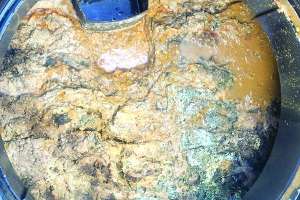
A fairly common sight for restaurant septic tanks: a thick layer of fat and oil.
Over the last 50 years, what has been going into septic systems has changed. There are many reasons why, including reduced flows and an increase in the use of pharmaceuticals, personal care products and sanitizers. Another big change has been our diet.
Fiber consumption in the United States is generally low, with most Americans consuming less than the recommended amount. If fiber consumption increases in a home, the weight and size of fecal waste increases. Some foods, like corn, nuts and seeds, are high in fiber and can be difficult to digest. With some of these high fiber foods, the body’s enzymes are unable to break down the outer coating, such as the cellulose in corn’s outer casing, so the food particles remain visible. If these solids do not settle out in the septic tank, there is the risk of clogging an effluent filter or downstream components.
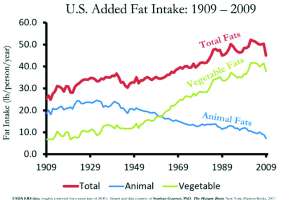
The amount of overall fat in the average diet has increased over time. The type of fat has also changed. As depicted in the diagram, the amount of animal fat has decreased over time and the amount of vegetable fat has gone up significantly.
In our bodies, these fats are broken down into their basic components of fatty acids and glycerol. A majority of these components are used in our bodies, but when consumed beyond our needs they are stored for later use as fat.
In the onsite wastewater treatment industry, we often distinguish between the type of fats and oils, but at the end of day they are all “fat” in our diet. Consuming more fats in our diets often means more vegetable oils going down the drain primarily through our kitchen sink and into our systems.
Continued public education is needed on this topic so no leftover fat or oil from cooking is dumped down the drain. Even with careful disposal of items such as bacon grease or used oil from a fryer, residual fat and oil will go down the drain when pots, pans and dishes are cleaned. Fats and oils can also be added to septic systems through the use of garbage disposals processing undigested food.
Both fats and oils are generally treated in onsite wastewater treatment systems by separating it from the wastewater stream. Since they are less dense than water, they float to the top. The fat portion will solidify if the temperatures are below room temperature (80 degrees F), but free oil will float to the top and has a higher risk of passing through a septic tank or grease trap during high flow events.
The other type of oil is emulsified oil, which has been broken up into very small droplets and is produced by mechanical or chemical reaction. Mechanical emulsification can occur when extremely hot water from a dishwasher is mixed with the oil. Given time and a decrease in temperature, this oil can be separated. Chemical emulsification occurs when detergents or cleaners produce a mix of oil and water. Degreasing compounds can generate dissolved oils, in which discrete oil particles are no longer present. Chemically emulsified oil takes a longer time to separate, increasing the risk of carrying it to downstream components unless long dormant periods are available to allow separation. These issues can be more critical with commercial kitchens.
It is important to try to contain fats and oils early in the system because it can accumulate inside pipes and lead to clogging of downstream components. They also contribute to the biochemical oxygen demand and total suspended solid concentrations.
A recent movement sees more Americans thinking about their protein consumption. In the last 10 years, the market size of protein powders alone has nearly doubled and is projected to continue on this upward trend. When people consume more protein than their bodies need, excess nitrogen is flushed out in urine. Research has shown that anywhere from 67–100% of the nitrogen in human sewage results from our consumption of protein. Protein deficiency is very low in the U.S.; therefore, it is likely that the overall amount of nitrogen in our wastewater will increase.
The amount of phosphorus in our food has also gone up due to the increased consumption of processed foods where the element is commonly used. Multivitamins and supplements also present a significant contribution to consumption levels. Phosphorus deficiency is rare in the U.S., so as more phosphorus is consumed more will be excreted in our wastewater.
When troubleshooting an onsite wastewater treatment system, the diet within the home may be worth having a conversation about particularly if you see signs of fiber, fats and oils in the septic tank. The general trend toward higher amounts of nitrogen and phosphorus in our wastewater is expected due to increased consumption of protein and processed foods, so think and plan accordingly.
Continue reading for free