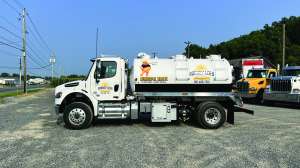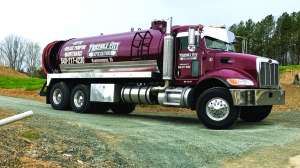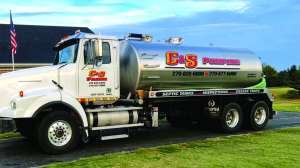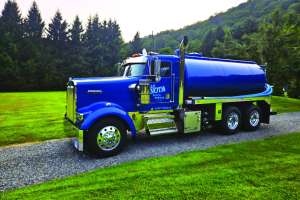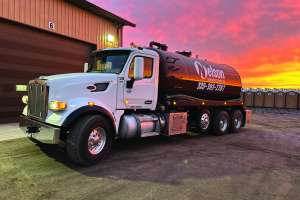
By now, you probably know the December issue means Classy Truck central. It provides a chance to look back on the year’s winners and acknowledge once more a handful of worthy working trucks that are getting the job done around the United States and Canada. And let’s face it, they are just plain fun to admire.
Along with that, we can learn a lot from these entries. Ordering your next truck is a huge business move and it can be overwhelming with the amount of options on the market today. The choices you make for cab and chassis, pumps and blowers, storage boxes, tank material and size and everything in between can either provide a platform for profitability, or limit the service and jobs you can offer in the future.
Classy Truck entries provide examples and ideas for those thinking of ordering a new truck to expand their fleet, buying their first rig or looking to spruce up a trusty old truck. The owners of these rigs have gone through the same nerve-wracking process of laying down a substantial investment based on their business’s needs and personal taste in hopes that those decisions lead to dollars coming in.
I find it interesting to compare the latest winners to those of the past to see how technologies and setups have shifted over time.
What’s changed
I looked back at the classy truck winners from 2014 to see how things have changed over the past decade.
One of the first things I noticed is people are building bigger. In 2014, only one of the featured trucks had a tank capacity of 5,000-gallons. The average large capacity tank in that lineup was around 4,000 gallons, which was big compared to past years. This year, six trucks had 5,000-gallon tanks or larger. Like it was speculated in 2014, the increasing tank size is likely a result of the efficiency it can bring. The added volume allows pumpers to hit several jobs on one route before offloading at a disposal site.
Along with that, versatility seems to be a priority these days. Many of the rigs this year were built for residential and commercial pumping, whereas the majority 10 years ago were specifically for residential service only. This could be another reason we are seeing larger trucks.
2024 also delivered more brand new trucks compared to 2014. What does that tell us? Is it the result of a depleted used market? Perhaps it’s an indication that businesses are growing at a pace where new trucks are required to accommodate the need for rapid fleet expansion, and that owners are confident in the outlook of the industry and want to invest in brand new for longevity purposes.
What’s the same
I consider it a nod to the trucks and owners of 10 years ago, but the overall appearance of how pumpers are designing their trucks hasn’t changed all that much. Sophisticated paint schemes, eye-catching decals and head-turning polished metal are the standard.
Patriotism seems to run deep as reds, blues and whites filled the lineup in 2014, and many entries this year featured similar palettes. Handy features of old like sight glasses, top and rear manways, Crust Buster mounts and aluminum hose trays are also still being chosen by pumpers today.
New and old
Though we see mostly brand new trucks in this year’s roundup, there are still pumpers out there putting their investment in the oldies, but goodies. Two restoration trucks made the list.
One noteworthy restoration is a 1983 International owned by Joel Lucas, a truck he has been driving for 25 years. Instead of buying brand new, he put his money and some elbow grease into refurbishing the truck he has grown to love over two and a half decades of operating.
Eddie Burns also saw the value in restoring his 2001 Kenworth over buying new, proving that a little work into an older truck with good bones is a worthwhile endeavor and might be the best choice for your business situation.
You tell me
Please reach out and tell me your takes and the trends you’re noticing in the world of pumping trucks. I’d love to hear about new technologies, different design strategies, or anything else that can help pumpers with their truck investment. Why do you think people are investing heavily into new trucks? Will capacity’s increase even more?
And I’d also like to hear your forecasts for the truck market. What are your plans for your next truck? Will you build for particular jobs, or design it to be versatile as a one-truck-pumps-all rig?
Vote!
Take a look at the 2024 Classy Truck entries laid out in the pages ahead and choose your favorite. Head over to www.pumper.com/classy and vote for the truck of the year. The winning truck will be photographed and featured on the February 2025 cover of Pumper.
Thanks for reading!
Continue reading for free