
Grinder pump employed for basement bathroom install
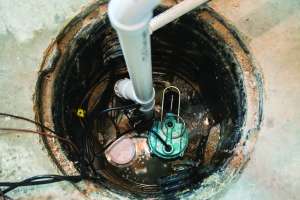
Problem: A homeowner in the Midwest wanted to add a bathroom to his basement. Due to the age of his home, it was not possible to cost-effectively drill the 2-inch hole required for the 500-foot sewage pump discharge pipe his bathroom would require.
Solution: The homeowner’s contractor recommended grinding sewage prior to discharge using a Little Giant 16G Series Grinder Pump. The 16G Series features the same cutting mechanism used in larger Franklin Electric models for proven grinding capabilities. The heavy-duty 1 hp class F motor would provide optimal power to prevent flushables and other debris from clogging, while the discharge is customizable to a user’s needs. This would allow the installation of a smaller, more cost-effective 1 1/4-inch hole and discharge pipe.
Result: Not only was the homeowner able to get his basement bathroom, but he was able to save money. Drilling a smaller hole was less expensive and saved on material costs. Since the sewage needed to be pumped out 500 feet, the smaller 1 1/4-inch sewage pump discharge pipe was considerably less expensive than 500 feet of larger pipe. 844-250-4982; www.littlegiant.com

Advanced treatment unit a fit for small coastal home
Problem: Watch Hill, Rhode Island, is a beautiful coastal village in the town of Westerly surrounded on three sides by water. Many consider it the ideal summer resort vacation location due to the proximity of major cities New York, Boston and Providence. However, most lots are compact in size, especially those adjacent to coastal areas. One two-bedroom white stucco house that was adjacent to the ocean fit this criteria.
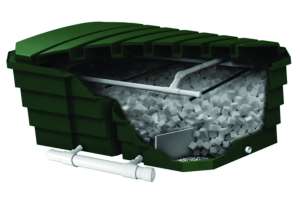
Solution: The designer, Eugene Spring, along with expert installer Timpson Excavating were able to install the FujiClean nitrogen-reducing CEN5 model going by gravity to a 12-foot GST (Geomatrix).
Result: Site space was severely limited, but using the FujiClean unit with a footprint of only 5.5 by 8 feet, space was maximized for subsurface dispersal. 207-406-2927; www.fujicleanusa.com
System enables campground to meet regulatory requirements
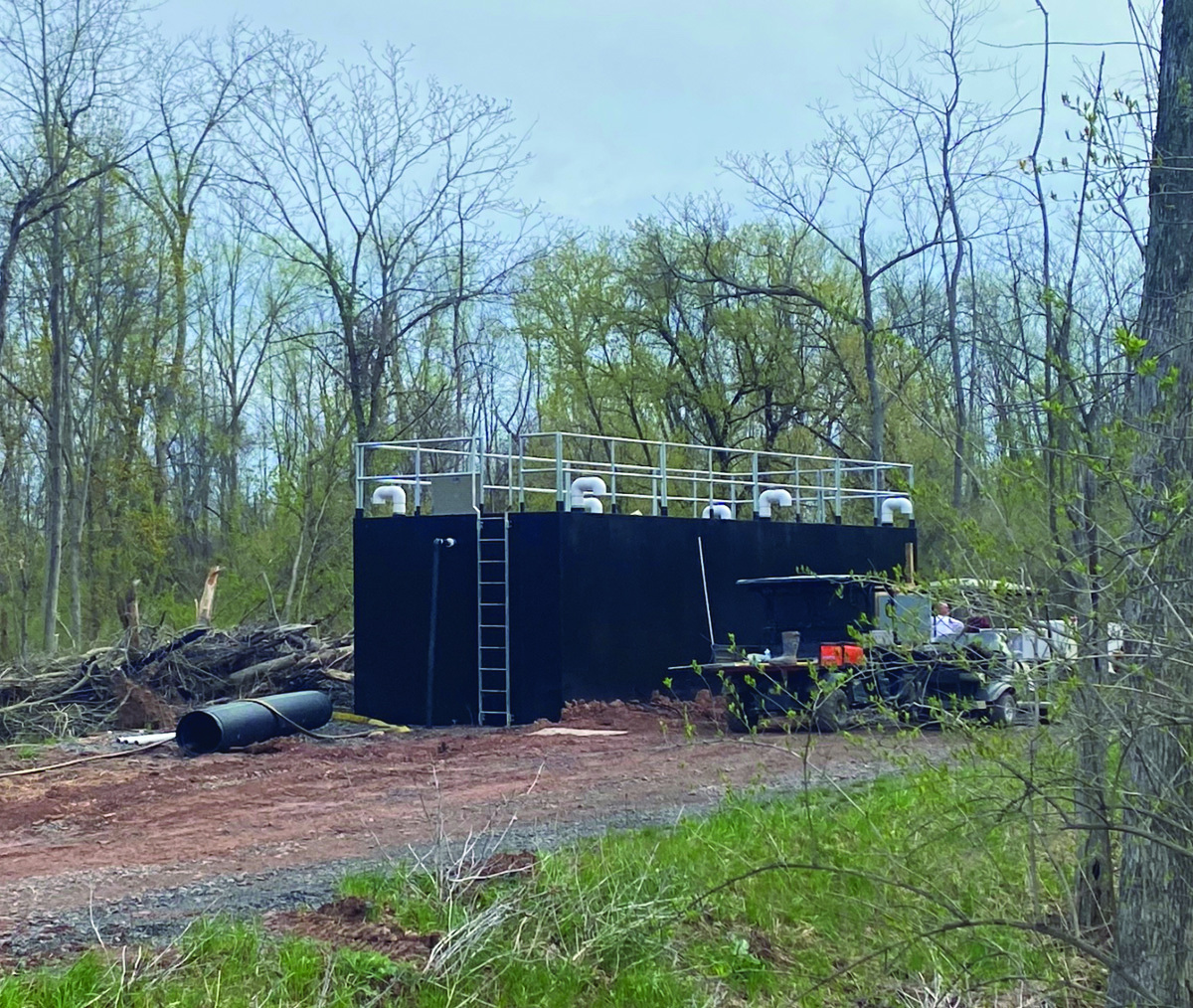
Problem: Big Guys Campground in Brockport, New York, was established in 2020 after the owners purchased the golf course and club house property with the vision to convert the space to a campground with an event center, store, fitness center and other facilities. During the system permitting process it was discovered that there was a known imperiled mussel population located in the stream of the proposed outfall of the wastewater treatment plant.
Solution: Two options were presented by the NYSDEC to the owners. One was to immediately impose ammonia limits that the wastewater treatment plant would need to meet at the end of the pipe before discharging to the stream. The second option was that if the owners choose not to construct a system designed to meet the proposed limits, they could apply a dilution factor based on flow rates from the ponds on property to the same location of the wastewater treatment plant’s outfall. An ECOPOD Advanced Wastewater Treatment System from Infiltrator Water Technologies was designed to meet the new ammonia effluent requirements of 1.25 mg/L (summer) / 2.75 mg/L (winter). The system is designed to handle 16,165 gpd. A single-compartment tank with an ECOPOD E3400D was installed in an epoxy coated steel tank.
Result: The system was installed in three phases to meet the needs of the campground as they expanded during the initial years of operation. Testing has determined that effluent meets the requirements of the NYSDEC for protecting the mussel population. 800-221-4436; www.infiltratorwater.com

Vent filter eliminates foul septic odors
Problem: After installation of a septic system, the Midwestern lake home customer complained of odors in his yard. The contractor installed residential vent odor filters on the tank vent and on the roof vents. The residential odor filters improved but did not eliminate the problem.
Solution: The contractor reviewed the problem with Simple Solutions and determined that the problem was due to the airflow from the tank vent exceeding the airflow normally seen in a typical installation. The home is built on the top of a hill and the holding tank is located at the bottom of the hill. The discharge pipe is approximately 75 feet long and drops approximately 15 feet. The septic modules are located on the side of the house above the holding tank. Odor reappeared whenever water was running into the tank, either from one of the home appliances or when the discharge pumps turn off and the wastewater that is in the feed lines to the modules drains back into the tank. A larger solar powered Super Wolverine vent filter can eliminate odorous airflows up to 10 cfm and the solar fan actively vents the tank, reducing the accumulation of sewer gas in the system. In the case of concrete holding tanks, this can decrease the deterioration associated with hydrogen sulfide.
Result: The odor problem was eliminated and the customer can once again enjoy his lake home without nuisance odors ruining his day. 866-667-8465; www.industrialodorcontrol.com

Bacterial generator used on resort pond
Problem: Golf course fairways are lush and green because they are heavily watered and fertilized. Unfortunately, algae in the ponds and water hazards use these same mineral nutrients to drive photosynthesis. This captures carbon dioxide from the atmosphere and converts it into organic matter, ultimately loading the pond with muck and depleting the oxygen. That was the case at Bahamian Sandals Resort, Emerald Bay-Exuma.
Solution: The Aerobic Bacterial Generator from SludgeHammer uses specialized bacteria with a high digestion rate to compete with the anaerobic bacteria that cause problems in the leachfield. Because the ABG was designed as a free-standing unit to use in any existing septic tank, it can also be “free floating.” The unit digests all that organic carbon back to carbon dioxide, returning it to the atmosphere. Since there was no electricity at the ponds, SludgeHammer developed an on-site solar powered system. Luckily the units are powered by low wattage linear blowers, so it was realistic to go solar.
Result: The units are floating, providing air and bacteria in the battle for clarity in the water, and elimination of the muck. 231-348-5866; www.sludgehammer.net
Continue reading for free