
Technology for treating effluent in the onsite wastewater industry continues to evolve with ongoing advancements in aerobic treatment units. But like everything, proper operation and proactive maintenance are crucial to their functionality.
Applications
An ATU creates an aerobic environment in a tank where air is added in a relatively small footprint. They are commonly used in environmentally sensitive areas for pretreating effluent before it is delivered to a soil treatment system, or where it is desirable to discharge effluent into soils that can benefit from effluent that has undergone further treatment than a septic tank provides.
In some areas, the ATU effluent, after a disinfection device, is discharged on the surface or directly into a water body. Some types of ATUs have been successfully used to reduce high-strength waste from facilities like restaurants and RV dump stations, and similar facilities Another application that is growing in use with ATUs is nitrogen reduction achieved by effluent recirculation. As effluent is treated in the ATU, it becomes oxygenated, and a majority of the nitrogen is in the form of nitrate. When returned to a processing or recirculation tank, if low in dissolved oxygen, bacteria can utilize the nitrates in the effluent and release nitrogen gas to the atmosphere in a process called denitrification, assuming the correct environment is created.
Maintenance
With proper design and a good maintenance program, the aerobic treatment system should perform well and treat effluent for a long time. Frequent operation and maintenance is essential. Owners of aerobic treatment units should have a contract for maintenance and requirements through certification and regulatory programs. The frequency of visits by a professional for a residential ATU is typically every six months.
There are many different types and brands of ATU, but they share some common operation and maintenance activities. An ATU typically includes a trash tank, aeration chamber, air supply system, clarifier and sludge return mechanism (either active or passive). Each of these components must be evaluated while performing maintenance. For this to occur, easy access to all these components is needed. If portions of the system are not accessible or cannot be accessed, steps must be taken to gain access.
The mechanics
Most ATUs have a small septic tank/compartment, sometimes referred to as a trash trap. Trash tanks provide some anaerobic treatment depending upon the size and configuration. This tank must be managed to determine if sludge and scum are building up or if nondegradable materials are present. If nondegradable material is present, the owner of the home or business should be informed that this practice is not acceptable.
Wastewater then enters a mixed aeration chamber/tank where aerobic organisms in an oxygen-rich environment are provided by an air supply system. The aeration chamber may be suspended-growth, where the microorganisms are floating freely in the effluent, and/or attached-growth, where they are attached to a media. The biomass in the system should have a brown color, which is an indication of aerobic conditions; instead, a black color indicates anaerobic conditions or dead microbes.
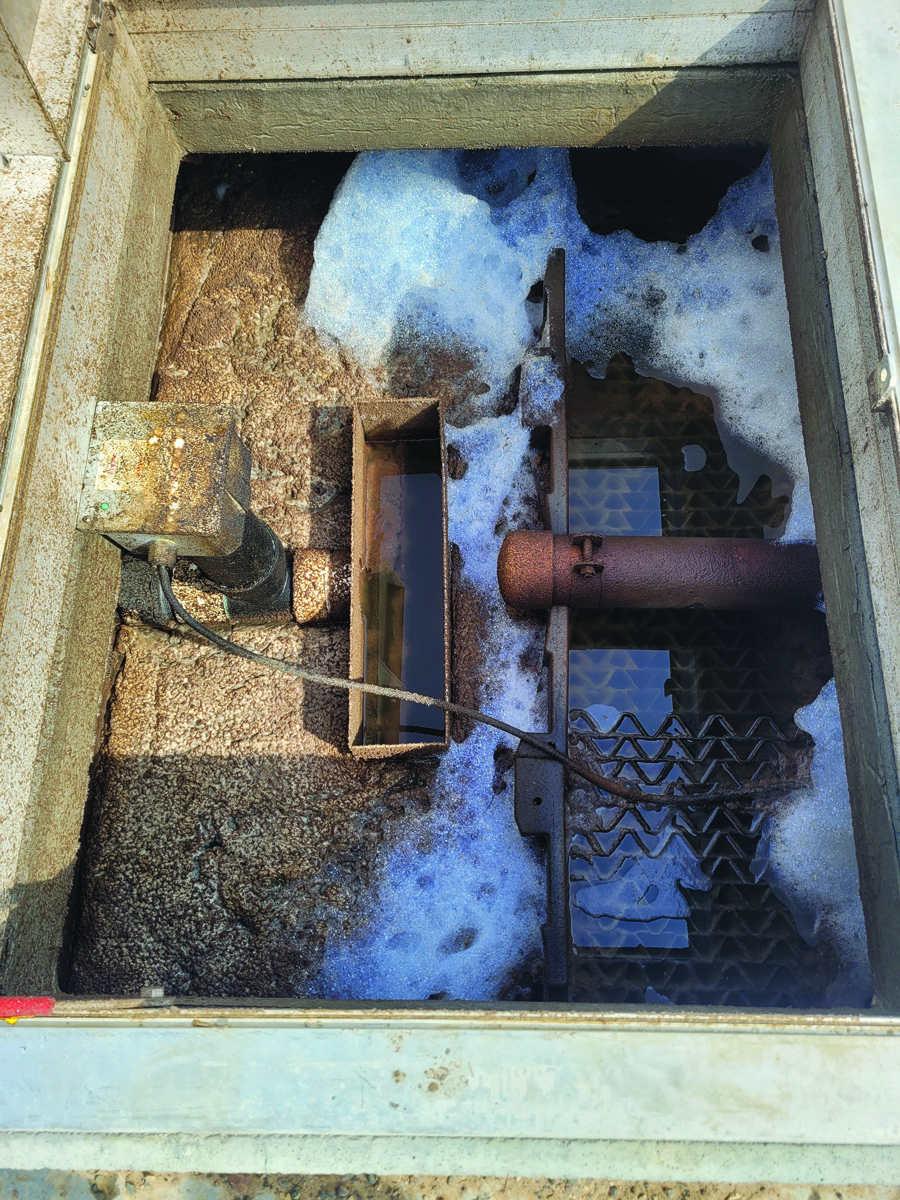
ATUs using attached-growth media require the media to be evaluated, as it can become plugged with biomass. The media should also be evaluated for proper mixing or effluent flow. Media may float as the biomass accumulates, and some attached growth systems employ restraining methods to keep the media submerged. If the media is floating, it may need cleaning or restraining to keep it submerged. Foaming within the aeration chamber should be assessed.
Air supply
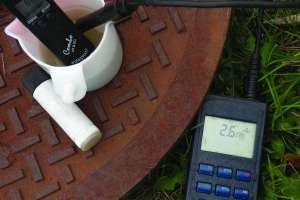
The service provider needs to check that the air supply is hooked up and providing air to the unit by a visual inspection of the supply piping and observation of bubbling action. A dissolved oxygen meter or DO kit is an effective tool to determine if the conditions in the ATU are aerobic. The DO should be greater than 2 mg/L. If the supply of air to the bacteria is compromised, the tank loses effectiveness.
Due to the high volume of air entering the system, ATU has an air exhaust. It is always good to locate this exhaust and ensure there are no obstructions and a strong septic odor. With aerobic conditions, the smell of this exhaust should be like that of a musty, moist environment. The ATU should also have a high-water alarm and it is always wise to confirm that it is operating properly.
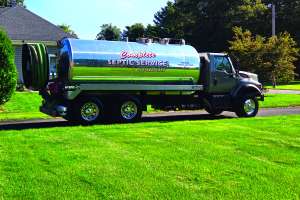
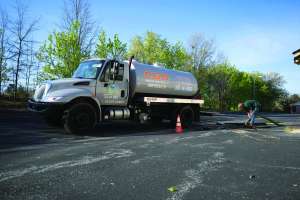
Always evaluate the mixed liquor in the aeration portion to determine if the tank requires pumping. Although ATUs use the extended aeration process, endogenous degradation cannot completely prevent the accumulation of old biomass. Biomass and nonbiodegradable solids will accumulate, and periodically require removal of a portion of these solids.
Bring in the hose
Pumping is generally needed when the solids levels are above 6,000 mg/L. Typically, to determine this, a settleability test of the mixed liquor is performed. The settled solids should measure between 20% to 60% of the total volume after a period of 30 minutes. If the settleability rate is greater than 60%, pumping is typically needed, although some suspended-growth units may need pumping before this density of biomass is reached. It is advised to check with the manufacturer for more specific requirements. During removal, it is important to leave some of the solids in the aerobic chamber to serve as seed to repopulate the biological floc.
Beyond aeration
Wastewater exiting the aeration chamber enters the clarifier. The clarification chamber separates solids from the effluent. Calm conditions in the clarifier allow biomass suspended in the wastewater to settle. If the clarifier is separate, it will need to be inspected as well for pumping. If it is more than one-third full of solids, it typically will need to be cleaned. An effluent screen or filter may be placed in the outlet of the clarifier and may also need to be cleaned.
Some of the settled biomass is typically returned either passively or actively. If active, it’s often done with a pump. In passive mode, it can be evaluated visually by using a profile probe to measure the depth of a clarified zone below the outlet and the settled sludge blanket.
Thorough inspection of the effluent is also needed during a maintenance visit. It should be relatively clear and free of odor. The effluent may require laboratory testing to verify performance. ATUs are commonly evaluated for the removal of BOD and TSS and may also be evaluated for removal of viruses and bacteria, as indicated by fecal coliform or E. coli, ammonia or total nitrogen. Whenever possible, flow data should be obtained from the ATU panel via a meter, cycle counter or running time clocks. This data can then be used to determine daily or average gallons per day.
As with all onsite wastewater treatment systems, operations and maintenance is essential to short and long-term performance. With ATUs, monitoring of each component is crucial to evaluate performance.
Continue reading for free