
System pretreats camp grease interceptor and seeds downstream septic system with aerobic microorganisms
Problem: Chewonki, an internationally recognized environmental education nonprofit focused on nature-based education and stewardship in Wiscasset, Maine, wanted to reduce or eliminate pumping frequency of its grease interceptor and the downstream septic system while also lessening loading to its leachfields. The grease interceptor was sending significant FOG to the septic system, creating a very thick and hard buildup of biosolids when mixed with the black- and graywater, resulting in a thick biomat that was hard to pump out.
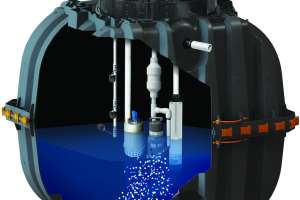
Solution: IMET installed two aerobic biological Grease Interceptor Modules directly into the grease interceptor to pretreat the grease interceptor waterbody before discharging to the three-tank septic system. The modules installed also began to seed the downstream septic system with aerobic microorganisms.
Result: Within two days of installation, the thick FOG layer in the grease interceptor was gone, with only translucent milky water remaining. Since installation in 2021, the grease interceptor has sustained no FOG buildup and has not required any pumping. The downstream septic tank, seeded by the IMET system, has had its pumping requirement reduced by 50%. The camp is very happy with the results and is planning to install six IMET modules in the three tank septic system to provide complete treatment before effluent water is discharged to the leachfield. 216-906-1066; www.imet.net

System sized right for tight residential spaces
Problem: What happens when there’s no room for a drainfield? You leave it out altogether. With a residential home in Chapel Hill, North Carolina, that’s what engineers did. The homeowners had a conventional septic system with a drainfield that dispersed into poor soils. When the drainfield failed and needed to be replaced, the lot was too small for a new one and sewer service was unavailable.
Solution: Enter engineer Kevin Davidson of Agri-Waste Technology. He and the area’s Orenco sales manager had an idea. The homeowners could install an AdvanTex AX20-RT unit with UV disinfection. This would provide an extremely high level of wastewater treatment through use of a packed-bed media filter and ultraviolet disinfection. The treated effluent was expected to meet National Pollutant Discharge Elimination permit limits for surface discharge into a ditch or body of water, eliminating the need for a drainfield.
Result: TThe North Carolina Department of Water Quality approved the permit. After the homeowners purchased equipment from AQWA, installation crews completed the project in three days. “AX-RT is the best unit, when you look at aesthetics, installation cost, ability to treat waste, and support from Orenco,” says Davidson. “Compared to other technologies, I would grade Orenco at the top.” 800-348-9843; www.orenco.com
Quick, low-profile installation for a farm storefront
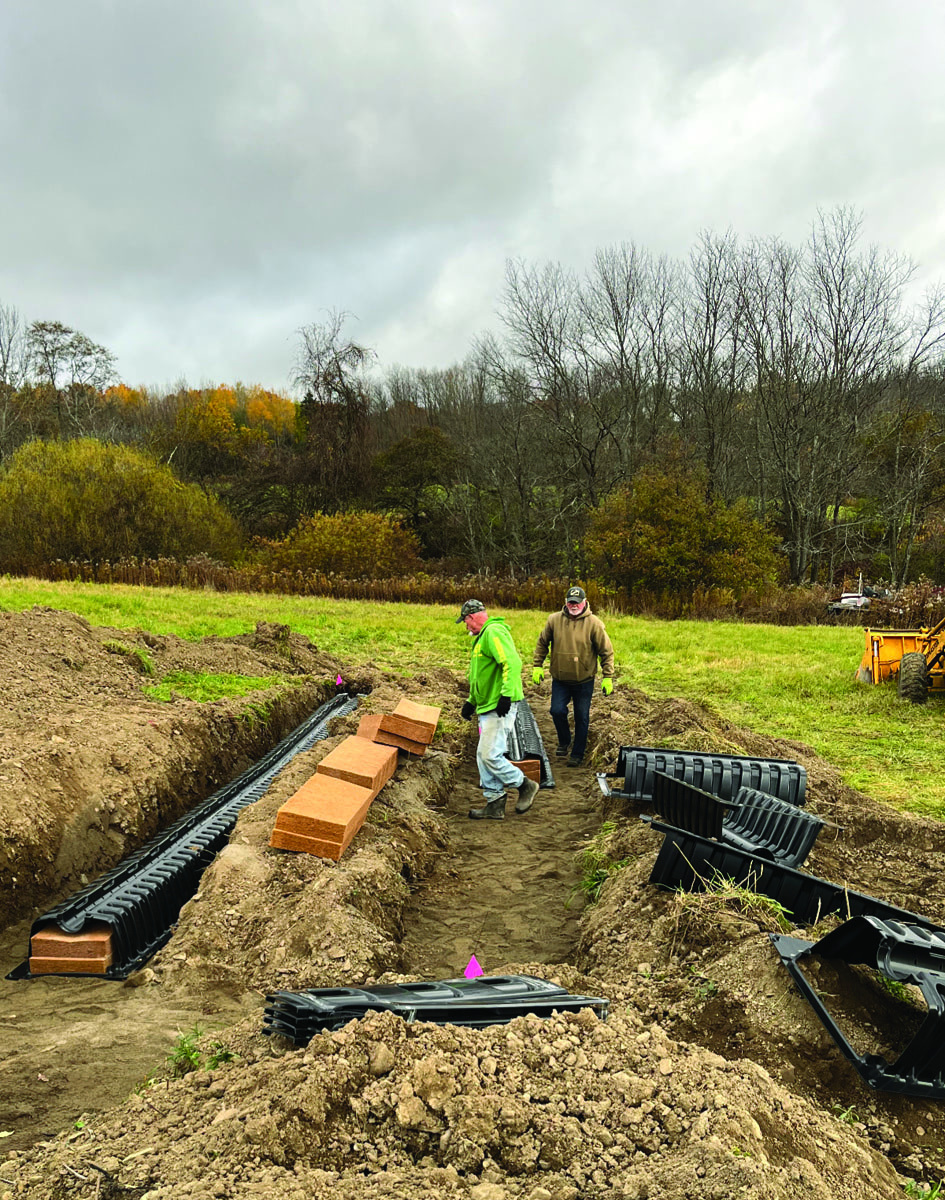
Problem: A bison farm in Hinsdale, New York, was building a storefront to sell its products. The owner needed a septic system that could be installed quickly, operated with minimal costs and preserved the farmland’s visual appeal by blending into the lot’s natural contours.
Solution: Jonathan Rogers from MDA Engineers designed the Ecoflo linear biofilter from Premier Tech Water and Environment for the project. This combined treatment and dispersal system uses integrated distribution channels to reduce the need for perforated pipes, offers a wider range of sand options beyond C33 and keeps a low profile. The linear biofilter pairs with the Rewatec dosing distribution box, a lightweight device that optimizes effluent distribution across trenches without electricity.
Result: Working with Premier Tech’s on-site experts, the farm installed the system across two trenches that followed the land’s contour. The only gravel used was to level and secure the distribution box while the system’s design and treatment performance allowed for a quick installation without C33 sand. The dosing distribution box ensured precise distribution across the trenches, resulting in a low-maintenance, efficient solution that met both operational and aesthetic requirements. 570-220-7937; www.ecoflo.eco
Suspended biofilm generator rejuvenates failing drainfield
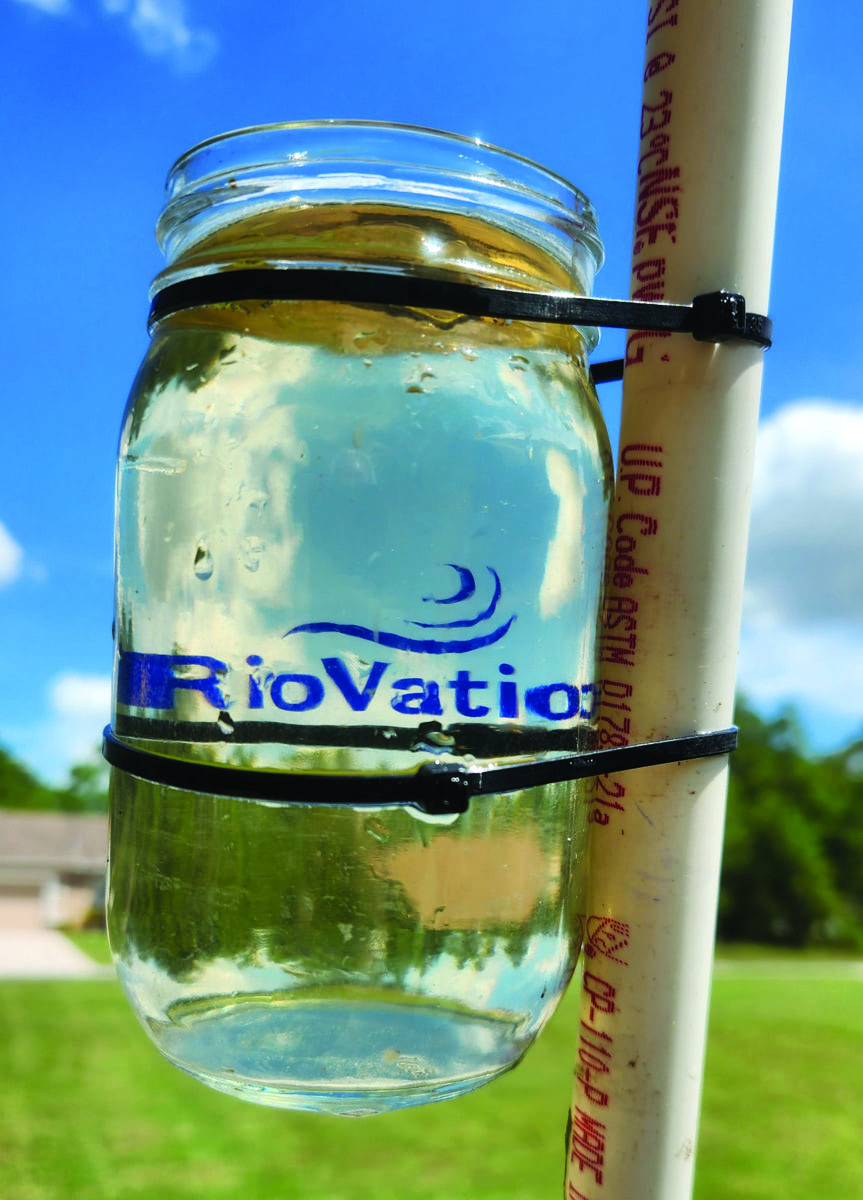
Problem: A Midwestern residential property was built on high Class III soils characterized by high clay content — conditions that offer marginal permeability (Class IV soils would typically require an ATU). The system consisted of a two-compartment septic tank, a distribution box with levelers and four 50-foot chamber laterals with inspection ports. Effluent was initially directed to a single lateral for observation. Within four months, that lateral began overflowing into the next. The same issue occurred sequentially with all four laterals, indicating early soil-pore clogging and poor percolation.
Solution: A RioVation BioMaze Suspended Biofilm Generator was installed inside the existing septic tank. It easily integrates into both new and retrofit installations — single- or multi-compartment. Once operating, it establishes a thriving ecosystem of aerobic microorganisms in both attached-growth biofilm and in suspension throughout the tank and effluent. The result is effluent high in dissolved oxygen and remarkably low in BOD, TSS, nitrogen and fecal coliform.
Result: Now operating for more than six years, the system continues to discharge clear, odorless effluent through a single 50-foot chamber lateral. The drainfield continues to percolate efficiently and problem free. This installation demonstrates the ability of BioMaze to reverse biomat clogging, restore percolation capacity and extend drainfield service life — without costly excavation or replacement. 352-228-4488; www.riovation.com
Meat processing high-strength waste retrofit uses advanced treatment technology
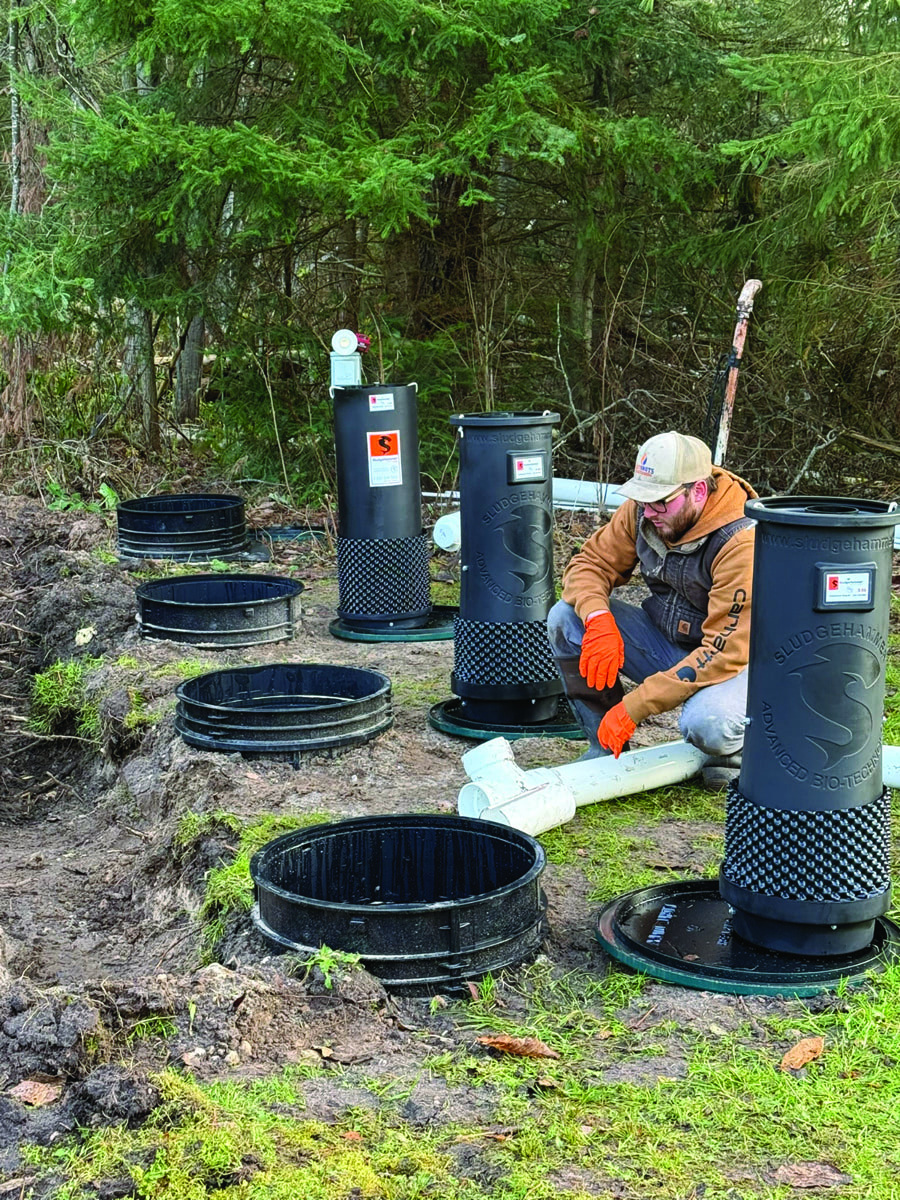
Problem: The Smith Meats Processing Facility in Cheboygan, Michigan, was required by the Michigan Department of Environment, Great Lakes, and Energy to significantly reduce high-strength wastewater discharges from its meat-processing operations. The existing onsite septic and disposal field could not properly treat the facility’s 600 gpd of high-strength effluent containing elevated BOD, TSS and nitrogen. Achieving compliance was essential to protect local groundwater, but replacing the entire septic infrastructure would have been costly and disruptive to operations.
Solution: SludgeHammer engineers developed a modular, scalable retrofit system that utilized the facility’s existing septic tanks, avoiding the expense of new tank installation. The installation team installed two S-86 high-strength waste treatment units into the first 1,000-gallon single-chamber septic tank to address the strongest waste stream. A third unit was installed in the first 1,000-gallon chamber of the second 1,500-gallon double-compartment tank for additional treatment. The second 500-gallon chamber was converted from a pump chamber into a settling and clarification chamber equipped with a pleated gravity exit filter. Wastewater was then replumbed to flow into the facility’s existing domestic wastewater pump chamber before final dispersal.
Result: The retrofitted system now produces clean, highly treated effluent that is safely discharged to the existing disposal mound. The project satisfied EGLE’s stringent treatment requirements, protected groundwater quality and delivered major cost savings by preserving and upgrading the facility’s existing infrastructure rather than replacing it. 231-348-5866; www.sludgehammer.net
Continue reading for free