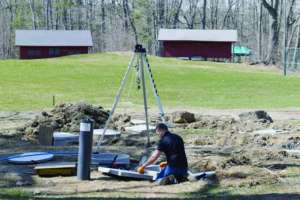

Onsite wastewater treatment systems are designed to receive only a specified daily flow. When an OWTS is designed and installed, the site’s natural hydrology is altered. The site and soils go from receiving the typical annual precipitation, measured in inches, to receiving feet of effluent application in the soil treatment area.
During the life of the OWTS, surface water is managed, as many systems are susceptible to significant impacts from water additions. Since our systems are expected to accept several hundred gallons of water per day, adding any additional water regardless of its source, will affect performance. This is true on all sites, but particularly important on sites with shallow water tables and/or challenging soils. These sites are challenging due to the volume of wastewater they can process, so limiting stormwater impact on the system is critical.
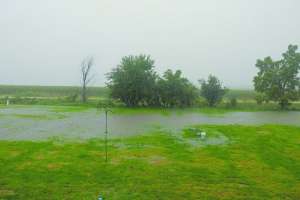
Excess water can overwhelm any onsite system’s treatment capabilities and must be managed carefully and diverted away from system components. In general, upslope areas of a site have good drainage as water flows away from these zones relatively quickly. The lower portions of the landscape have poor drainage as water flows into these zones or moves away from them slowly.

Reading the terrain
During operation and maintenance site visits, evaluate surface water flow and the system’s location on the site.
You want to look for topography that retains or concentrates subsurface flows such as swales, depressions or potholes, or for a system located near the bottom of concave slopes. A concave slope is a hillside or segment of terrain that becomes progressively gentler as you move downslope where there is a convergence of surface and subsurface drainage. If the system is located at a low elevation, surface water and/or groundwater may flow toward and across it.
If a stormwater drainage channel serving several adjacent properties, or an entire subdivision, discharges onto or near the site, there are profound implications for system performance during wet seasons. Nearby stormwater retention basins can also affect systems because large volumes of water are directed toward them and infiltrate the soil. This may be from the property you are on or neighboring properties with other impervious surfaces, such as roads.
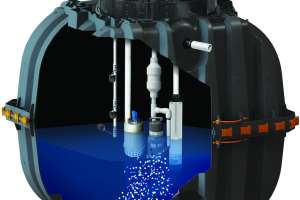
Evaluate the location within the natural landscape for each component of the system. One common mistake is installing components at the base or toe of a slope. This is the point at which the slope begins to flatten and surface runoff slows and infiltrates. If the septic tank or pump station is installed here and all connections are not fully watertight, water will infiltrate the tank and ultimately be discharged to the soil dispersal area, potentially causing hydraulic overload.
Grades matter
Proper grading of system components, including tanks and soil treatment areas, is essential for effective surface water management. Final grade should be relatively even and sloped to allow surface water to drain away from system components. However, excessively steep slopes will encourage erosion (soil being carried away during precipitation events). Side slopes of mounded soil treatment areas are prone to erosion when excessively steep. Sewage odors and/or surface effluent may indicate issues, whether on this site or in the neighborhood.
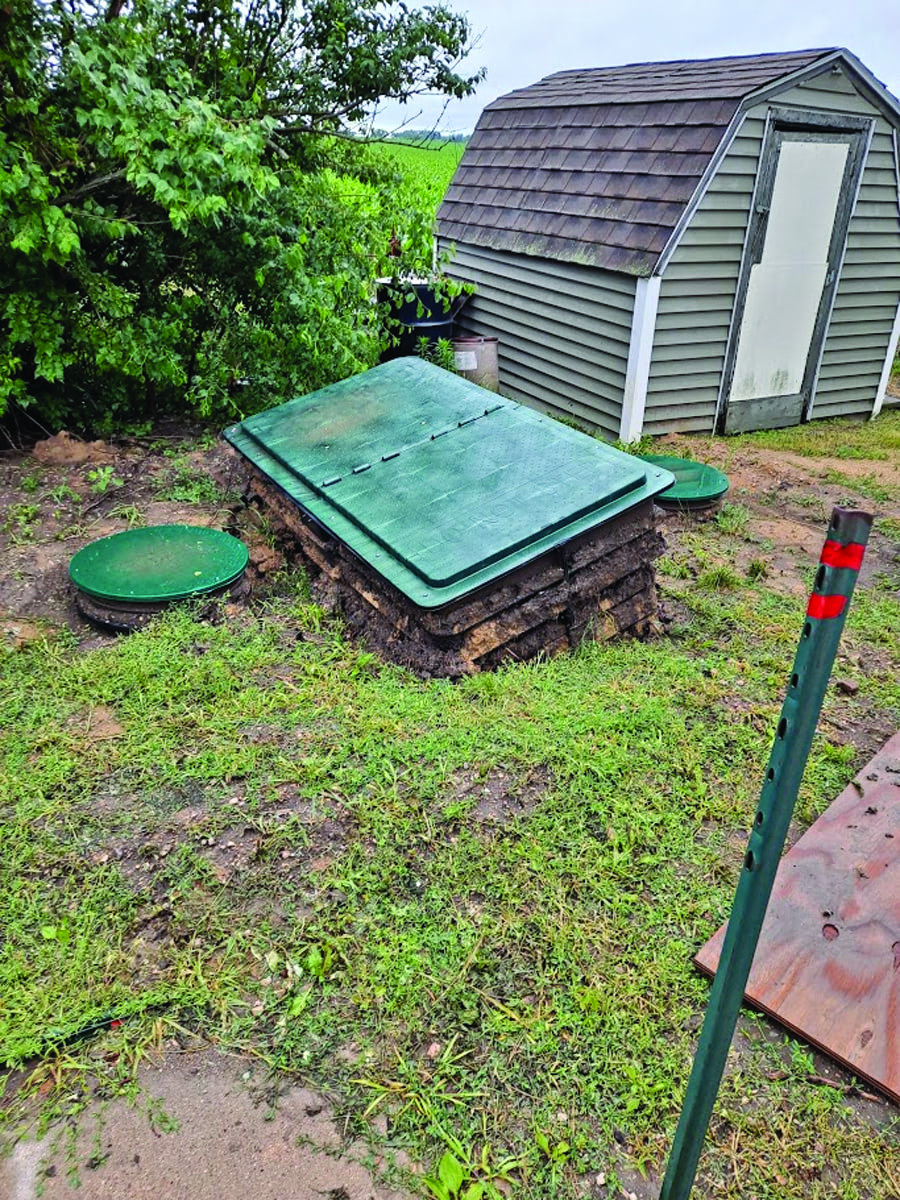
Surface settling indicates soil shifting below the land surface. Settling around tanks, soil treatment areas and other components can be caused by:
- Poor installation practices due to the use of improper backfill or settling of backfill.
- Soil infiltration into the tank through open joints or cracks, broken pipes or structural failure of the tank.
- New fill material used in installation settling.
If settling is significant and the area is not crowned, surface water will pool and infiltrate, potentially impacting the systems. Areas of settling should be filled to reduce this risk.
Weathering the storm
Stormwater runoff from buildings and other structures can also infiltrate onsite wastewater treatment systems. Stormwater from roofs, driveways or patios should be diverted around or away from the system using gutters, drainage trenches and/or berms. If the site has perimeter/footing drains around the structure, basement or other clear sources of water exiting the building, such as from water treatment, ensure they are directed away from the system.
If components are subject to stormwater impacts, the owner should be notified and a plan to divert the surface water should be developed and implemented. Locating a system to minimize run-on is ideal, but sometimes not possible. In these cases, surface-water diversions must be installed. Surface water should be diverted away from tanks, the soil treatment area and any other system components. Diversion berms and swales can be used to collect surface water moving across the site and channel it around the system. If these components were part of the system installation during O&M visits, the components should be evaluated to ensure they are intact and operating effectively.
Using drains
The water can also be diverted away from system components by using interceptor drains to collect runoff entering the site and channel it around the system. If interceptor drains are present, they must have an effective outlet. That is, the outlet must be capable of conveying collected water away from the site. Outlets should be free-flowing, stabilized and protected with a rodent guard. If a pumped drainage system is used, this introduces another component that must be inspected and maintained. Ensure that the pump drainage is operating correctly and the discharge outlet is stabilized.
In some jurisdictions, drainage systems are installed to artificially lower the water table. Pipes are buried below the drainfield, often with gravel and fabric, and daylighted to a suitable discharge point or connected to a pump system, depending on site needs. The tile lines may need periodic cleaning to remove sediment, roots or blockages, thereby improving drainage. Sampling of this discharge may also be required to ensure performance and monitoring to verify that vertical separation is maintained throughout the OWTS operation.
Continue reading for free