
Techniques used to verify an onsite wastewater treatment system’s performance for a regulatory authority or a manufacturer as part of service visit vary greatly.
Monitoring an onsite wastewater treatment system’s performance varies from something as simple as checking for sewage on the soil surface to taking samples for laboratory analysis. System diagnostics usually require data on the combined hydraulic and constituent load to provide a detailed view of system performance. Using proper methods to collect, handle and preserve samples will result in the most accurate results.
Why
There are several reasons you may be taking a sample. Often it’s for regulatory compliance requirements, or simply when you are troubleshooting. Taking samples throughout a system to determine influent levels of contaminants compared to effluent levels is a great way to do that.
What type
The sample should be representative of the influent or effluent and should be reproducible by another person. Most often we will be pulling a grab sample for a system that tells at one location, at one point in time, the parameter levels in the wastewater. But other options exist that may give representative data.
Composite sampling is when individual samples are collected from the same point at different times and compiled into a single, larger sample. Samples may be of equal volume or proportional to the flow at time of sampling. Composite samples are typically collected with a composite sampler over four to 24 hours. They can also be taken from a location where a discrete grab sample is taken that has a mix of effluent representative of the system performance at one location. A common location for these to be drawn is a dosing tank.
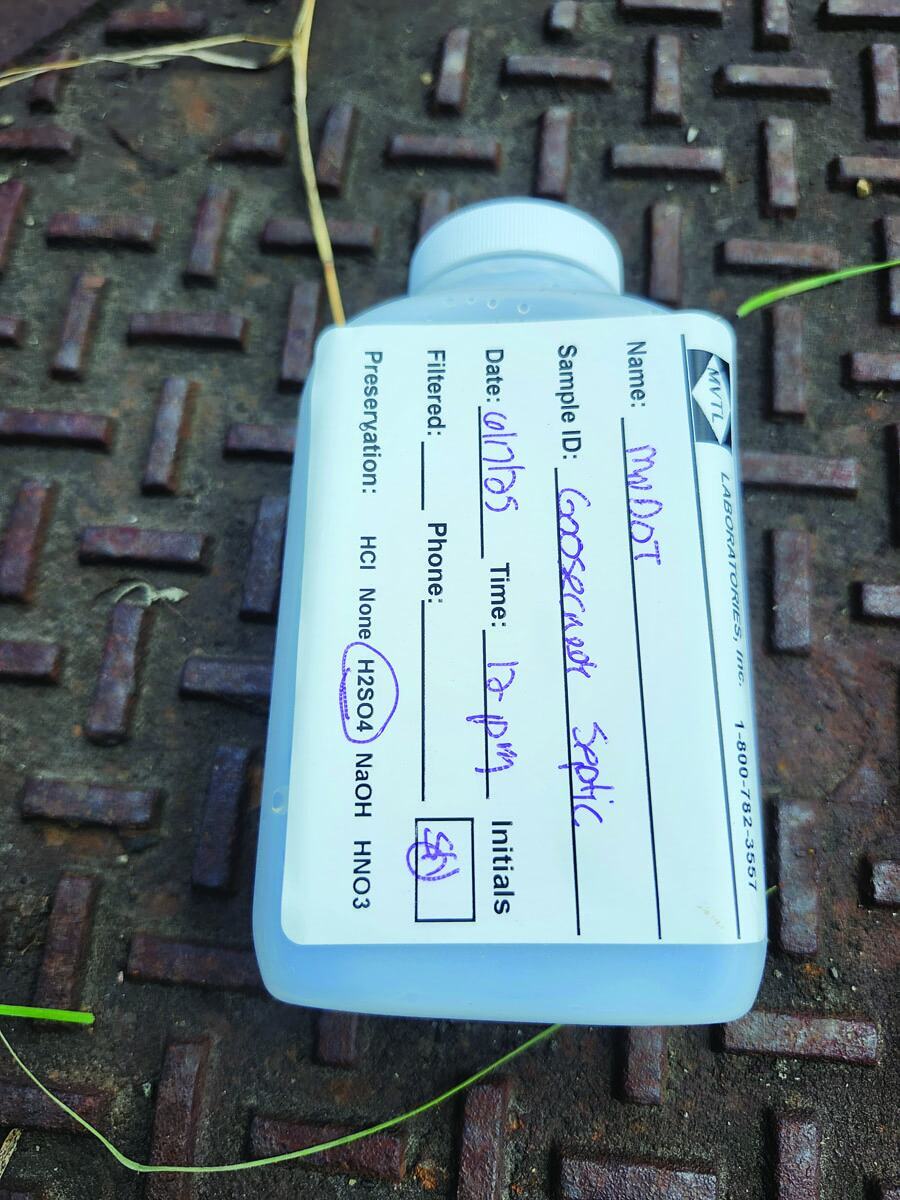
Be sure to contact the lab prior to sampling and make sure they are certified lab. This ensures they are using standard procedures and are audited to verify compliance with the standards. Very often, labs will provide the appropriate sample bottles based on the items you will be analyzing for along with the required chain-of-custody form. This identifies who collected the sample, a sample name/description and the analysis requested.
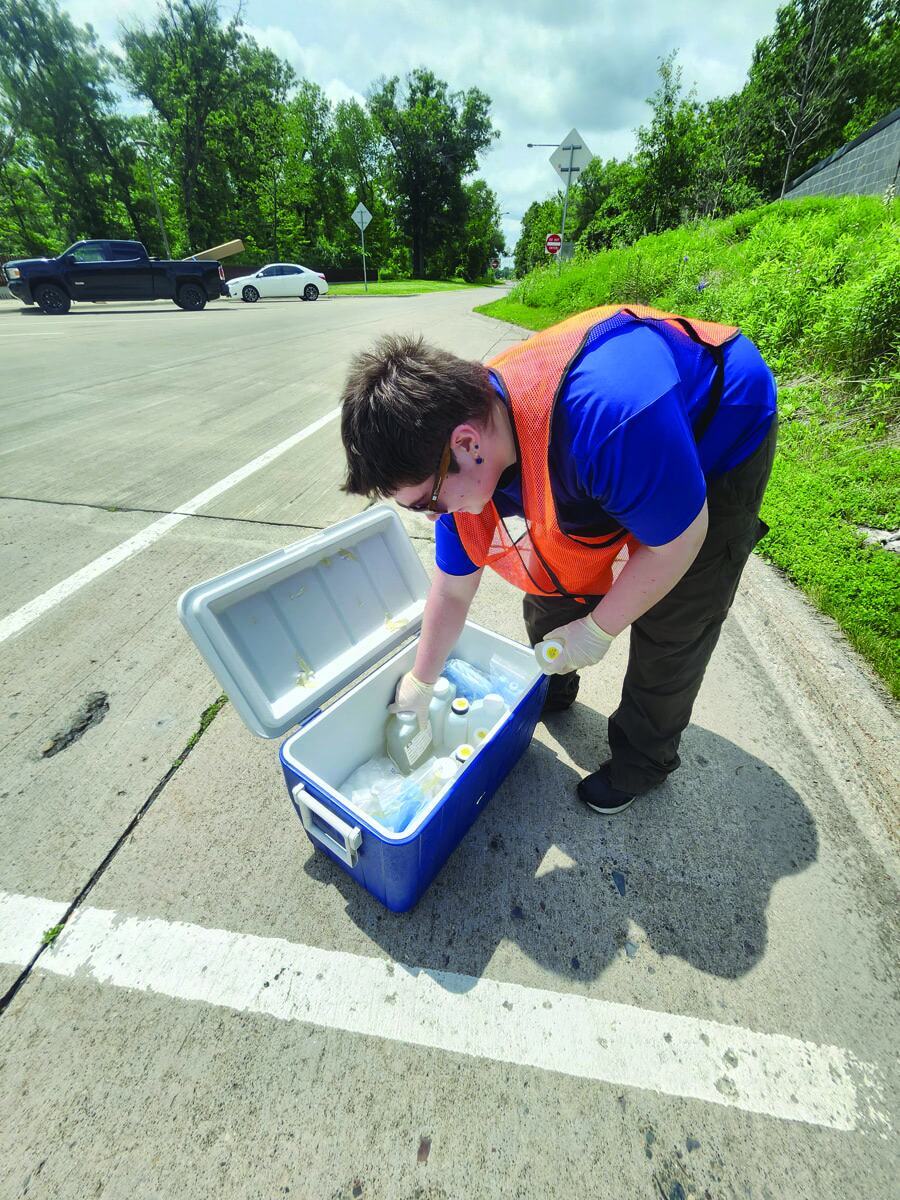
Some analyses require a preservative to be placed in the sample to stop chemical reactions. Confirm which days and times the lab will accept your sample due to hold times and staffing. Samples should be stored in a cooler on ice and delivered to the lab within the required timeframe. Hold times can be as short as six hours and as long as a month, so it’s important to confirm with your lab.
When
The timing of sample collection influences how representative the sample is. Depending on the timing, the effluent collected may be freshly flowing effluent or processed effluent. Freshly flowing effluent is typically preferred as it is actively moving through the system, but is sometimes not accessible or available during the sampling visit. Keep in mind when the sample is pulled particularly for nonresidential waste as the results will likely be different if the sample was collected during a peak loading time rather than low use period for the system.
What analysis
The constituents monitored for will depend on why you are sampling. If it is for regulatory compliance the parameters to monitor will be dictated. For troubleshooting, starting with a measure of the organics and solids is always a good idea, but additional parameters such as nitrogen, alkalinity or oil and grease may be needed as well, depending on the treatment goals.
Where
The precise location to obtain the sample may be the most critical aspect to consider.
The best location for sampling is dependent on the reason for sampling, whether troubleshooting a certain component or for overall system performance data. When tracking system performance over time it is important to collect samples from the same location each time.
There are many locations where samples can be taken and they are best determined when the system is being designed so they can be built in. Effluent chambers, pump tanks and sampling ports are suggested locations.
Some obvious locations where the wastewater characteristics are of interest:
Influent to the system – This location is the most difficult to sample as the inlet to the first component (typically a septic tank) will not be accurate unless you are able to composite sample and even then, the larger solids settle too quickly.
Effluent from the septic tank – This location is often going to be more consistent as a grab sample and will indicate the effluent being discharged into advanced treatment or to the soil treatment area. Sampling at the outlet baffle at the bottom of the baffle is preferred over a sample in the middle of the column due to scum/sludge interference.
At the system’s “end-of-pipe” – This location is typically after advanced pretreatment, such as an ATU or media filter, but before discharge to final treatment and dispersal. With proprietary systems be sure to check with the manufacturer about the preferred sampling location. Some systems may have a specific sampling port.
From a dosing or flow equalization tank – These are often good locations to sample due to reduced sludge and scum and they provide composite characteristics. Keep in mind, when sampling from an equalization tank, not to sample right after the pump has run, as solids tend to be stirred up by the pumping event.
Beneath the system with a lysimeter or monitoring well – These are relatively uncommon for individual systems but may be required for systems with combined advanced treatment and dispersal or large cluster/commercial systems.
How
This is another important aspect to consider as the wrong technique may result in inaccurate results.
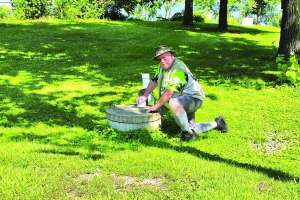
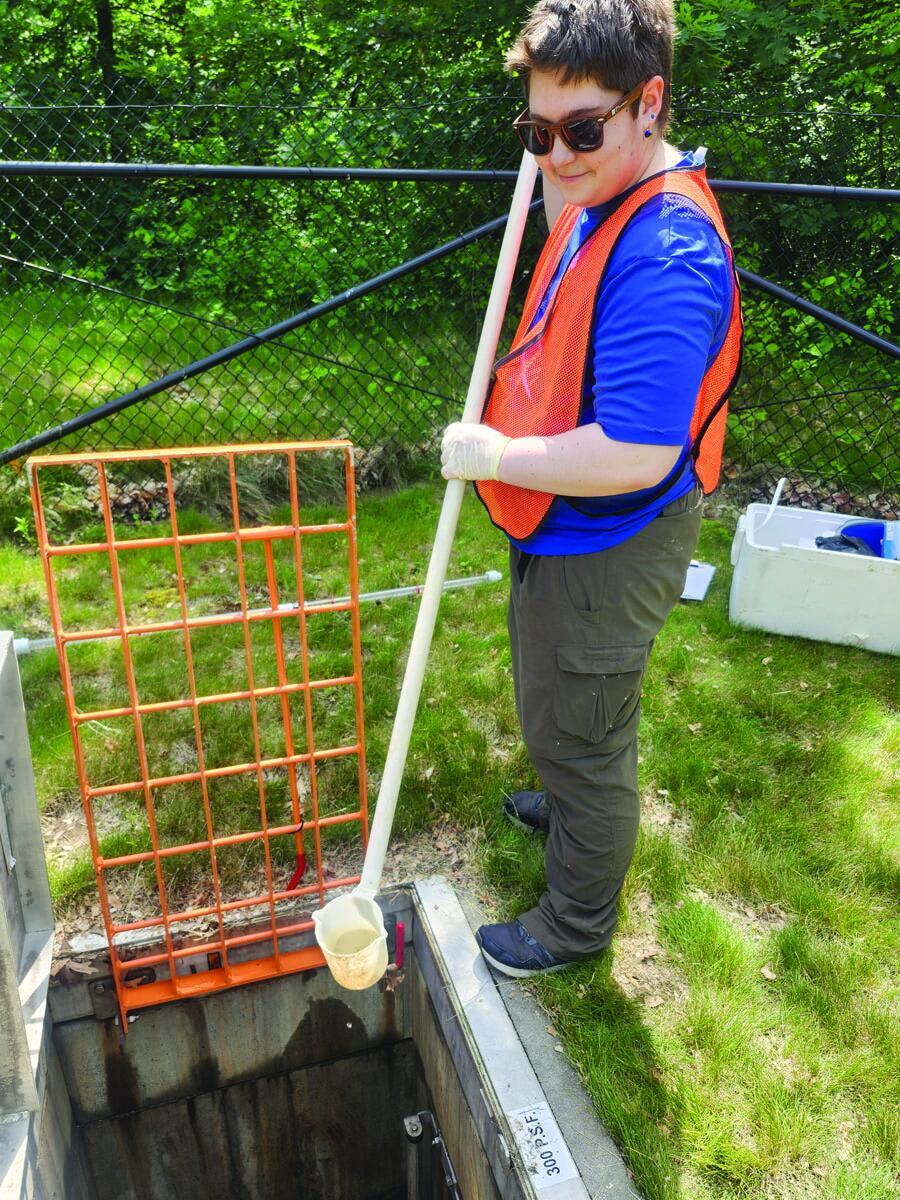
Sample collection can be achieved with a long-handled dipper, sampling probe or a vacuum pump. Be sure to avoid sludge, scum or solids that could impact your sample. If any solids dislodge, wait for them to settle before taking your sample.
Sampling devices must be clean with distilled water between sampling events to prevent cross contamination. If multiple samples are being collected and the sampling device will not be cleaned between sample collections, start collecting samples with the cleanest effluent and move upstream. Fill the bottles full and clearly label the sample container with waterproof markings.
Wear proper personal protective equipment (nitrile gloves) and safety glasses to minimize the chance of contamination and to protect yourself. Use appropriate methods for cleaning and storing tools, equipment and clothing.
The samples collected should be appropriate to meet goals of regulatory compliance or troubleshooting. Documentation must be provided, and the results must be accurate so that the sampling results are defensible and useful in meeting the objectives of the monitoring activity.
Continue reading for free