
It’s not unusual for septic companies to receive emergency calls. But the call Nicki Deines received one day in 2020 was completely out of the ordinary and would soon lead her down the unexpected path of starting a nonprofit.
The mother who called explained she needed urgent service because her daughter had been diagnosed with leukemia, and she was afraid the chemotherapy drugs might disrupt their septic system.
Deines had never heard about this problem but the mother spoke from experience. “Her sister-in-law had passed away from cancer,” Deines says. “Shortly after her funeral, their septic system failed and the contractor diagnosed the problem in the failed leach lines as due to an accumulation of chemotherapy byproducts.”
Deines says there was no way she and her husband would charge the family after what they were going through. They donated pumping services every six months for the two-year duration of the girl’s (successful) treatment.
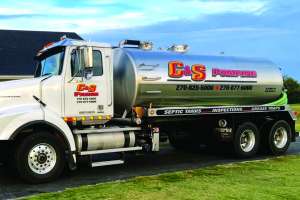
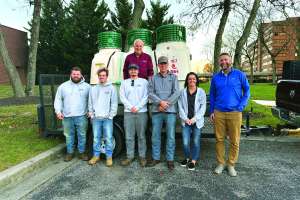
Deines and her husband Mathew are the owners of All-American Septic Pumping & Services in San Diego. They provide septic pumping, inspections and minor repairs, and also do commercial and industrial waste hauling. Their team includes four technicians and one office person.
THE PROBLEM
Deines began doing research. The drugs don’t damage the tanks, she says. “But when a chemotherapy patient uses the restroom, the drugs remain active in their waste for a period of time — I’ve heard everything from 48 hours to two weeks — which disrupts bacterial growth so the bacteria can’t break down solid waste at the expected rate, causing an accumulation of solid material faster than at a typical home.
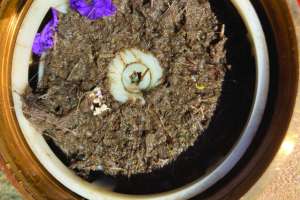
“But then there’s also a byproduct that’s produced. It’s a pink, gooey sludge that gets suspended in the effluent layer and can get pushed out into the leach lines, causing a blockage and affecting the ability of the system to seep wastewater into the ground. The industry solution is to have the tank pumped more frequently.”
But increased pumping frequency can pose a financial hardship to many families already overburdened with the diagnosis, and there are no services available to help them. “I could find housecleaning and yard work services but nothing on septic,” Deines says.
SPARKED AN IDEA
After their experience with this family, Deines says word got around, and over the next four years her company voluntarily helped six other families going through the same thing. Then it struck her how many people were in that same situation.
“That’s how it came to be that we started a nonprofit organization,” she says. The mission: To coordinate free septic pumping by volunteer pumpers for qualifying chemotherapy patients during their treatment period. Deines had a national organization in mind.
In February 2024 she began the laborious process — buying the domain name, applying for 501(c)(3) status, hiring web designers and attorneys, getting insurance, selecting a board, designing a logo. “It’s literally like starting a business except with more red tape,” she says. The process took 18 months, and Pumps for Patients officially launched in August 2025.
Deines also did a lot of research and consulted with septic professionals and wastewater educators to make sure all their information was correct.
The issue of pumping frequency was considered. There’s been no research, Deines says, and it largely depends on frequency of treatment, dosage, inpatient or outpatient status, and how many people live in the house.
Right now they’re estimating three to six months. But a pumper can make a recommendation after assessing the situation — and each one is different. “We had a patient contact us who had gone from pumping every six months to three months and then three weeks. They reached out to us and I had three pumpers step up to donate. One also donated jetting service. It’s those moments where you’re just like, ‘Oh, my gosh.’”
SPREADING THE WORD
The next step was getting the word out to pumpers and patients. Her efforts to find willing pumpers got a huge boost when two social media influencers posted about the program in early 2026. “My email blew up,” Deines says. “One was Sara Heger. I had been picking her brain. And I emailed Dominic from Poor Pumper Society who was very supportive.”
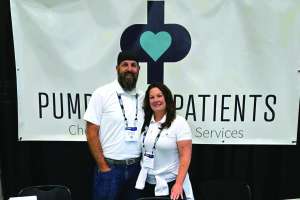
The WWETT Show was also helpful. “It gave us access to people across the country,” she says. “I’ve had state onsite organizations reach out asking for flyers to pass out. One lady said she represented seven cancer clinics in Michigan and wanted to pass out flyers to them.”
To find families who need the service, Deines contacts social workers whose job includes educating patients on resources available to them.
VETTING
Potential recipients go through a thorough vetting process. They must provide personal information, income bracket, diagnosis, treatment plan, oncologist and social worker’s contact information. They are asked questions about their septic system, when it was last serviced and by whom.
After that, a decision is made whether they qualify or not. Nonqualifiers are usually people whose incomes are too high or they haven’t had their system pumped in a long time and need to do that first before reapplying.
Qualified applicants then must provide tax documents and bank statements. “Then I send a diagnosis verification form directly to the oncologist or social worker so I’m getting it from the source,” Deines says. “Once we have all the documentation that proves diagnosis and financial need, I reach out to our Pumping Partners in the area. If I don’t have a volunteer between the last service provider and our Pumping Partners, I resort to Google.”
STATUS
Deines is still tweaking the organizational processes and working out liability releases. “We are dealing with super sensitive information, so we have to make sure our processes are protecting everybody involved,” she says. She is also communicating with Heger about research possibilities.
At this point, no one in the organization is being paid but they do need donations to cover operating expenses. And although they hope pumpers can volunteer their services, that’s not always possible. “That’s a big ask and it’s not everybody’s circumstance,” Deines says. In cases of discounted services, donations cover the difference.
“We want to be very transparent about where the money goes,” Deines says. “We’ve been involved in other organizations that, once we learned where the money was going — corporate retreats and ungodly salaries — we got out. So we come with that lens.”
Deines is exceedingly grateful to the volunteer pumpers. “I’ve dubbed them my ‘army,’” she says. “They’re not just donating or discounting but spreading the word.” At the WWETT Show she met a number of pumpers already doing this on their own. She notes that her organization is available to help them with vetting, if they wish.
Currently Deines is doing the bulk of the work herself, but she’s motivated. “I can’t describe how fulfilling and humbling it is to do this — making sure patients are not stressed about home maintenance when they’re fighting for their lives. We want families who are going through the worst thing they’ve ever experienced to be able to focus on healing and not worry about their septic system failing or having a $17,000 repair at the end. That’s where my fire comes from.”
For more information, visit pumpsforpatients.org.
Continue reading for free