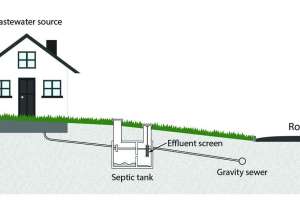
A federal judge ordered a temporary stop to the installation of new septic tanks in the North Indian River Lagoon Watershed in Florida, multiple news outlets reported. Because of concerns for manatees, the Department of Environmental Protection will stop issuing permits for constructing and installing septic systems in the watershed.
The judge agreed that wastewater discharged into the lagoon killed seagrass, a primary food eaten by manatees, leading to the manatees’ harm and death. In the U.S., manatees are classified as a threatened species.
The Florida Department of Environmental Protection asked a federal appeals court to put the injunction on hold while the case is under appeal.
The moratorium, which began on July 17, will be lifted once the State of Florida obtains an “incidental take” permit from the U.S. Fish and Wildlife Services. To receive the permit, Florida must develop a conservation plan regarding manatee protection and habitat management. The judge also ordered the state to perform biomedical assessments and supplemental feeding programs for the manatees.
Minnesota
Stearns County, Minnesota, is offering grants and low-interest loans to homeowners who need to repair or replace a failing septic system, according to a Stearns County news release. Homeowners who own and live on a property and meet income requirements can receive grants of up to $10,000. Ten grants of $10,000 each are available through the Environmental Services Department.
Homeowners of any income level can apply for low-interest loans (3% interest and seven-year terms). Contact Stearns County for more information and an application.
Virginia
House Bill 2671 regarding septic inspections will take effect July 1. The Virginia Realtors Association published several articles outlining the key components of the bill in relation to real estate transactions.
In summary, the legislation sets minimum inspection standards for septic systems as a condition of the sale. Either buyers or sellers can order a septic inspection. Inspectors are required to inspect and report on all readily accessible and openable components. The inspection also includes “any components specified in the operation permit and any vegetation, grading or signs of harmful water entry that may impact septic system function.” Septic inspectors must provide a written report within 10 business days of the inspection.
Michigan
Grand Traverse County, Michigan, adopted new septic regulations that will take effect in 2026, the Traverse Ticker reported. The regulations require a septic evaluation before the sale, transfer or conveyance of properties located within 300 feet of a lake, pond, stream or river. Certified inspectors must perform the evaluations. The new regulations also outline enforcement actions, including fines and citations, and an appeals process.
Grand Traverse County is following the lead of other Michigan counties that require septic inspections associated with real estate transactions. The state of Michigan is the only U.S. state without a statewide septic code.
Wisconsin
Cities in Rock County, Wisconsin, can no longer rely on a clean water law to force property owners to accept city annexation and city sewer and water services, WCLO reported. Cities like Janesville and Beloit used a U.S. water quality law as a loophole to annex properties. The cities argued that running water and sewer into neighboring towns helped maintain federal clean water rules.
However, the Rock County Board adopted an ordinance to prevent outside municipalities from forcing property owners to abandon their septic systems and wells for city services and annexation. Under the County Board’s ruling, cities need to establish agreements with towns for annexation. Towns have the jurisdiction to sign boundary agreements and determine water and sewer infrastructure.
The ruling comes as several towns that border Janesville and Beloit are planning rural subdivisions.
South Carolina
Homeowners in the Lake Wateree Watershed, South Carolina, may be eligible for grant funding to repair or replace a failing septic system. The South Carolina Department of Environmental Services awarded a $199,399 grant to Kershaw County to protect water quality in the Lake Wateree Watershed, WIS TV reported. Homeowners may apply for up to 60% cost-share assistance from the grant program, the Lake Wateree Septic 319 Project. For more information, call 803-451-3679 or visit the Kershaw County website.
Continue reading for free