Approximately 25% of households in the United States have a septic system treating their wastewater, making them an essential part of our wastewater treatment infrastructure.
Federal guidelines and local regulations often recommend or require pumping of septic tanks every 2-5 years, although data suggest 50% of owners do not follow these recommendations. As more and more attention is directed toward the need for proper maintenance, the amount of septage being removed from septic systems is increasing every year. Problems related to septage disposal options are becoming increasingly common. This problem may become more pronounced as more decentralized clustered systems are being installed for small communities.
System types
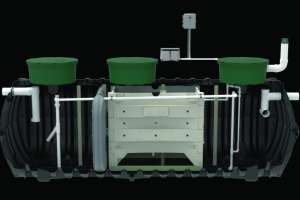
Many small community systems have a septic tank at each home utilizing septic tank effluent gravity and septic tank effluent pump collection options. In a STEG system, each source or group of sources has a watertight septic tank with an effluent screen and an access riser. Effluent flows out of the tank and into a collection sewer by gravity. The collection sewer is typically a plastic pipe about 4 to 8 inches in diameter. Alternatively, effluent may gravity flow to a lift station connected to a pressure sewer system. The piping from the tank to the collection line includes a cleanout installed in an access to grade.
In a STEP system, each wastewater source or group of sources is again fitted with a watertight septic tank. However, in this case, an effluent pump is installed in the outlet end of the tank. The pump injects the clarified effluent into a pressure sewer system. As each STEP pump in the collection systems operates, effluent is progressively moved to the wastewater treatment facility. Both STEG and STEP options require regular septic tank maintenance and a location for septage disposal and treatment. Tank residuals must be pumped out on a requisite basis (ideally, when solids are 25 to 33% of the liquid depth of the tank) and effluent screens should be inspected annually and cleaned as needed.
Disposal limitations
Access to septage treatment is becoming a problem in many areas, but this issue has received relatively little attention. Recently, a study was conducted in Georgia where approximately 40% of homes are served by a septic system. Septage removal and disposal contractors may only legally dispose of domestic septage in three approved ways in Georgia.
The first option is to take the material to a county, municipal or otherwise approved wastewater treatment facility permitted by Georgia Environmental Protection Division where it can be properly treated. The second option is disposal at a permitted separate septage handling facility. The third is via land application at sites with a low potential for public exposure that have been specifically permitted by the EPD for handling septage.
Land with a low potential for public exposure is land that the public uses infrequently. This includes, but is not limited to, agricultural land, forest and a reclamation site located in an unpopulated area. Even though land application is allowed in Georgia rules the requirements related to local approvals result in communities blocking them from being utilized.
Overcapacity
Therefore, this project focused on the other options currently being utilized. They took county-level estimates of the number septic systems along with municipal and regional data collected from wastewater treatment plant facilities. They evaluated the treatment options for septage disposal, the cost of septage treatment and the amount of septage delivered to receiving plants.
The study estimated, conservatively, that Georgia should generate at least 932,000 gpd of septage, but only has capacity to treat 500,000-650,000 gpd. More than 70% of counties in the state do not have municipal treatment options for septage. They also found that increasing the dumping fee for septage disposal at a wastewater treatment lead to a decline of septage delivered. This doesn’t mean that fewer septic systems were pumped so the question remains to where this septage is being disposed of legally or if it is being illegally discharged into centralized sewer systems, or into the environment without treatment.
Possible fixes
Several solutions were discussed in this report which could result in more septage disposal options. Regional land application sites accepting septage from multiple haulers is one example. Communities can also invest in the construction of separate handling facilities to handle septage or WWTP can be designed to treat septage. To ensure there are adequate treatment options for septage, the support of local, state and federal agencies along with user fees will likely be needed. This does not need to all be handled by public institutions. Private operations could be encouraged through financial incentives to develop treatment facilities.
Chemical concerns
Another concerning development in the US is the banning of land application of biosolids and septage. As of 2024, the only state to ban it statewide is Maine, although other states are considering regulatory actions, and some local programs do not allow land application.
The concern in Maine was “forever chemicals”. PFAS can resist heat, water, and oil and have been used in food packaging, nonstick cookware, certain types of firefighting foam, and to make clothes, carpets and furniture resistant to water and stains. They may also be used in certain personal care products such as shampoo, dental floss and makeup. Creating and using these products can allow PFAS to enter our environment and wastewater. PFAS tend to break down very slowly, so they can build up in humans and animals.
They are associated with a range of negative health effects which include certain types of cancer, high cholesterol and reduced vaccine effectiveness. To protect human health and the environment, manufacturers are slowly phasing out the production and use of products containing these chemicals and safer alternatives are being investigated. If biosolids or septage are not land applied the remaining options are incinerating or landfilling. In Maine, the majority will be landfilled or taken out of state due to landfilling costs.
To support sustainable wastewater management in the United States, we need to ensure that there are affordable treatment options to manage the septage from septic systems. From a planning perspective, we need to close the loop on treatment in septic systems including management of the septage removed during pumping.