
In 2015, Randy Cunningham was working as a plumber and electrician for a hospital in West Virginia. His wife Jennifer was director of pharmacy at another hospital. They couldn’t have imagined that buying an 1857 farmhouse would lead them to starting a septic business.
“We needed to get the septic system pumped and the closest person who could come was from Maryland,” Randy explains. “And when he was here, three people stopped and asked him for a card. I looked at my wife and said, ‘I’m buying a truck.’”

They searched online and in March 2016 found a used vacuum truck — a 1995 International DT466 with a 2,000-gallon steel tank. Randy’s twin brother Rodney, who has a hotshot business, drove to Valley Falls, New York, to pick it up, and Jennifer’s stepfather Don Everly, who owned a trucking business, helped Randy learn how to drive it.
Meanwhile, Jennifer worked on licensing and legal requirements as well as setting up bookkeeping and marketing processes. By April, Cunningham Septic Pumping in Bruceton Mills was in business.
BUILDING THE CUSTOMER BASE
The town has a population of only 70 people, and the area is sparsely populated, so the company’s service territory is quite spread out. They typically work within a 50-mile radius but will go 150 miles one way if the need is there. “That wouldn’t be our preference, and we always encourage people to find someone closer, but sometimes that’s not an option,” Jennifer says.
Randy adds, “And when people are having problems, they don’t care.”
The company also became licensed in nearby Pennsylvania. Regulations are somewhat different for each state, Jennifer says. “West Virginia is a little more stringent in their reporting requirements, both at the local health department and also the state DEP (Department of Environmental Protection). Pennsylvania also has paperwork, but it’s not monthly reporting as it is in West Virginia.”

Most of their work is for residential systems, but they also do some commercial work including pumpouts of small onsite treatment plants for schools and housing developments.
Word of mouth has been the company’s most effective marketing tool, but in the beginning they relied on a Facebook page. “I would frequently hang up little tear tabs at post offices, the pizza shop and other businesses,” Jennifer says.
They also paid for Google Ads for a brief period of time. And when someone tells Randy he did a good job, he asks them to leave a rating on Facebook or Google.
Jennifer admits it can be hard to keep up with posting on Facebook. “I was pretty heavy with it for a while but I’m not the biggest social media person,” she says. “I do like their feature that you can create a post and then set it to upload at a future date. So sometimes I sit down and do that for different holidays or things like SepticSmart Week in September. I’ve thought about bringing in our oldest daughter, who’s more savvy with TikTok and Instagram, and letting her handle some of that.”
TIME TO UPGRADE

For six years, Randy continued to work at the hospital while pumping tanks on nights and weekends. “But it got to the point where I had to choose between the two, and I chose to stay in the septic business,” he says. “And things just started clicking.”
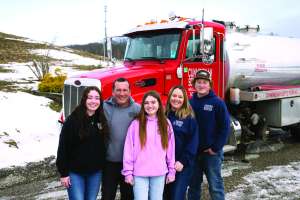
As the company got busier, Randy ended up spending more time in the truck and soon was ready for an upgrade with more features including things like air conditioning, speed and comfort. In 2020, they bought a 2021 Peterbilt built out by Satellite Industries with a 2,500-gallon aluminum tank and a Masport pump.
“The other truck was a good starter truck, but it wasn’t one for the long haul,” Jennifer says. “We kept it for a little while but it really just sat, and a couple years ago an individual purchased it.”
The company works with several dumpsites in the area but primarily uses the Morgantown Utility Board facility in the next county. “They’re very expedient and good,” Randy reports.

Randy takes the vacuum truck to a nearby shop for major problems, but handles minor upkeep and repairs himself. And after years of crawling underneath the greasy truck, sometimes in a foot of snow, the Cunninghams plan to put up a service building on their property in 2026.
Other equipment includes a Crust Buster tank agitator. The company doesn’t currently offer locating services so Randy expects customers to know where their tanks are. About half of them have risers. “I encourage people to get them,” he says. “I tell them to look on the internet. I will also explain how to install them.”
The company doesn’t put customers on maintenance contracts, but Randy advises them how often they should have their systems serviced based on their average use and the number of people in the home. For most people, it’s three to five years. “We just recommend they call us when it’s time, and so far that’s worked out pretty good for us,” Jennifer says.
OFFICE WORK
Jennifer continues to work at her full-time job at the pharmacy while handling the bookwork and marketing for the company. For invoicing, she uses a combination of Excel files and QuickBooks (Intuit). The company prefers that customers pay with cash or check but will process credit cards for businesses who want to pay electronically.

Jennifer also takes care of reporting requirements for the local health departments and the state Department of Environmental Protection. Sales and use tax paperwork is submitted online. She works with an accountant on quarterly taxes.
The company is in the process of implementing Tank Track software for electronic record keeping. “I went to the WWETT show to find a software vendor,” Jennifer says. “It’s fairly new for us, so we’re not optimizing it at this point, but my goal for 2026 is to ramp up the usage of that platform and have Randy move from paper invoicing to using his iPad for electronic invoicing. I’ve had some calls with the company to line up additional training. They’re going to help me through a few of the areas I don’t quite understand.”
WORK HARD, PLAY HARD
Randy says he typically works seven days a week. Some of that is due to the volume of work, and some of it is as a convenience to customers who work during the week. And weekends are prime usage time for their summer campground clients. They also get a fair amount of emergencies, especially during holidays or periods of intense rain.

Randy gets a bit of a break in the winter when it slows down or becomes unsafe to take the truck out, although they do offer snowplowing services. But the slowdown gives him a chance to engage in a favorite activity. “From October to March there’s some form of hunting,” he says. “My goal is to be able to go somewhere at least every other year and hunt something different, but I’ve got to slow down working to be able to do it.”
Weather is one of the company’s biggest challenges year-round, Randy says. “It might be 90 degrees one day, and the next day it’s raining cats and dogs. You just never know what you’re going to get.” Another challenge is the hilly terrain and working at houses located on hillsides. Randy says pulling hoses has made him strong, but Jennifer looks forward to the day they buy a hose reel.
A GOOD FIT
Jennifer says Randy has a personality well suited for the job. “He’s a talker,” she says. “So for him to be able to get out and be around people and have those interactions, he’s a natural fit for it.” Whether he just visits with customers or educates them on their system, people remember him.
Looking to the future, the couple sees a lot of opportunities for growth, but for now they’re just staying the course until they know what involvement their kids might want to have. “Right now we just try to balance work with home life and try to make it home so everybody can sit down and eat dinner together,” Randy says.
Continue reading for free