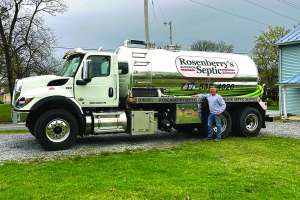

Name and title or job description: William Neidigh, president of Rosenberry’s Septic Services and Keystone Excavation Services.
Business name and location: Rosenberry’s Septic Services and Keystone Excavation Services; Shippensburg, Pennsylvania. The business started in 1946, with the current ownership since 2008.
Age: 55
Years in the industry: 26
Services we offer: Manufacturer of precast septic tanks, dose tanks, holding tanks, drywells and other related products; septic, holding and grease tank pumping and service; septage treatment and disposal facility ownership and operations; septic system repairs; septic system inspections; and septic system soil evaluation, consultation and designs.
Installations of the following systems: On-lot septic systems including elevated sand mounds, Eljen geotextile sand filters, Premier Tech coco biofilters, small flow stream discharge facilities; and other approved alternate septic systems.
Also, we install simplex and duplex lift stations, holding tanks, grease tanks and public sewer lateral connections.
Septic-related product sales include effluent, sewage and grinder pumps and pump packages — Goulds, Liberty, Champion and other pump manufacturers; simplex and duplex grinder pump stations; plastic and concrete tank risers; effluent filters; PVC baffles; PVC pipe and fittings; control panels, electric conduit, wiring and controls; and more.
Association involvement: Active member of the Pennsylvania Septage Management Association and the Pennsylvania Association of Sewage Enforcement Officers, and trainer for the Pennsylvania Association of Sewage Enforcement Officers Academy.
Benefits of belonging to the association: Pennsylvania Septage Management Association: Continuing education and certification. Legislative liaison. Regulatory oversight and connection to Pennsylvania Department of Environmental Protection representatives. New technology and product updates.
Biggest issue facing your association right now: Pennsylvania Code, Title 25, Chapters 71, 72 and 73: major revisions in the planning, permitting and standards for on-lot sewage treatment facilities.
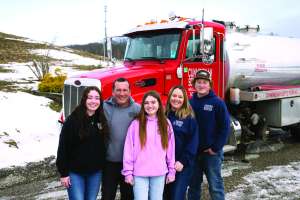
Our crew includes: I have two sons, Jason and Darren, ages 24 and 23, who are involved in all aspects of the business. They are CDL drivers, equipment operators and leaders. They do it all. My wife, Karen, handles the office duties, sales and communication with clients.
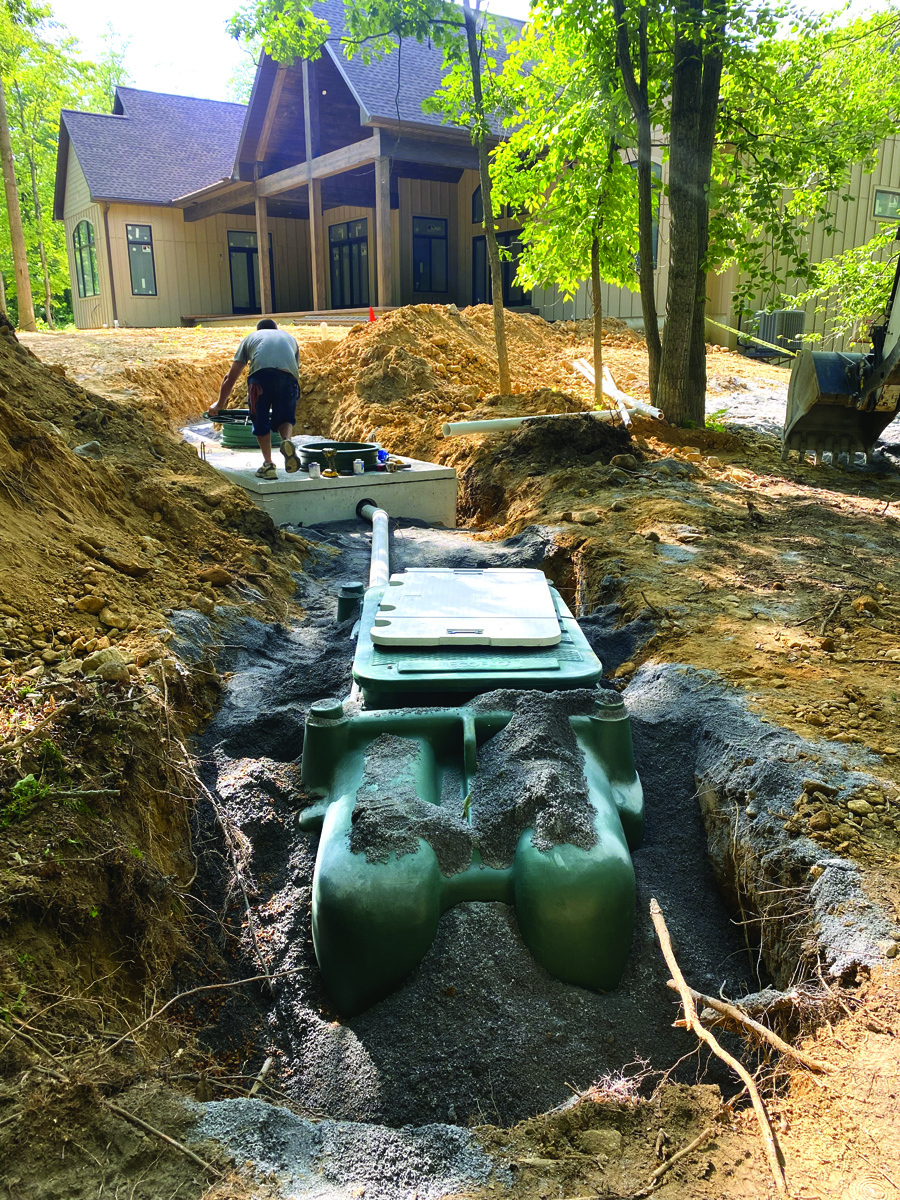
We have 12 employees who are cross-trained to assist with the many services we offer. We offer all our services and product sales year around; however, we typically manufacture our precast products from December through May when installations and repairs tend to slow down. During the spring, summer and fall, the manufacturing team transitions into the excavation side of the business, including installations and repairs. We install tanks year-round, as well as completing repairs and conducting septic system inspections for real estate transactions.
Typical day on the job: Review daily work orders, scheduling and personnel assignments. Conduct site visits for sales and gather necessary information to prepare written installation and repair quotes. Review technicians’ field data and site photographs to prepare final septic system inspection reports. Finalize billing for excavation and septic system installation projects.
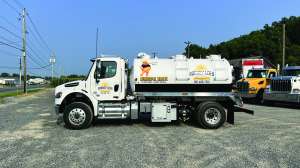
The job I’ll never forget: On our first vac truck project, we spent approximately eight hours attempting to vac out saturated peat moss from a Premier Tech fiberglass biofilter tank. Although a small amount of peat was removed from the tank, the peat moss seemed to be too wet and heavy to vac. Additionally, after hours on the job, we thought the waste tank was full, exacerbating the vac efforts. So, we unnecessarily made a trip to empty the vac truck when it still had ample capacity to complete the job. Turns out we were losing vacuum due to unsealed pipe joints. A cracked pipe section and the pipe intake flange wasn’t sealed properly to the waste tank. After corrective repairs and more vac time, a similar vac job typically takes less than an hour. We can get two tanks of spent peat moss on one load.
My favorite piece of equipment: I enjoy using a sewer camera as an evaluation tool and showing the customer in real time what is causing the problem they are experiencing. As they say, a live video or picture is worth a thousand words. My favorite piece of heavy equipment is any of the excavators we own, from a Bobcat E20 to a Doosan 140.
Most challenging site I’ve worked on: Federal government military base work. The mandatory inspections of the trucks, equipment, materials and proper personnel identification and clearances can cause long delays, making scheduling and project completion time difficult to estimate.
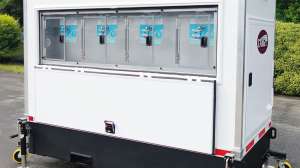
Oops, this didn’t work out as planned: Portable restroom service. We started with 30 units and quickly realized it takes volume to make this service profitable. It was clear we were driving too far and spending too much time servicing 20-30 units that it financially didn’t make sense. In addition, we were in a saturated market and the competition provided good service at competitive rates, so it was difficult to find a competitive edge. We happily sold this segment of the business to a local portable restroom company after approximately two years.
The craziest question or most insightful comment from a customer: A common homeowner misconception is that the septic tank only needs to be pumped every three years since that’s how long it takes the septic tank to fill up.
If I could change one industry regulation, it would be: Pennsylvania currently does not require septic system installers to be licensed. Septic system installers should be trained and licensed, with continuing education required to maintain an installers license.
Best piece of small business advice I’ve heard or came up with: Whatever your task at hand, do it right the first time. You never get a second chance to make a first impression. Educating the customer and demonstrating the value-added services we provide is important.
If I wasn’t working in the waste-water industry, I would like to: I would like to do gold mining in Alaska. Make or break, it would be an adventure.
Crystal ball time – This is my outlook for the wastewater industry: Onsite wastewater treatment technologies will continue to advance and become increasingly complex, requiring specialized training and more frequent system maintenance. Continuing educational opportunities, including hands-on workshops, will be vital for acquiring the skills necessary to provide proper maintenance.
Continue reading for free