
Name and title or job description: Andrew Eichorn, co-owner
Age: 28
Years in the industry: 13
Business name and location: ONE Septic Services, Flushing, Michigan
Services we offer: We are a full-service septic company, offering pumping, installation, inspections and repairs.
Association involvement: National Association of Wastewater Technicians, Michigan Septic Trade Association. We joined both organizations when we started our company in 2024.
Benefits of belonging to the association: The biggest benefit from being members of the Michigan Septic Tank Association is the ongoing education they provide. The association hosts annual continuing education classes that are directly relevant to the work we do every day. We are able to take classes that easily meet the continuing education requirements of the Michigan Department of Environment, Great Lakes, and Energy. We plan our schedule around the annual conference. The topics are current, practical, and often focused on new technologies, changing regulations and industry best practices. It gives us an opportunity to learn from other professionals in the industry and stay on the leading edge of developments that ultimately help us better serve our customers.
NAWT gives us the opportunity to stay connected to the septic industry on a national level. Through the organization, we’re able to learn about industry practices from around the country, understand the challenges contractors are facing in different regions and stay informed about regulatory and legislative developments affecting onsite wastewater systems. It provides a broader perspective on the industry and helps us understand where the septic trade is heading, not just in Michigan, but across the nation.
Biggest issue facing your association right now: One of the biggest challenges facing the onsite wastewater industry is the growing need for public education and awareness. Many homeowners don’t fully understand how their septic systems work or the importance of proper maintenance, which can lead to costly failures and unplanned expenses. Continued education for both homeowners and industry professionals remains important as regulations and technologies evolve.
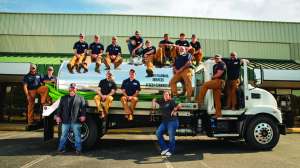
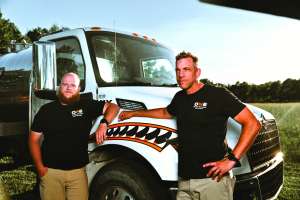
Our crew includes: ONE Septic Services is a veteran-owned, family-operated company owned by Kurt Obermeyer and myself, Andrew Eichorn.
I serve as chief operating officer and oversee the company’s field operations, project execution and technical services. With over 13 years of experience in septic system design, installation, diagnostics and repairs, I am the company’s subject matter expert on all aspects of onsite wastewater systems. I am also a plumber and have significant training and experience in electrical systems, providing a well-rounded understanding of the many components involved in modern septic installations and repairs.
Kurt serves as chief financial officer, overseeing the company’s financial planning, business strategy and administrative operations. A veteran of the United States Navy, Kurt served as a naval aviator before beginning a successful career as an airline pilot, where he currently flies for a major commercial carrier. As a co-owner of ONE Septic Services, he remains actively involved in the business and works alongside the team on his days off.
Recently joining the company is Stockton Obermeyer, Kurt’s son, who served as an U.S. Army infantry officer before returning home to become part of the family business. He brings leadership, project management expertise and a service-minded approach to his work with customers and the community.
Josh Vaughan has become an invaluable member of the team through his exceptional ability to learn, adapt and master new projects and responsibilities. His versatility and strong work ethic allow him to contribute across a wide range of field operations and help ensure projects are completed efficiently and to a high standard.
Matt Lipsky serves as the company’s primary driver and logistics specialist. Drawing on more than three decades of professional driving experience, Matt plays a critical role in coordinating deliveries, transporting equipment and ensuring materials arrive safely and efficiently at job sites throughout the region.
Typical day on the job: When the company started, it was just us handling everything ourselves. As the company has grown, my role has shifted more toward meeting with customers, diagnosing septic problems, evaluating sites for repairs and new installations, preparing estimates and managing projects in the field.
I’m also our primary heavy equipment operator, so even though I spend a lot of time working with customers and managing jobs, I’m still in an excavator on installation sites. A typical day might include meeting with new customers, troubleshooting a failing septic system, checking on active projects, operating equipment and helping the crew work through challenges that come up in the field.
The job I’ll never forget: We received an emergency call once on Thanksgiving weekend from a family at their cottage about two hours north of our service area. They had a septic backup with a house full of family visiting for the holiday and had no idea where their septic tank was located.
When we arrived, the homeowner showed us what he believed was the septic tank access, but it turned out to be only a cleanout. We spent more than an hour locating and uncovering the actual tank. Between the long drive, the low temperatures, the darkness and the challenge of finding the septic tank, it turned into quite an adventure.
What made the job memorable, though, was the family. They were incredibly good people and a lot of fun to work for. As we searched for the tank and worked through the problem, they started jokingly chanting “Andrew and Kurt! Andrew and Kurt!” as encouragement. It definitely kept everyone’s spirits up on a cold night and gave us a few laughs along the way.
By the time we located the tank, completed the pumping, cleaned everything up and made the two-hour drive home, we didn’t get back until around midnight. What stands out most wasn’t the long day, though, it was being able to help a family salvage their holiday gathering when they were in a difficult situation and had run out of options.
A few days later, the homeowner left us a review saying we were the only company that answered the phone and showed interest in helping. Those are the kinds of jobs that remind you why customer service matters and why sometimes doing the extra work is worth it.
My favorite piece of equipment: Our favorite tool is an RV camper hose. It’s not a specialized septic industry tool, and it wasn’t necessarily intended for the way we use it, but we find ourselves reaching for it almost daily. We use it to help clear clogged pipes coming from the house, and for such a simple piece of equipment, it saves us an incredible amount of time.
Most challenging site I’ve worked on: One of the most challenging sites I’ve worked on involved a septic tank that nobody could locate. The homeowner had no records of the system, and after spending a considerable amount of time probing and investigating the property, we still hadn’t found it.
Eventually, we used a flushable sonar locating device to trace the sewer line from the house. To our surprise, the tank ended up being 5 feet below grade, far deeper than we would normally expect to find a residential septic tank.
Finding the tank was only half the battle. Once we located it, we spent about 30 minutes digging before realizing we needed to bring in the excavator to finish the dig. What started as a routine pumping appointment turned into a lengthy troubleshooting and excavation project.
Oops, this didn’t work out as planned: A challenging aspect of the septic industry is managing customer expectations and helping homeowners understand the limitations of what we can do in an emergency. One winter call, we drove more than an hour outside our normal service area after dark to help a homeowner with a septic backup. The weather was terrible, the ground was frozen solid, and it took us nearly an hour and a half just to dig down to the tank.
We were able to get the tank pumped and the system functioning again, but it was clear that the drainfield had failed and would need to be replaced in the spring. We explained that pumping the tank was only a temporary measure and that the problems would likely return within a short period of time.
The homeowner was very happy that night because the immediate problem was solved. However, when the system began experiencing issues again several months later, she was frustrated, even though the outcome had been discussed from the beginning. Experiences like that have taught us that customer education is just as important as technical work. No matter how well you explain a failing system, it can be difficult for homeowners to fully appreciate the severity of the situation when the system appears to be working again after an emergency service call.
The craziest question or most insightful comment from a customer: One of the most memorable comments we’ve received came from a customer who called us because he thought he had a septic-related odor in his home. After inspecting the septic system, I determined that the septic system was functioning properly. Rather than stopping there, I continued investigating the source of the odor and discovered it was actually a propane leak inside the home.
What made the situation even more remarkable was that the gas company was unable to locate the source of the leak. A representative from the gas company called to discuss the findings and thanked us for the problem-solving and persistence in tracking down the source of the odor.
The customer later left a review saying we had “literally saved our lives” and that we went far beyond what would normally be expected from a septic contractor. While we certainly don’t take credit for being heroes, that experience reinforced something we strongly believe: taking the time to help customers solve their problem (even when it turns out not to be a septic problem) is simply the right thing to do.
Comments like that mean a lot to us because they show that customers notice when you genuinely care about helping them, not just completing a service call.
If I could change one industry regulation, it would be: We’re generally very happy with EGLE and appreciate the partnership and support they provide to the industry.
One very practical improvement would be for every county to move toward searchable digital records for septic systems. Having easy access to historical septic information, permits and site records would save time for contractors, help homeowners better understand their systems and make troubleshooting and future repairs much more efficient.
Best piece of small business advice I’ve heard or came up with: One of the best pieces of small business advice we’ve followed comes from Kurt: Don’t try to compete with the biggest companies in the industry before you’re ready. That’s often what causes businesses to overextend themselves financially. Equipment only pays for itself when it’s being used, so we focus on making smart purchases based on real demand rather than trying to look bigger than we are.
Just as important, customer service is everything. You may not be able to match the size of the largest company in your area, but you can absolutely outperform them with white-glove customer service. Spending time with our customers, communicating well and doing what we say we’re going to do builds trust and satisfaction with our customers.
Our philosophy is simple: Maintain strong cash reserves and provide the highest level of customer service in our market. That approach has allowed us to grow steadily, remain financially stable and establish a presence alongside many larger and more established companies in our area.
If I wasn’t working in the wastewater industry, I would like to: Outside of work, I enjoy spending time with my wife and two children and making the most of Michigan’s outdoors. Depending on the season, you’ll find me hunting, fishing, riding snowmobiles, riding motorcycles or golfing. I’ve always enjoyed being outdoors and value the time I can spend with family and friends doing the activities I love.
Crystal ball time – This is my outlook for the wastewater industry: Customers and homebuyers are becoming more aware of the importance of the health of their septic system. It is no longer something many homebuyers will take a chance with when buying a home. Conducting septic inspections as a part of the sale of a home is becoming more routine for us.
Additionally, septic systems are becoming more advanced, regulations continue to evolve and homeowners are expecting a higher level of service and expertise than ever before.
One thing I hope continues is the emphasis on education, both for industry professionals and for homeowners. Better-informed contractors lead to better installations and repairs, while better-informed homeowners are more likely to properly maintain their systems.
I also think technology will continue to play a larger role, whether that’s improved diagnostic tools, more advanced treatment systems or better ways to communicate with customers. At the end of the day, though, our industry will always be a people business. The companies that combine technical expertise with professionalism, honesty and great customer service will be the ones that continue to succeed.
Continue reading for free