
Virgil Elvis founded Elvis Service Company as a plumbing business in 1956. Septic installation and repair followed, then pumping. Over time, septic pumping opened another door: grease trap service using related pumping expertise and equipment.
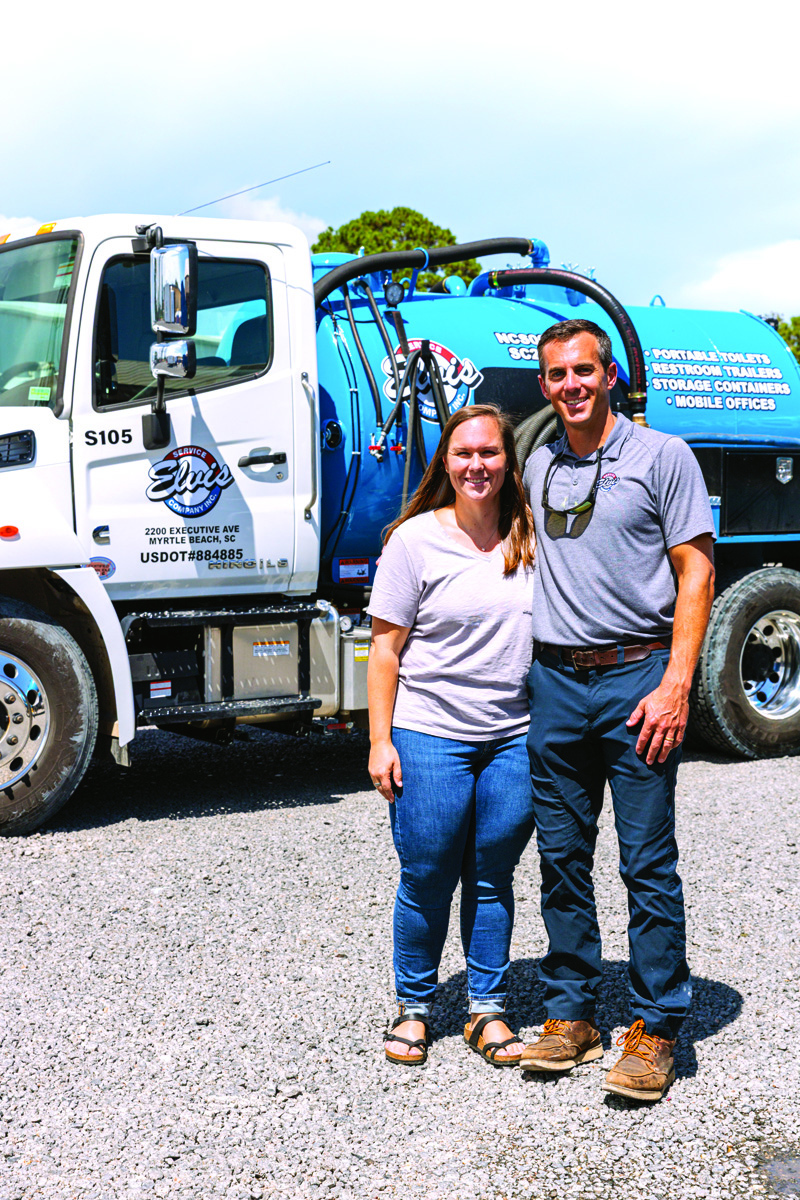
Today, the third-generation family business employs approximately 50 people in Myrtle Beach, South Carolina. Morgan Ardis, née Elvis, and her brother-in-law, Matthew Haselden, oversee day-to-day operations. Portable sanitation remains the company’s largest service line, followed by grease trap pumping by service volume. Elvis Recycling, which processes used cooking oil into yellow grease for resale, ranks third in revenue.
Pumper spoke with Matthew and Morgan about grease pumping, used cooking oil recycling and the equipment supporting those services.
Pumper: When did Elvis begin collecting and processing used cooking oil, and what opportunity did you see?
Matthew Haselden: We started this back in 2012. I was working in purchasing with a plastics recycler and began seeing the value in recyclable materials. Phil Elvis, Morgan’s father, had seen larger companies providing the service for years, but was skeptical because of the unknowns.
When Morgan and I came on board, we began with our closest grease trap customers. We had several unused portable toilet service trucks and some tanks for processing. We entered slowly, a few hundred gallons per month, one customer at a time. I would drive the 25-year-old portable toilet service truck once a week, knock on doors while pumping and try to gain new customers. Morgan was busy on the back end getting our software in line to organize and pay customers for the oil we picked up.
We were blessed enough that God put the right people in our life at the right time, connecting with end users and forming relationships up and down the supply chain.
Pumper: How do you separate the different types of grease your crews handle?
Morgan Ardis: We have what we call yellow grease and brown grease. Brown grease is from our grease trap accounts, and we have to pay to dispose of that, so we charge the customer. Yellow grease is used fryer oil. We pay our customers for that, and it can be used for biofuel.
Yellow grease falls under Elvis Recycling, with dedicated trucks and routes. The exterior grease trap, interior grease and septic crews also operate separately. We don’t mix those trucks. They’re all separate.
Pumper: Walk us through the used cooking oil process.
Morgan Ardis: We schedule pickup routes based on how quickly each account generates oil. Some stops may be serviced about every four weeks while high-volume accounts can require weekly pickups during the busy summer season. We use sludge sticks to measure how much of each pickup is oil and how much is water before pumping it into the truck.
At our Myrtle Beach plant, hot water helps separate oil from water while food debris settles out. We have a guy who works at the plant; that’s all he does. We clean it, get it down to the specific specs and sell it to the broker. Tankers come to the plant, and we load them from there.
Pumper: How does excess water affect the economics and efficiency of a used cooking oil route?
Morgan Ardis: The challenge is that we pay restaurants based on the amount of oil we collect, while we also have to pay to dispose of unwanted water. Early in the recycling operation, we tracked stops in Excel and paid accounts solely on the gallons collected. If you picked up 100 gallons of oil and 200 gallons of water, you weren’t getting affected by that.
If you’ve only got 1,500 gallons and a couple of hundred gallons are water, that can really mess up your route due to capacity issues. That was one of our biggest hurdles. Later, we adopted a program that tracks oil and water content and can reduce the per-gallon payment when water exceeds a certain threshold.
Pumper: How have rising brown-grease disposal costs and fewer disposal options affected the business?
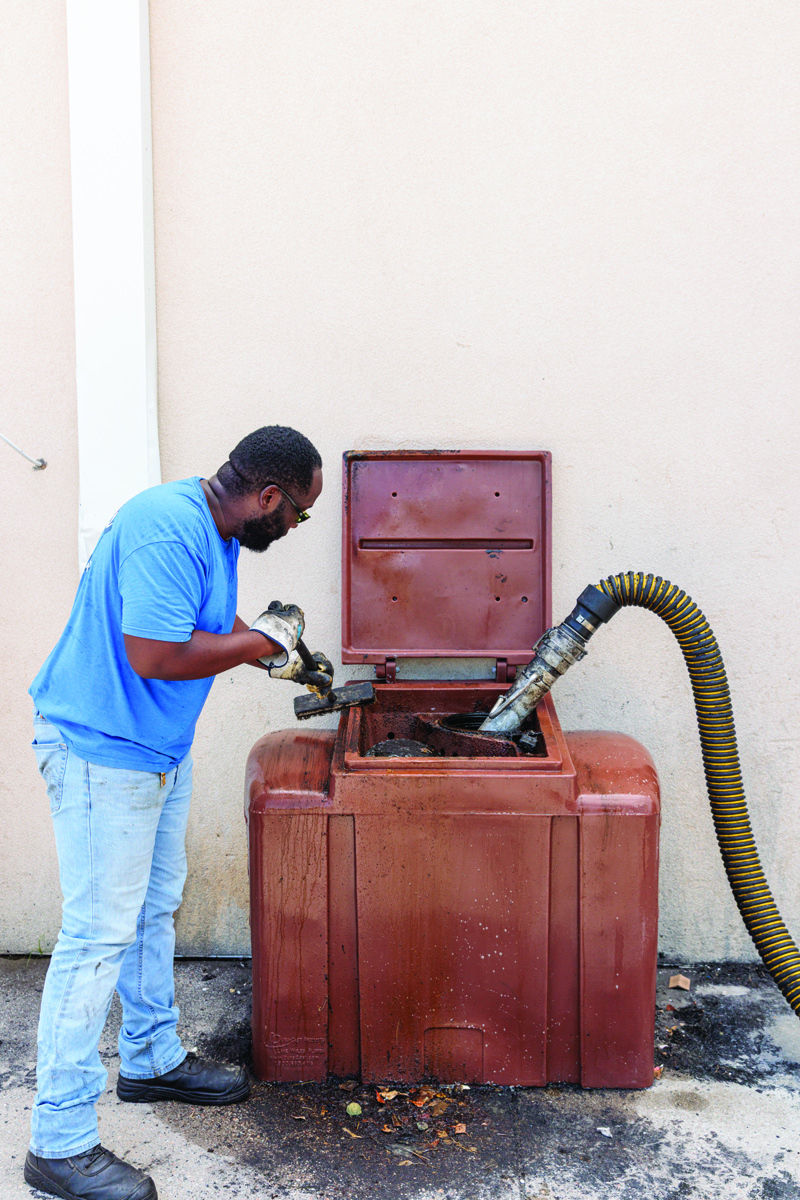
Morgan Ardis: That has been one of our biggest challenges, disposing of the brown grease. A lot of people honestly don’t want to take it. Sometimes you have to take it a longer distance, and pay more per gallon.
It’s also crucial to keep a city running. Someone has to take it because if you don’t do it, it will overflow and end up in your sewer system, and you have a lot bigger problems. We’ve looked at polymer treatment options that could potentially make the material easier to dispose of, but that is still preliminary and not something we’re doing now.
Pumper: How do exterior and interior grease traps differ in size, service frequency and equipment?
Morgan Ardis: Exterior grease interceptors are commonly around 1,000 to 1,500 gallons, although some customers have multiple tanks or larger systems. We have some restaurants that can go once a year and some that are pumped weekly. Since we are heavily seasonal, we have quite a bit of fluctuation in frequencies throughout the year.
Interior traps are often 25 to 50 gallons, and crews cannot always drag a conventional vacuum hose through a restaurant. We use our ProVac (Westmoor Ltd.) a lot — a little mini portable pump that we hook onto the liftgate and roll in to pump those interior grease traps. A separate crew handles that work and drain cleaning.
Pumper: When a restaurant has an overflow or blockage, how do you determine where the problem is?
Morgan Ardis: It’s kind of a puzzle. You work backward. If someone says it’s overflowing inside the restaurant, you know there may be a blockage between the restaurant and the grease trap. If they say it’s overflowing in the parking lot, then you know it’s getting past the grease trap and the blockage may be farther downstream.
Sometimes pumping alone will take care of the problem, but a lot of times you have to clear the blockage with a jetter and then pump it out. It just depends on the scenario.
Pumper: How has your jetting equipment evolved to help crews handle those blockages?
Matthew Haselden: We began with a Harben jetter back in 2013. We would get calls for backed-up systems all the time, both grease and sewer. We would dispatch the pump truck and oftentimes not be able to resolve the customers’ issues. This was not acceptable for us.
So, we invested in a 4,500 psi Harben jetter. This way we could make sure we could resolve any backup issues that customers had, and not tell them, ‘Sorry, you will have to call a plumber to bring a jetter.’ We wanted to be sure that when we left, the job was complete and the customer was flowing.
We have since purchased another Harben jetter, several smaller interior jetters for smaller drains, cable machines and a sewer camera to provide better feedback for customers with damages inside their pipes.
Pumper: Beyond grease work, what septic and storm-drain services does Elvis provide?
Matthew Haselden: We provide residential septic pumping and jetting. Also septic repairs to replace tanks and field-line drainage systems. Storm drain cleaning is a great business because oftentimes it is not urgent; you have several days of a window to schedule the projects. They are often several hours long and higher revenue than normal septic and grease trap pumping.
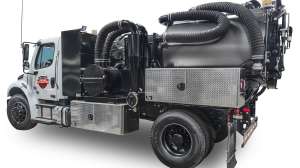
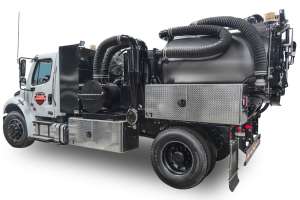
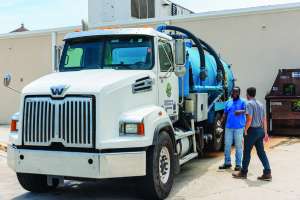
Our equipment includes a 2017 Western Star 4700SD with a Keith Huber 3,500-gallon vac system. On the septic side, we operate a 2024 Hino L7 and a 2022 Freightliner M2106, each with a 2,500-gallon Integrity Tank system.
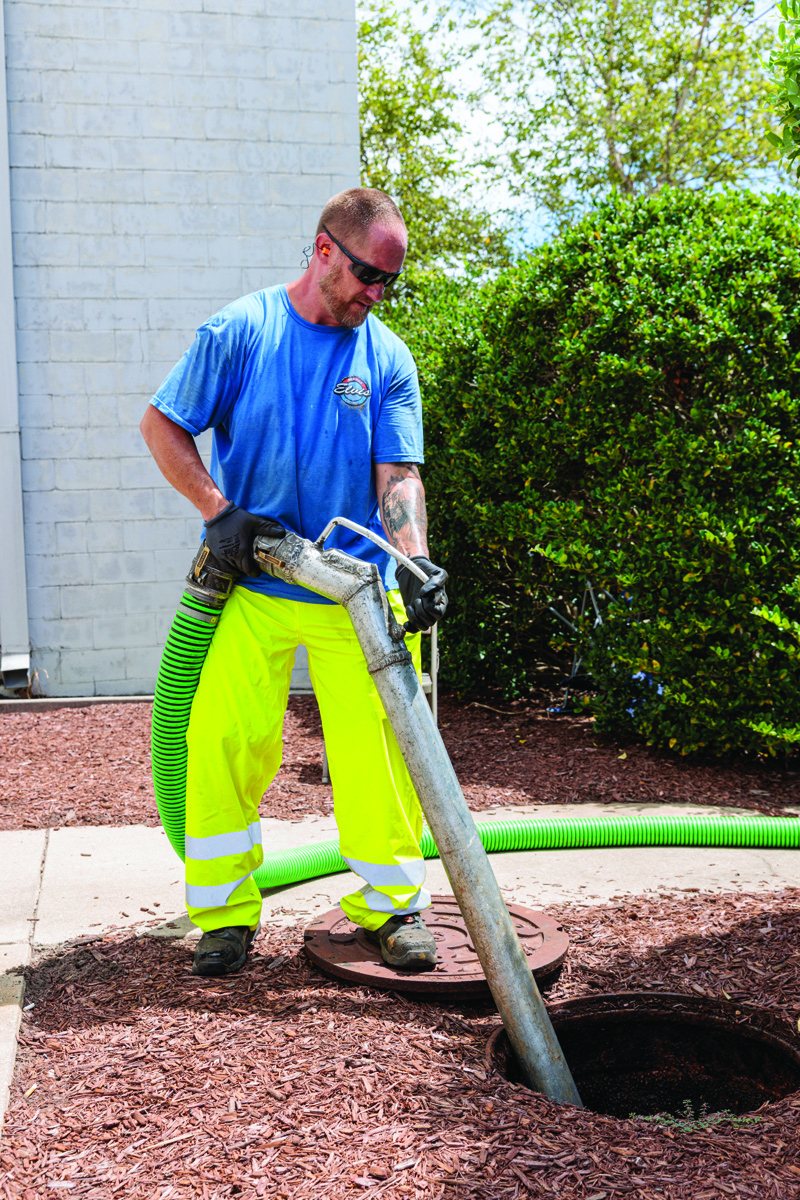
We moved over to operating all blower pumps on septic, grease and vac trucks. We only use rotary vane pumps on toilet trucks now. This makes pumping a much easier and quicker process. And the pumps last much longer without as much maintenance.
Pumper: How did existing grease trap experience help Elvis move into used cooking oil recycling?
Morgan Ardis: If we didn’t do grease traps, I wouldn’t want to jump right into it. But we had already dealt with the brown grease, so that kind of helped segue into the yellow grease. You do things differently, but at the end of the day you’re still pumping a very similar product.
We felt like there was a good market for it. We already had pump trucks and what we call blow-off tanks, where the material can settle before processing. We had worked through all of that for years, and that gave us a lot of insight into what that looks like with the other stuff.
Pumper: What has the used cooking oil recycling business taught you about diversification?
Matthew Haselden: To be able to diversify and provide multiple services to your customers is invaluable. It solidifies your relationships. Build trust as long as you can back up the additional products and services.
It is always good to grow slowly. Take your time. And don’t overcommit. But when you diversify, you become much more valuable to your existing customer base. And oftentimes, you can utilize the same employees for different types of work. So when one area is slow, you can shift over and focus on a different area.
Pumper: What has working in pumping and waste services taught you about the business?
Morgan Ardis: It’s definitely not glamorous. Growing up, we used to get made fun of. Our family had a porta potty business. It went from getting made fun of when you’re younger to really being a blessing to our family. It’s obviously a necessity for everyone. It took a long time to get there, but it’s cool to see where we’ve come.
Continue reading for free