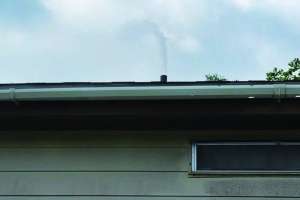

Odor is one of the most common complaints regarding onsite wastewater treatment systems. We all know that natural anaerobic digestion produces some gases that most do not find pleasant.
Onsite odors outside a home or business are particularly annoying when owners are trying to enjoy their property, and at commercial properties they can create concerns with the public. Onsite or sewer gas odors are not typically found in high enough concentrations to be dangerous but that doesn’t mean they aren’t a nuisance.
The gases produced during anaerobic digestion in a septic tank have the following smells:
- Hydrogen sulfide smells like rotten eggs.
- Ammonia has a sharp, pungent odor and smells like a chemical
or sometimes like old urine, or heavy sweat. - Volatile organic compounds like mercaptans smell like rotting cabbage or garlic as they are sulfur compounds.
- VOCs like amines smell like rotting or dead fish.
- Methane and carbon dioxide have no smell.
You may also smell a more chemical odor, which can be related to ammonia, but can also stem from the use of products in the home or business. If you notice a sour odor, it is often related to low acidic pH conditions due to fatty acids such as the smell from a grease interceptor.
Diagnosing the source
During a site visit, start by evaluating the presence of odor as you approach the system and walk around the property. There should be no strong odors near the system if the venting system is operating properly and there are no breakouts.
If odors are detected, determine the source by checking for missing caps on inspection ports or damaged lids or risers. Check for any indication of leaks around or above the system. Also check the roof vent location, prevailing winds and atmospheric pressure as these factors can contribute to odor issues.
It can also be useful to perform a smoke test. A smoke test uses a specialized blower and nontoxic smoke to pressurize a home’s drain, waste and vent system and can also identify leaking collection lines and septic components. Wherever smoke escapes — such as through cracks in pipes, risers, faulty wax rings, dry P-traps or disconnected vent lines — it visually pinpoints the exact source of hidden sewer gas odors.
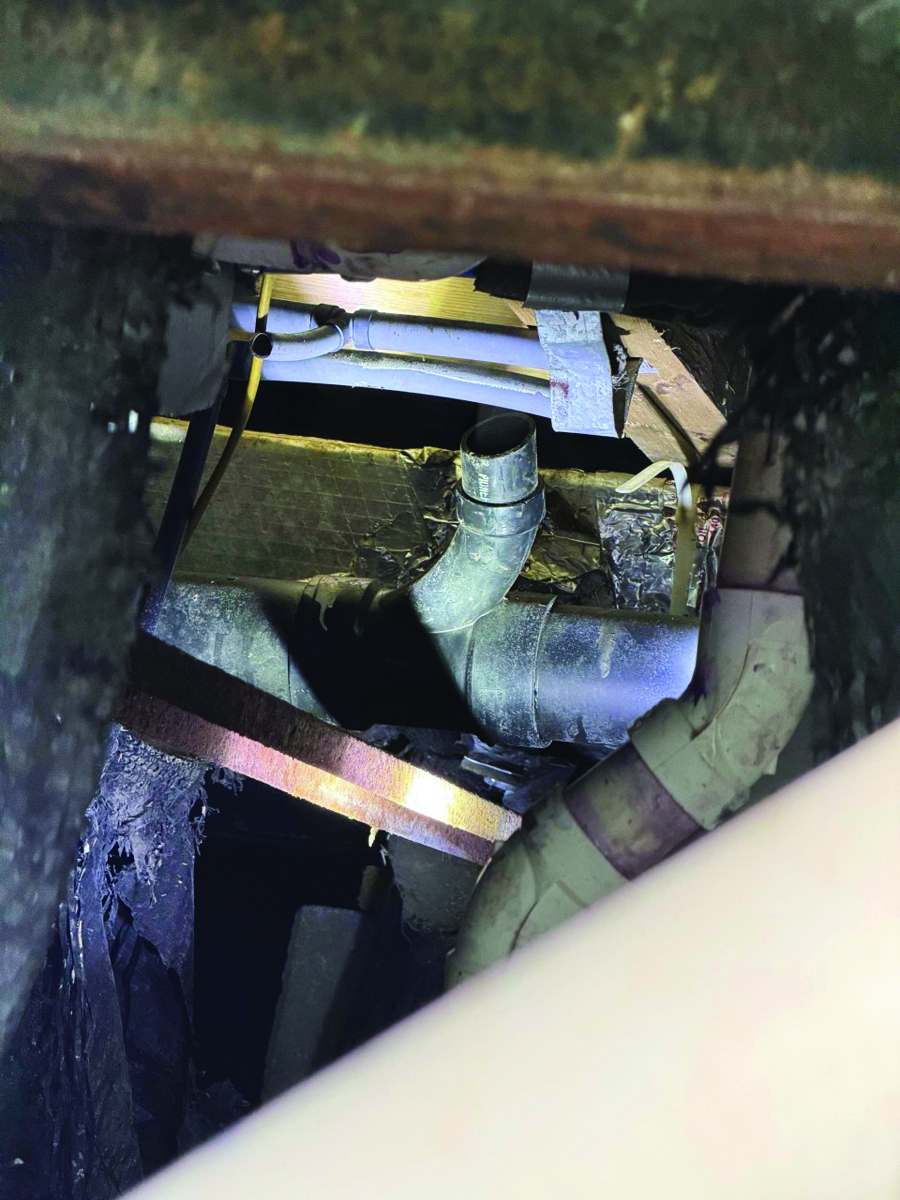
Below are the steps in conducting a smoke test:
- Before starting a test, you want to confirm that within the home/business, all the traps have water in them or the smoke will rapidly escape through dry traps and into the structure.
- Set up the smoke blower: This requires a nontoxic smoke generator or smoke candles. Position a high-volume, low-pressure blower over a system access point (typically the house cleanout or tank inlet/riser). Use a flexible duct adapter or sandbag ring, or even a towel/rag to create a tight seal around the opening. Typically, a 30- or 60-second candle will be used, which creates enough smoke to check a residential or small commercial system.
- Start the blower and introduce nontoxic diagnostic smoke into the air stream. Ensure the smoke source is free of open-flame hazards near sewer gases (methane).
- Allow the blower to push smoke through the sewer lines, tank headspace and soil absorption system. Smoke should normally exit out of the main plumbing stack vent above the roofline, confirming the line is clear and charged.
- Walk the system layout looking for escaping smoke:
- Indoors: Check around toilet bases, under sink cabinets, traps and fixtures.
- Outdoors: Look for smoke emerging from the ground over the building sewer, tank covers, distribution box and the soil treatment area.
- Develop a plan to remedy based on the results.
If the property has an aerobic treatment unit, the aerobic microbial treatment processes may have a mild, musty, aerobic smell. However, the odor should not be a strong anaerobic odor. If odors are detected, determine the source by checking for damaged lids and risers. Further evaluation will be required to determine the actual cause of the odor. Some cleaning products used in the home may cause some odors.
Gas exiting plumbing stack
Odors near the house can simply be caused by the wind pattern around the building. If the yard in general smells of onsite or sewer gas, it may be the plumbing vent pipe on the structure or a neighbor’s structure.
Oftentimes vents simply need to be extended. Properties located in valleys, forested areas or low areas may not have appropriate wind patterns to carry the odors away from the living areas and the yard. As the wind blows over the house, the air currents that are supposed to carry the gases up and away can instead carry the sewer gas down into the yard. Extending the vent pipe can help diffuse the odors, carrying them away from the yard.
Carbon filters can also be placed on the top of the vent to help control odor. The filters do need to be changed regularly (typically annually) to be effective. It is important that these filters do not obstruct the flow of air. Also, in cold climates, these filters can collect moisture in the winter and freeze, which will cause onsite odors in the building; so they are typically removed during the cold season.
In home or business
Inside the home, odors are typically a plumbing-related problem. Some of the most common leak points are a failed wax ring seal or loose closet flange bolts on toilets. Another common issue is a dry P-trap (water evaporated) or missing vent lines. Also, if they have a failing mechanical air admittance valve (AAV/cheater vent) or cracked vent pipe they can have leaks inside cabinets and walls. If a sewage ejector pump is present, the seals should be checked as they can fail and release gas into the home. Certainly, if they have had backups inside the home or in a crawl space under the home these can be the source of odor as well.
Escaping by tanks
Septic tanks are designed to vent back through the plumbing stack. The gases may not be allowed to vent properly if the building sewer lines are clogged or holding wastewater. By blowing the smoke in at the inlet of the septic tank, you will determine if it is venting properly.
You may also see that gases are leaking out riser lids of septic or dosing tanks. If these tanks are not venting properly you may need to camera the line from the home to the tank. Occasionally tanks may have goosenecks to vent by the onsite tank, which will allow gases to escape naturally. This will create odor in the yard and can be mitigated by venting through a biofilter or installing a carbon filter.
Most tank lids have a rubber seal or butyl seal which helps keep odors in the tank; these can get damaged over time and need replacement. A thin layer of mulch can be placed over lids to absorb some of the odor, but the lid should not be covered with soil as the tank is maintained by having access at grade. Inspection pipes should have tight-fitting covers that if damaged can release gases.
Near the soil treatment area
If strong odors are escaping from the soil treatment area, it can indicate a problem with that specific part of the system. Commonly you will be able to identify broken pipes, leaking access points or severe soil preferential flow.
Some treatment areas and regulations require vent pipes in specific applications. These may be a source of odors as well. All inspection pipes should be checked to make sure the pipes are not broken and that they are covered with a secure cap. A visual inspection of the entire area should be conducted to determine if there are any wet or spongy soil areas indicating that sewage is coming to the surface. If any of these conditions are found, humans and animals can encounter sewage. This is considered a public health threat and must be corrected immediately.
Continue reading for free