
A biological approach to FOG management at medical center
Problem: At Hardin Medical Center in Savannah, Tennessee, FOG had become a persistent maintenance challenge. Severe buildup and odors in the lift station and grease trap contributed to recurring blockages, frequent cleaning, pump issues and costly downtime.
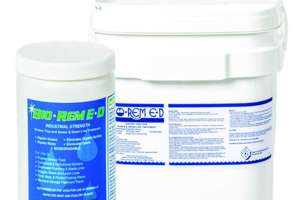
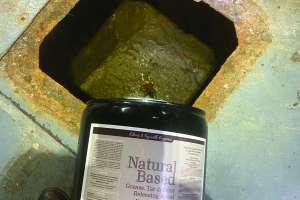
Solution: Following an onsite assessment, a proactive FOG management program was introduced. The approach incorporated automatic biological feeders, regularly scheduled bio packs, Natural Based Grease, Tar & Odor Releasing Agent from Culleoka Company and an air diffuser to increase aeration and support biological activity within the system.
Result: During the initial treatment period, crews observed a significant change. The dense, compacted grease mat began breaking apart and transitioning into a more manageable slurry. Increased aeration, combined with ongoing biological treatment, helped create conditions favorable to the continued breakdown of organic waste and FOG. Rather than treating the initial improvement as a one-time solution, Hardin Medical Center incorporated the program into its preventive maintenance routine. Nearly 11 months later, the program remains in place. Routine service by the maintenance crew, along with onsite inspections by technical personnel, continues to show progress in managing grease accumulation and odor. 855-777-6246; www.culleokacompany.com

Grease interceptor modules reduce FOG at beachfront resort
Problem: A world-class beachfront resort in Aruba was experiencing significant hydrogen sulfide odors from two grease interceptors, including one serving an oceanfront restaurant. Frequent pumping due to FOG accumulation increased maintenance costs and disrupted the guest experience. The resort wanted to eliminate odor complaints while significantly reducing pumping and maintenance requirements.
Solution: IMET Corporation installed IMET Grease Interceptor Modules directly into the resort’s existing grease interceptors. Installation was completed in under two hours, required no major infrastructure changes, causing minimal disruption. Powered by a quiet, energy-efficient air pump, the system utilizes engineered bioactive porous media to cultivate and protect bacterial colonies that provide biological pretreatment of FOG and organic waste while helping mitigate hydrogen sulfide odors. The system requires very little ongoing maintenance. Modules have no moving parts, limiting routine maintenance to quarterly air pump filter service and annual diaphragm replacement.
Result: Within the first day, the FOG cake was no longer present in the second and third chambers where the modules were installed, with only a thin layer of grease remaining in the third chamber. Since installation, the resort has received no further guest complaints related to odors and has virtually eliminated pump truck service except for removal of trash and nonbiodegradable debris. Downstream lines have remained free of FOG buildup as the IMET IGM continuously seeds the wastewater with aerobic bacteria, helping keep downstream piping clean. The systems were installed in 2019 and have now been operating successfully at the resort for seven years. 440-799-3135; www.imet.net

Company cuts disposal trips and expands daily capacity
Problem: Carolina Septic of Kernersville, North Carolina, was servicing grease traps with a conventional pumper truck and making as many as three to four trips per day to its wastewater treatment facility. Disposal distance, unloading delays, restricted receiving hours and rising tipping fees limited route capacity. The company averaged about eight customers per day while fuel use, driver time and truck wear increased with every disposal run.
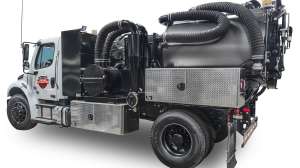
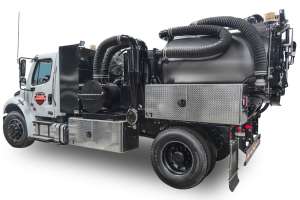
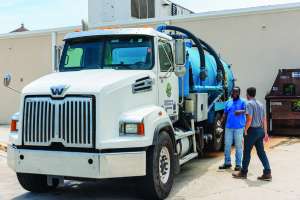
Solution: Carolina Septic purchased an Omega Liquid Waste Solutions two-compartment pumper truck equipped with an onboard wastewater filtration system. During service, liquids and solids are separated during pumpout. Once the grease trap is completely emptied, the wastewater is filtered through a self-cleaning 100-micron stainless steel membrane with no chemicals or additives, and returned to the same trap. Only the retained grease, sludge and solids are transported for disposal, preventing cross contamination between customers. Omega trucks can also do conventional pumpouts with no wastewater return if needed.
Result: During the initial treatment period, crews observed a significant change. The dense, compacted grease mat began breaking apart and transitioning into a more manageable slurry. Increased aeration, combined with ongoing biological treatment, helped create conditions favorable to the continued breakdown of organic waste and FOG. Rather than treating the initial improvement as a one-time solution, Hardin Medical Center incorporated the program into its preventive maintenance routine. Nearly 11 months later, the program remains in place. Routine service by the maintenance crew, along with onsite inspections by technical personnel, continues to show progress in managing grease accumulation and odor. 888-741-4440; www.omega-lws.com
Continue reading for free