
Sebastian Czaplicki came to the United States from Poland at age 17 with little more than $10 in his pocket and a suitcase full of clothes.
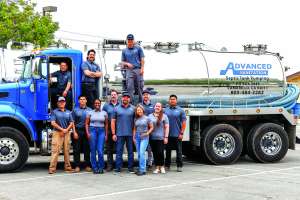
He also brought a work ethic, and that’s a key reason he now leads a septic service company with 10 employees, three vacuum trucks and a growing base of customers in Southern California.
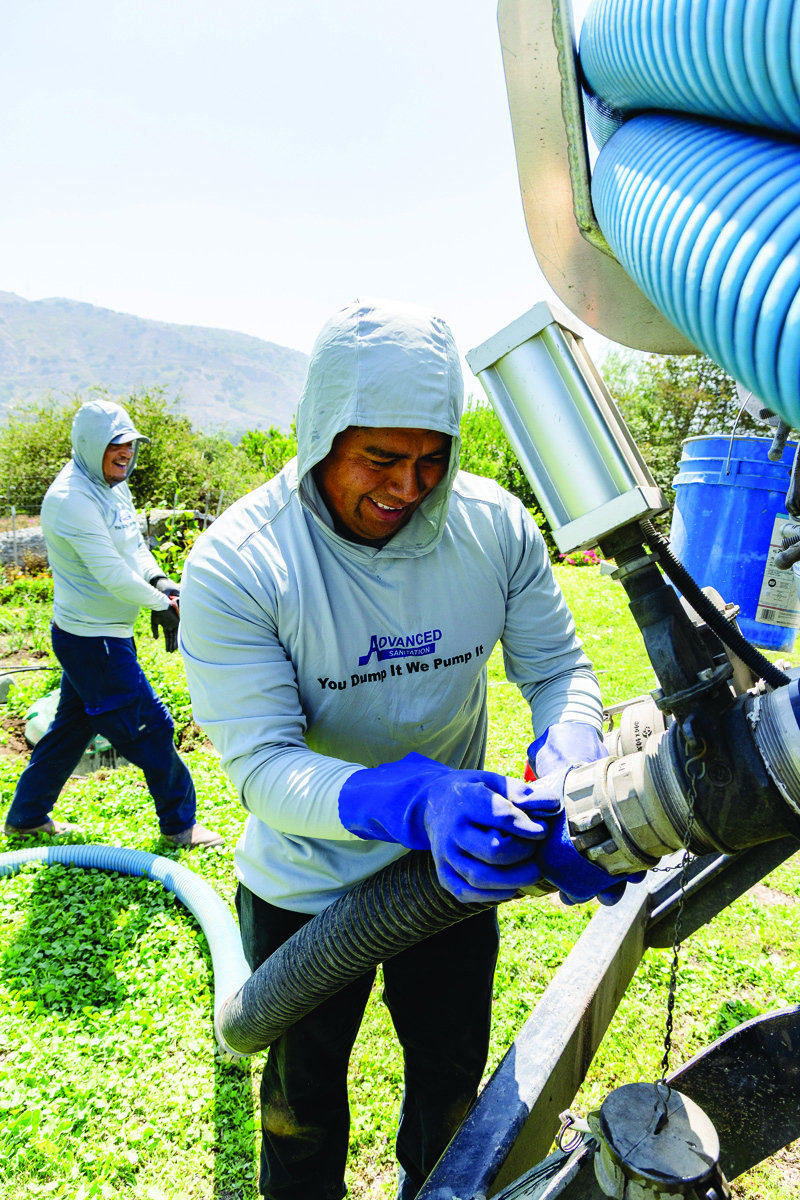
Advanced Sanitation, based in Somis, serves Ventura and Santa Barbara counties and part of Los Angeles County, installing or repairing about 50 onsite treatment systems per year and pumping some 1,500 septic tanks and seepage pits.
“We do any services related to septic system installation pumping, small repairs, camera work and more,” Czaplicki says. “Last year we had 5.5 times the revenue from the first year under my ownership [2014]. We plan to get into portable restrooms and trailers in the near future.”
Not afraid of work
Czaplicki traces his work ethic to his grandparents’/aunt’s dairy farm back in Poland. “I worked there from the time I was five or six years old,” he recalls. “At any opportunity I would be there driving tractors, feeding and milking cows, harvesting. If my parents didn’t want to take me, I would ride there on my bike.”
His family moved to the U.S. in August 2001 “with help from my aunt, who was already here,” Czaplicki says. “My dad came first, then me two weeks later, and my mom in January 2002.”
In 2011, he got his CDL and drove for UPS Freight while holding various part-time jobs.
One of those was with a friend, Jason Rushing, who had a septic installation business. In 2013, Czaplicki was hired on as a driver for the company he now owns. The older couple who owned it wanted to retire; Czaplicki bought it in 2014 using a loan from Rushing’s father and a Small Business Administration loan.
“I had never run a business,” Czaplicki says. “All I knew was how to work hard and long hours. I’d never worked in the office a day in my life. I had to learn as I was going. Jason helped me get through some hurdles. You can say he was mentoring me.”
He started with two older vacuum trucks, a tractor and tank trailer, and one truck driver. He worked from about 3 a.m. to 6 p.m. driving the trucks and handling all the paperwork. In 2016 he got his septic installer license.
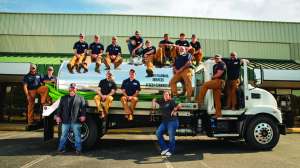
He steadily built a clientele and expanded his equipment inventory. By 2022 he had two pumpers and two installers on staff. He hired a dispatcher in 2023. Today the team includes his wife, Hannah Fay Salupen, who handles human resources, plus:
- Ana Maria, office manager and bookkeeper
- Marco Hernandez, crew foreman
- Richard Robertson, marketing and growth coordinator
- Valencia Graves, dispatcher
- Ramiro Huizar, waste haul driver
- Lorenzo Ruales Jr., equipment operator and laborer
- Sergio Virruetta and Cruz Ulises, pumper technicians
- Donovan Ware and Jeremy Morgan, dump truck drivers/equipment operators
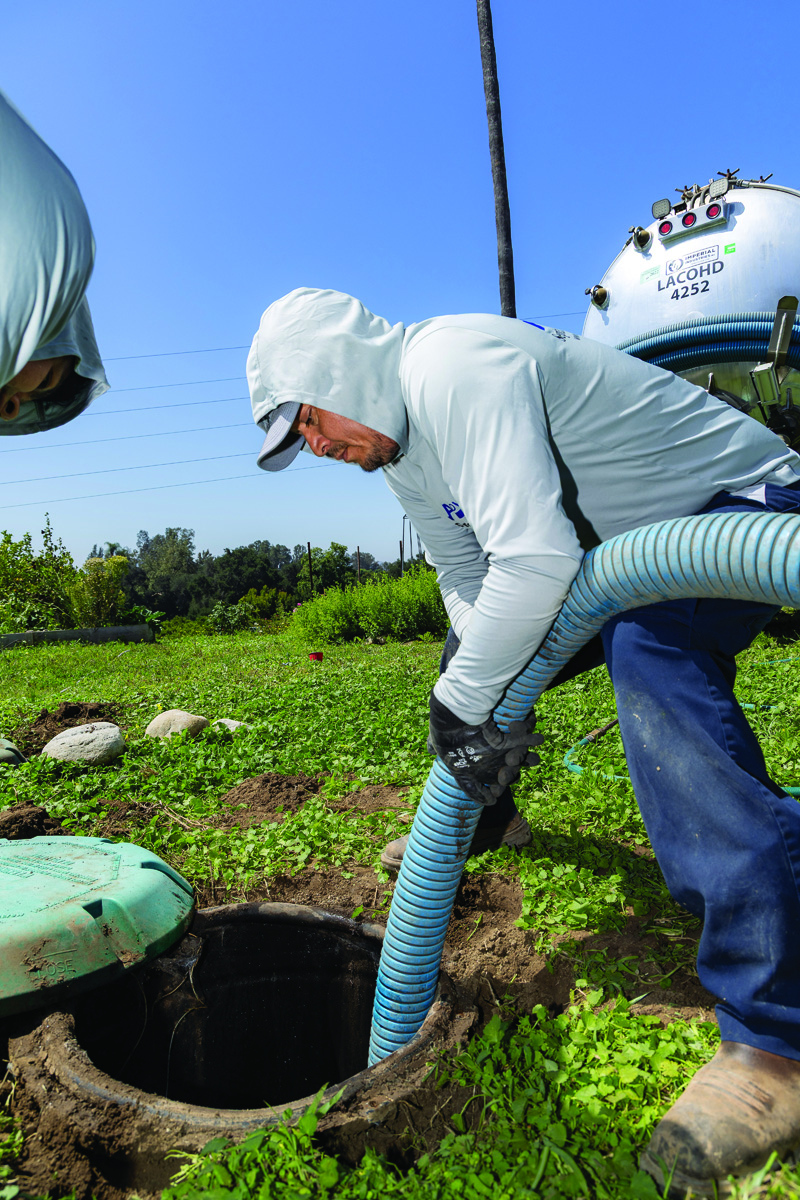
Customers first
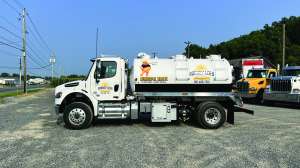
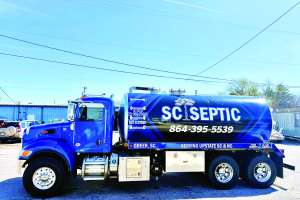
The pumping business grew almost solely by word of mouth, although Czaplicki now markets through Google Ads, Facebook and Instagram. The vacuum trucks with their galaxy blue cabs are recognized throughout the service area and help generate calls: “One person was literally driving next to my pump truck, and he called me. He has been our customer ever since.”
About 90% of customers are residential; commercial work includes schools, small businesses and a few restaurant grease traps. Communication with customers, especially on pricing, is a differentiator. When customers call, dispatcher Graves runs through a scripted question-answer session.
“Based on those questions, we can figure out what the customer needs,” Czaplicki says. “Sometimes we drive 45 minutes to the job site, and I don’t want our driver to have to turn around because we can’t do the job.”
Customers are asked to send pictures to show the septic tank risers and lids and document that no digging will be needed. Based on all this information, the customer receives an itemized estimate, so there are no surprises: “We treat our customers how we want to be treated. If a contractor comes to my house to do work, I don’t want them to give me a price and then halfway through the job they say, ‘Oh, this is going to be double.’”
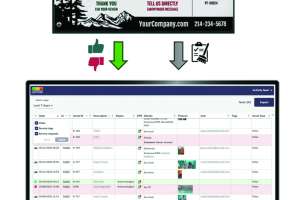
ServiceTitan software helps keep the business on track and facilitates interaction with customers. “Our drivers can upload pictures before and after they pump so that we can show our procedures,” Czaplicki says. “Our main goal is keeping customers informed: This is what we do, this is how we do it, and this is the result.”

Drivers arrive for appointments within a two-hour window; customers receive a courtesy call about 30 minutes before the drivers arrive. Once there, they do a complete job: “We pump the whole septic tank and wash it out. After digging, we put it back as best we can so it looks nice.” The vacuum truck fleet includes:
- 2017 Peterbilt 335 with 2,700-gallon aluminum tank built by FlowMark Vacuum Trucks
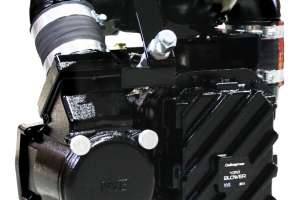
- 2020 Peterbilt 389 5,400-gallon aluminum tank (Imperial Industries) with remote control and onboard jetter and NVE 4310 blower
- 2022 Peterbilt 345 with 3,600-gallon aluminum tank (also Imperial) and NVE 4310 blower
Well equipped
Pumping helps grow the installation business, as vacuum truck drivers notice system defects and sometimes systems that are failing. Inspections for real estate transactions also identify systems in need of attention.
“On installations, when we do a job, we try to minimize the damage to the property,” Czaplicki says. “We cover everything in plywood or steel plates to avoid disturbance to the landscape as much as possible.”
Some installations are seepage pits. “Our water tables are pretty deep for the most part,” Czaplicki says. “In my county [Ventura], the water table can go from 10 feet up to 200 feet deep. Seepage pits are somewhat common there. A lot of properties in our area don’t have enough room to put a leachfield, and seepage pits are more popular.” To create seepage pits, the company owns a 2013 Tescar CF3 hydraulic drill rig. Other major equipment in the fleet includes:
- 2020 Caterpillar 306 and 2026 Caterpillar 308 excavators
- 2016 John Deere 323 skid-steer
- 2014 John Deere 310SK backhoe
- 2013 Peterbilt 386 Super Ten dump truck with steel body
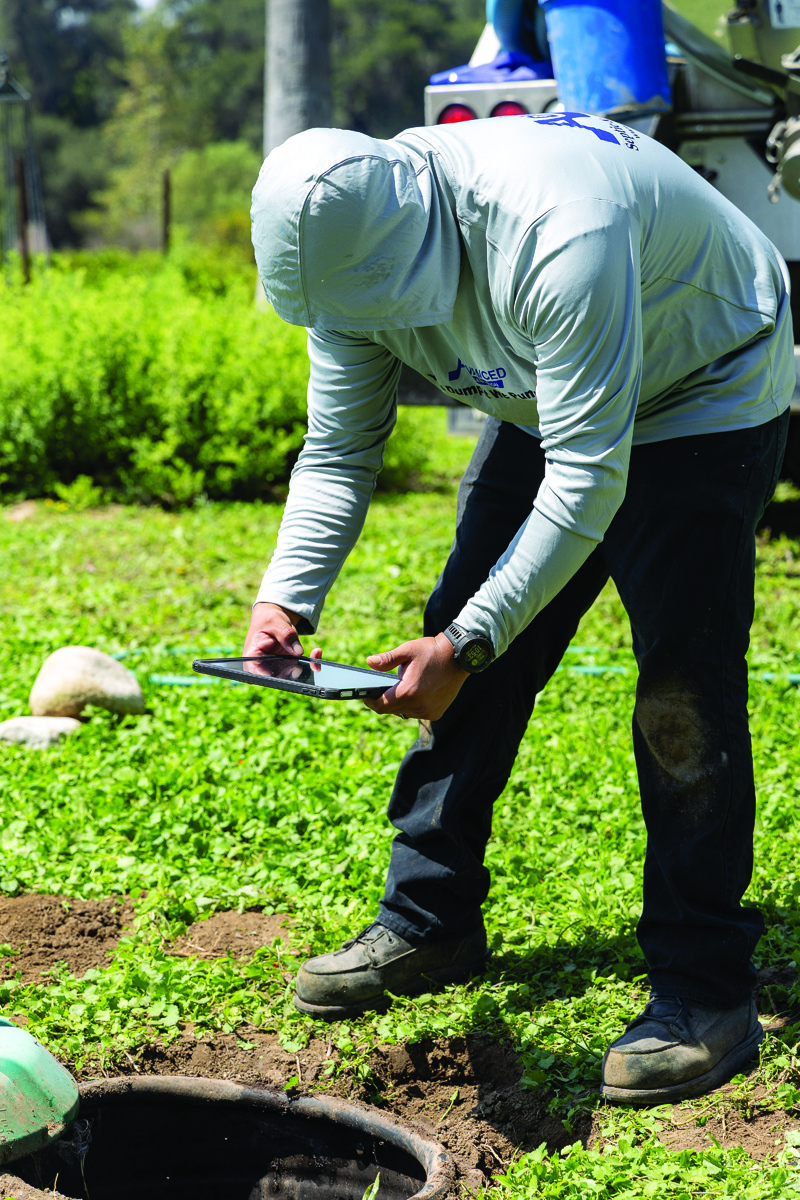
Leadership lessons
Amid all the day-to-day tasks, Czaplicki notes, he had to learn where his time was the most valuable: setting direction for the business and building and leading a strong team. He made that discovery in part by reading business books, a favorite being The 21 Irrefutable Laws of Leadership by John Maxwell.
He also works with a business consultant who is helping him create standard operating procedures and structure the company so that one day it can be sold or passed down to one or more of his three children.
“At one point I was doing pretty much everything,” he says. “Answering the phones, booking, doing installations. I realized that if I hire somebody, I can gain a little bit of my time back.”
He’s fond of a quote attributed to Alexander the Great: I am not afraid of an army of lions led by a sheep; I am afraid of an army of sheep led by a lion. “It means a true leader can lead anybody into war,” he says. “I want to be as good a leader as I can be.”
That includes recruiting and hiring the right people. “For the most part, we have had success using Indeed. We found our two most recent team members that way. We’re very particular about employees. We prefer people with driving experience, but more importantly, we need people willing to work hard and willing to learn.
“We look for more of a culture fit, somebody who fits on our team, versus a certain skill level. We believe that skills can be taught, but you can’t teach attitude. We don’t want somebody who just wants to get the job done and leave. We want somebody who wants to thrive, who wants to be as good as they can be.”
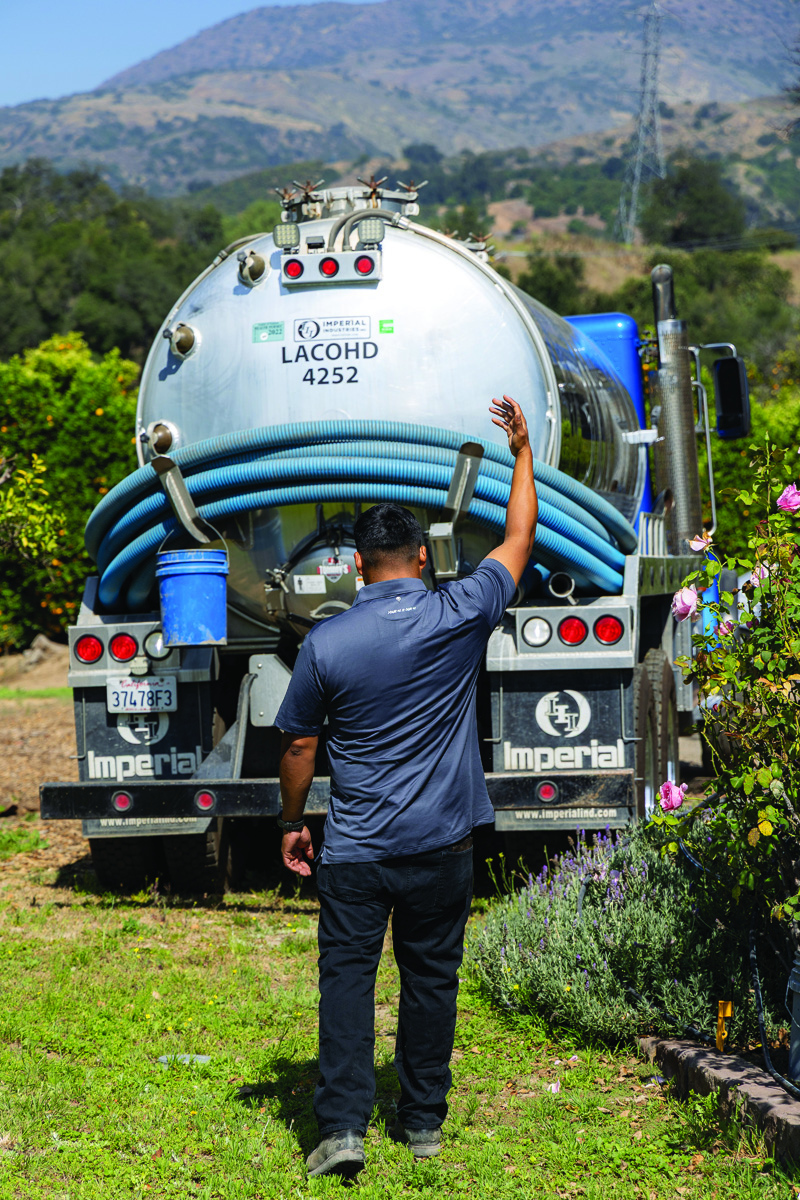
People who fit that description are assured of being treated well at Advanced Sanitation. Team members receive competitive pay; medical and dental insurance; a 401(k) account; paid time off for sick days, holidays and vacation; and, most recent, life insurance.
“If we don’t take care of our people, somebody else will,” Czaplicki says. “We’re a small company, so they’re not a number here. We promote a culture of teamwork because if one of us is missing, it’s hurting everybody else. We want everyone to work together.”
More growth ahead
The next frontier for the company is portable sanitation. Advanced Sanitation already owns some standard restrooms placed on installation sites for team members’ use. The next step is to create a rental fleet, to include luxury trailers. “My wife is going to be in charge of that,” Czaplicki says. “She’s doing research to figure out what we need to get started.”
The ambition Czaplicki brought with him from Poland hasn’t faded: “When I started, my wife would ask me if the size of the company was big enough. I used to say ‘I’m happy where I’m at.’ But it was a bunch of lies. We grew, and I was able to get a taste of a different life. There is more to achieve, so we decided to get bigger.”
Continue reading for free