
Rob Ratta became the third-generation owner of his family’s septic and portable restroom business started by his grandfather in the 1950s when he took over the company in 2005. Over the years the company persevered through economic roller coasters, growing pains, the pandemic, labor shortages and occasional challenging family dynamics.
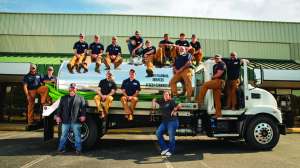
Rob runs R.M. Ratta Corp. with his wife Jen out of a 2.2-acre property in Ayer, Massachusetts. Other family members include his cousin Fred Ehwa, who’s been there since they were children, and Jen’s brother, Matt Robinson who’s been with them 30 years. The Rattas’ son Jack (18) is getting more involved through a work-study program at school, and daughters Shelby (22) and Addison (18) occasionally help out in the office.
Other long-term employees include Scott Goodman (30-plus years), T.J. MacGregor (12 years) and Tim Hardaker (eight years). Eight other office and field personnel round out the staff.
The company operates three divisions — pumping, excavation and portable restrooms. They work within a 50-mile radius which includes southern New Hampshire. Licensing couldn’t be more different between the two states, Jen says. “In New Hampshire, there is just one state license. In Massachusetts you have to be licensed in every town. Thankfully our closest 17 towns fall under one board, so just one license, but other than that you have to get separate licenses for pumping and installing, and some towns now require them for Title 5 inspections.”

COMPANY HISTORY
Rob’s grandfather, Frederic Lou Ratta, started providing bulldozing services in the mid-1950s, then added septic pumping. “He had one of the first actual vacuum trucks, not a mud sucker on the back with a wooden box,” Rob says. “His first truck was a 1958 Chevy with an 1,800-gallon tank.”
Frederic Lou’s son, Frederick James, took over in 1964. “He was 20 years old at the time,” Rob says. “He was into drag racing and my grandmother told him, ‘Jimmy, you’re either going to drag race or you’re going to run the business. What are you going to do?’ That was the deciding factor for him.”
Frederick James operated the business out of the family home, but as it grew, neighbors became increasingly unhappy, so in 1985 he bought a piece of property and slowly moved the company. He also added portable restrooms. “We started out with eight units and no toilet truck,” Rob says. “We used an old landscape trailer for deliveries. Our slogan was, ‘A potty to rent for every event’ and all we did was parties, weddings and special events.”
In the mid-1980s, the company’s employment peaked at 12 people, but a few years later when the recession hit they lost nearly everyone. “All that was left was me and my cousin Freddie,” Rob says. “It really put a big toll on my parents.”
ROB’S TURN
Rob grew up working in the business. In 1990, when he turned 18, he got his Class A license. “And in 1996 I branched out a little bit on my own with a trucking business, and in 2000 an excavation business,” he says. “I was still working with my parents, but we had some family issues and I went one way and they went another — but we came back together.”
During the break, Rob and Jen bought their current property and built a 12,000-square-foot building. In 2005 they took over the pumping business and a few years later the portable restroom division. The rest of the business had fizzled out. It took them 10 years to get the company on solid footing again.
PUMPING DIVISION
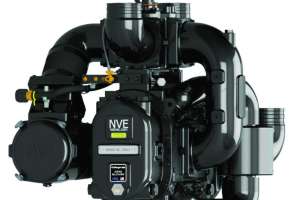
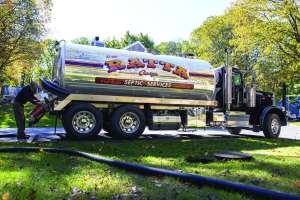
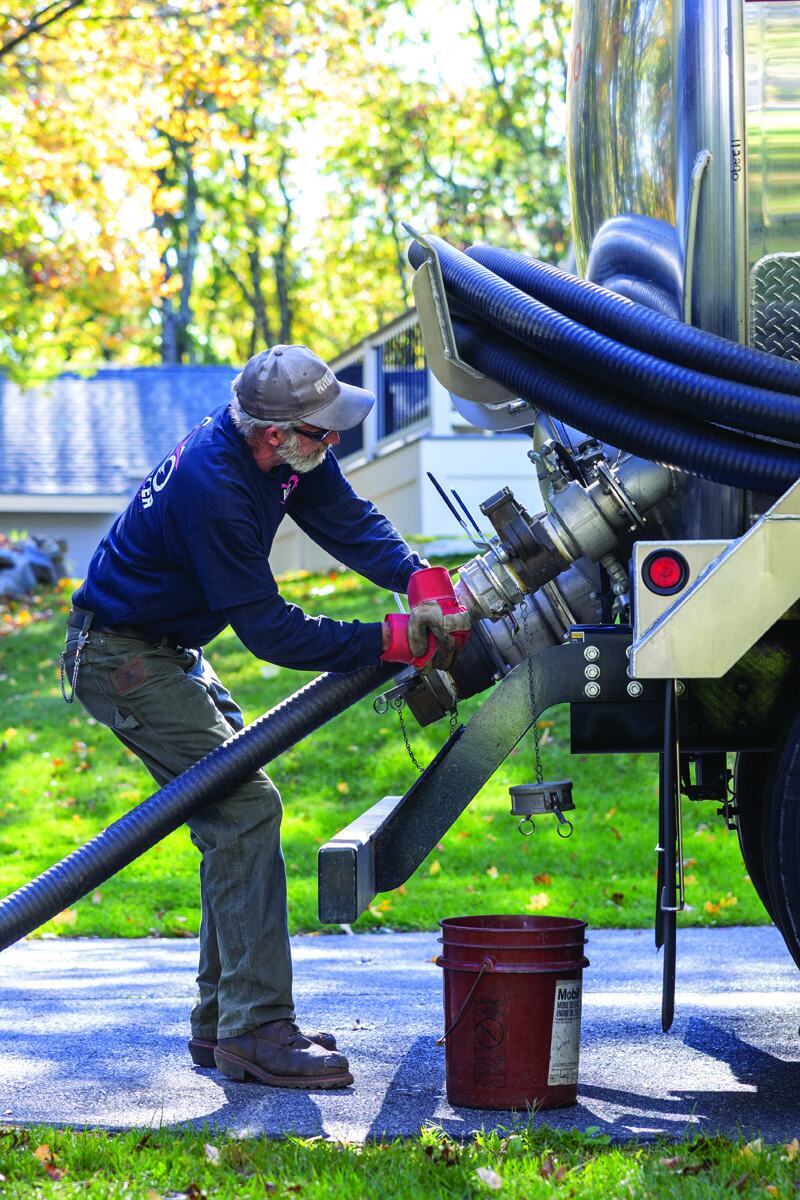
Septic and grease trap pumping accounts for about 40% of the company’s revenue. The service fleet includes a 2004 Peterbilt with a 4,800-gallon steel tank from Andert, a 2018 Kenworth with a 5,000-gallon steel tank from Andert, and a 2020 Peterbilt 567 and 2024 Peterbilt 389 built out by Imperial Industries with 5,000-gallon aluminum tanks. They also have a 9,000-gallon 2011 ACRO vacuum tank trailer for transporting waste and for use on commercial projects such as apartment complexes and shopping centers. All their trucks have National Vacuum Equipment 4310 blowers.
Tools include a Mongoose jetter (Sewer Equipment) and two cameras (RIDGID and EasyCAM).
Drivers either offload at one of the five treatment plants in their service territory or return to the yard and transfer waste to the company’s storage facilities — a 22,000-gallon frac tank and a couple of 9,000-gallon storage tankers.

EXCAVATION DIVISION
In addition to installing septic systems, the company does other small-scale residential and commercial excavation work related to water, sewer, drainage, site work and foundations. This division also accounts for about 40% of the company’s revenue.
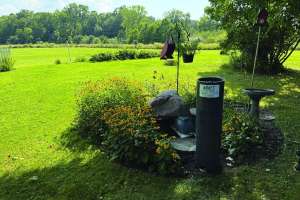
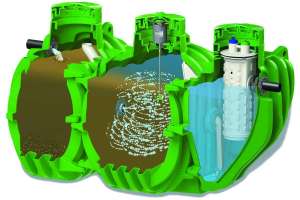
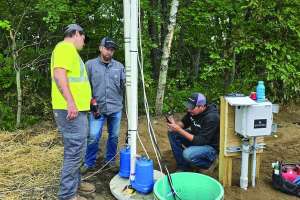
Rob says 80% of their installs are Advanced Enviro-Septic treatment systems from Infiltrator Water Technologies. “They’re a pretty bulletproof system,” he says. “But just as with anything, they’re only as good as the installation and how they’re treated.”
Soil conditions vary. “Some areas have beautiful sand and gravel,” Rob says. “Others are just glacial tills that are 40-minute-an-inch perc rates with the water table at 18 inches where you end up with these postage stamp-sized lots built in the 1950s and 1960s.”
The team uses two John Deere loaders and six John Deere excavators in sizes ranging from the 35 model to the 300. They also have four Kenworth and Peterbilt dump trucks — a tri-axle, a 10-wheeler, a six-wheeler and a tractor-trailer — with dump bodies from Donovan Equipment (steel) and MAC Trailer (aluminum).
The vast majority of their work is replacing systems because many pre-1995 units do not comply with current standards, Rob says. “Seasonal high water is what gets so many of them. How we do soil testing drastically changed when Title 5 was rewritten in 1995.”
In cases involving real estate transactions, the company generally puts in the new system up front and then gets paid in full at the time of closing, which helps the owner out.
PORTABLE RESTROOM DIVISION
Portable sanitation is the smallest segment of the business — “But it’s such a nice add-on for what we do,” Jen says. “It’s so easy to run with just a limited number of employees and it’s all the same licenses for disposal. It’s kind of a no-brainer to have it.”
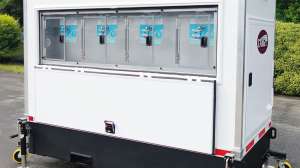
The company has close to 500 PolyJohn portable restrooms. “And, honestly, I don’t want to get any bigger than that,” Jen says. “Right now it’s a manageable segment of the business.”
In addition to events and construction projects, they do a lot with the local towns and parks departments. “We try to be supportive of them because of all the things they do for the families in town,” Jen says. “There are also a lot of boards and committees in small towns and I work with as many of them as I can. I don’t think there’s a person on the highway or sewer department that doesn’t have our cellphone number.”
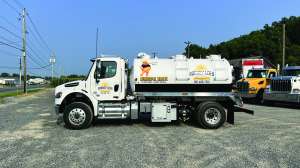
The division has two vacuum trucks — 2022 and 2023 Ford F-550s built out by Imperial Industries with 500-gallon waste/250-gallon freshwater aluminum tanks and Masport pumps.
PERSONNEL MANAGEMENT
Although a number of staff members have been with the company for decades, hiring and keeping staff is a constant challenge for Rob and Jen. But they work hard at it. “Everyone gets treated like they’re family,” Jen says. “And we try to let them know they’re more than just an employee. It’s not just money that people are looking for. They want to be happy in their job. When you know you’re valued, that goes a long way.”
Meetings are informal. “We just gather up every morning getting everybody going,” Rob says. “It’s making sure they know what they have to do, answering questions and ‘go have a great day’ kind of thing.”
“Then the guys spend time in the shop at the end of the day talking over what went on during the day and what’s going to happen the next day,” Jen adds. “The same thing in the office.”
For special treats, the company gives everyone a case of bison burgers for Memorial Day, fresh turkeys for Thanksgiving and pies at Christmas.

PRIDE IN THE FLEET
It’s important to Rob to keep the trucks in top condition and looking good no matter how old. “We run them at least 10 years,” he says. “We take very good care of them, so even at 10 years old, they’re still in beautiful shape. And a lot of our stuff is 20 years old.”
The work is all done in-house. “We do the repair work, rebuild them, paint, everything,” Rob says. “We don’t farm out much of anything. It’s a lot of work but it’s rewarding. But I haven’t figured out the sweet spot of where we should be trading them or selling them outright.”
They tend to the trucks year round but especially in the winter when they have extra time. The company avoids laying anyone off in the winter because it’s so hard to get them back. Excavation work continues when there’s not a lot of frost, and they stay busy with pumping. They also supplement with snowplowing.
A SATISFYING CAREER
Rob says other than the frustration of finding and keeping employees, he loves everything about running the business. And Jen says she couldn’t have asked for a better job while raising their kids. She was able to attend all their events and take care of them when they were sick. She says she also loves working with the people they have and helping customers out.
Rob’s dad (81) still stops by occasionally. “He comes down here in his big cowboy hat and looks around at everything,” Jen says. “He’s really proud of his son and what we’ve built. He’s a wealth of knowledge and is always willing to help.”
Continue reading for free