
Across the country, there has been a noticeable increase in food enthusiasts and specialty restaurants. And with that, grease traps.
Effective grease traps are designed to slow the incoming wastewater so the fats, oil and grease congeals and floats to the top and solids settle to the bottom of the trap. If these accumulations of FOG are not routinely pumped out of the trap, the contaminants overflow the trap and contribute to downstream problems. Some facilities with high FOG may have a grease separator within their facility, which is typically managed by staff of the facility.
Breaking them down
Fats and oils are made up of chemical compounds called triglycerides, which are made up of one unit of sugar alcohol and three units of fatty acids. It is the decomposition of these fatty acids that creates the odors associated with fats and oils that have spoiled or turned rancid.
Grease traps work on the principle of gravity and buoyancy. When wastewater enters the trap, it cools down, causing FOG to rise to the surface due to their lower density than water. The treated wastewater, which is lower in FOG, exits the grease trap through an outlet. Solid food particles and other debris settle at the bottom of the trap.
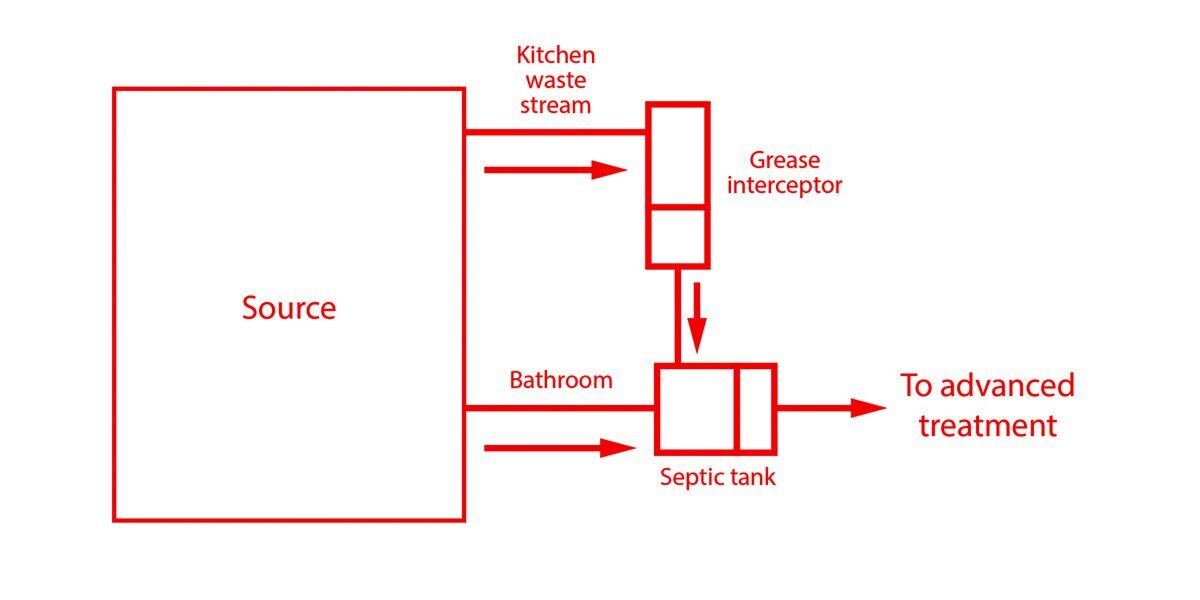
Wastes that are pumped from these traps are then very high in fats and oils, and ideally do not contain sanitary wastes, although they can be set up in two main layouts.
Configurations
- A separate tank that receives only wastewater from the kitchen that is FOG. The effluent from that tank is then discharged to a centralized sewage treatment system or into a septic tank.
- The first septic tank receives all the wastewater from the facility. Facilities with high FOG connected to septic systems generally install several septic tanks in series to provide a cleaner effluent before discharging to downstream components. In this system design, the first septic tank in the series acts as a grease trap, but may be regulated as a septic tank. In this scenario, the first septic tank in the series will be considered a grease trap with modified baffles and with more frequent maintenance.
Gravity traps are often made out of concrete but can also be steel, fiberglass or plastic. They come in various sizes to accommodate different flow rates and are ideal for restaurants, cafeterias and other food service establishments.
Servicing
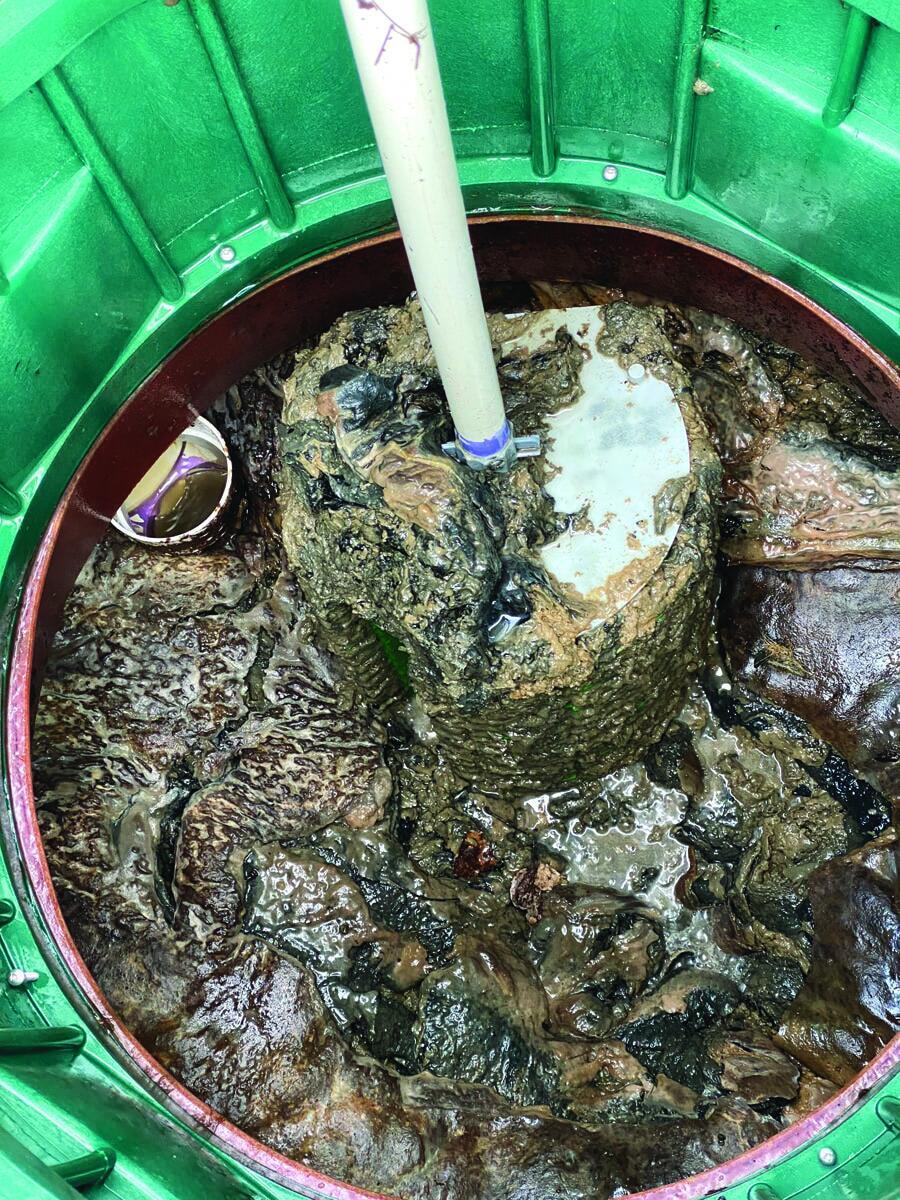
Typical recommendations and requirements for grease traps require them to be serviced when the percentage of FOG reaches 25%. During a typical grease trap cleaning, the grease trap will be inspected, the accumulated waste removed and the interior surfaces cleaned. The use of specialized tools and techniques to remove the solidified FOG and food particles is often needed to get the tank thoroughly cleaned. Additionally, check for any signs of damage or malfunction that might require further attention.
Grease trap waste is often processed by industrial or municipal wastewater treatment facilities, although there may be challenges associated with some WWTPs accepting the waste — particularly smaller WWTPs because of the high biochemical oxygen demand of FOG. Due to the costly nature of treating grease trap waste, an increasing number of facilities are refusing to process grease trap waste.
If they do continue to receive grease trap waste, the tipping fee is generally substantially higher (sometimes 300%) than other types of waste. Landfills cannot accept this waste because of the liquid content; therefore, land application is a common form of management. However, land application is not permitted in some areas.
Effects of land application
Limited research has been conducted on the effects of land-applied grease trap wastes on the soil or plants. Some studies suggest that the soil can break down this waste, and that it may even be beneficial to the soil.
However, one of the problems that occurs when grease traps wastes are applied to forage or cover crops is that the aboveground portions of the plant are coated with the FOG. This can kill the aboveground portion of the plant temporarily. Plants do recover since the roots are not damaged, but yields are likely affected.
Another issue with excessive application rates of FOG is the clogging of soil pores. This could lead to problems with soil aeration or runoff since the soil’s infiltration capacity and rate may be reduced. Spray application on soil can also coat the surface of the soil with grease, making it water-repellent. To avoid this problem, application rates must be limited, especially when surface-applied.
Application rates are on the order of four dry tons/acre/year (about 16,000 gallons/acre/year at 6% total solids). Many jurisdictions limit application rates to 25,000 gallons/acre/year, but the waste must be diluted 50% with water. The high energy content of the fats and oils encourages microbial decomposition in the soil, but unlike domestic septage, grease trap waste tends to be low in nitrogen.
A nonbiological concern with land application of grease trap wastes is that they can be very odorous. Odor is not only a nuisance condition, but can attract vectors such as flies and rodents to application sites. To reduce the odor problem, it is recommended that incorporation or injection be used as an application method whenever possible and that care be taken when locating sites that will be used for land application. If these wastes are applied to the surface, they should be mixed with septage and lime stabilized.
Other outlets
One option to consider is reaching out to local composting facilities. The high-energy content of the waste is advantageous to composting where grease trap waste is combined with other feedstocks and high temperatures are needed to ensure pathogen reduction.
Grease trap waste can be composted as a liquid (with adequate absorptive bulking agent) or as a decanted “semi solid.” The FOG tends to coat the bulking agent(s) it is mixed with, which offers large surface areas for microbial decomposition in a compost pile. The high energy content encourages a more rapid rise in composting temperatures.
The amount of grease trap waste that can be added to a compost mix depends on several factors like whether it is a liquid or decanted, the “freshness” of the waste, the composting approach (aerated static pile will break down the FOG quicker than windrows), and the absorptive capacity of the bulking agent(s) used (dry sawdust being preferable to ground yard trimmings). Grease trap waste in a compost mix can range from less than 10% to over 40%, with variable odor problems, depending on the factors above.
Educate
Some maintainers have noted that restaurant grease traps can contain a lot of floating oils. These oils should be collected in the restaurant and recycled. If there is a lot of oil in the grease trap, the management of the restaurant should be informed, and their workers trained on how to collect and manage this oil. Restaurant managers should be encouraged to train their workers to catch as much of the FOG as possible before they go down the drain. This will not only reduce problems with their effluent, but will also limit the amount of waste that will need to be managed.
Other best management practices for facilities with grease traps:
- Clean on a routine basis for effective treatment
- Keep a maintenance log to help optimize clean frequency and reduce costs
- Post “No Grease or No FOG” above sinks and near drains to minimize discharge to traps
- Secure floor drain covers and screens to reduce the introduction of large items into drains
- Install a strainer or basket in sinks and drains to capture large food particles and solid debris
- Avoid pouring hot water or chemicals down the drain as they can dissolve grease, causing it to bypass the grease trap
- Scrape plates and utensils before washing. This can significantly reduce the amount of FOG entering the trap.
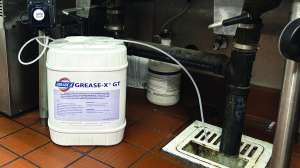
There are products on the market that may be beneficial to assist in the breakdown of FOG, odors or dealing with excessive buildup. Care should be taken to evaluate these products to ensure they do not emulsify the FOG and cause it to travel to downstream components.
Grease trap maintenance on a regular basis is critical to protecting downstream wastewater components. Due to the concentrated nature of the contents, solutions for dealing with this wastestream can be challenging, but options are out there and it’s a needed service in the industry.
Continue reading for free