From soothing sore muscles to promoting relaxation, Epsom salt use is becoming more common. And so some may question if they are all right to use with an onsite wastewater treatment system.
Where We See It
While Epsom salt is naturally occurring, it is also manufactured for commercial and therapeutic purposes, which is the majority of what is available on the market today. They are also promoted as a septic-safe toilet cleaner that can deal with grime and hard water stains.
Epsom salts are composed of magnesium and sulfate, and most of the reported benefits are attributed to its magnesium, a mineral that many people do not get enough of. The magnesium is believed to be absorbed through the skin, providing health benefits such as muscle relaxation and stress relief.
Though classified as a salt, Epsom salt is a completely different compound than table salt. Since it is often dissolved in baths, it is often referred to as a “bath salt.” While it looks similar to table salt, its taste is distinctly different as it is bitter and unpalatable.
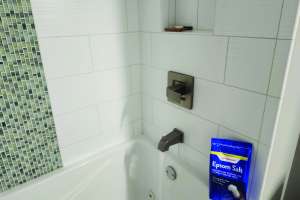
When Epsom salt is dissolved in water, it releases magnesium and sulfate ions. The most common use is taking what’s called an Epsom salt bath with the general recommendation to add two cups of Epsom salt to the water in a standard-sized bathtub. After each use the tub is drained as normal. Some people will also soak their feet in a small basin with Epsom salt.
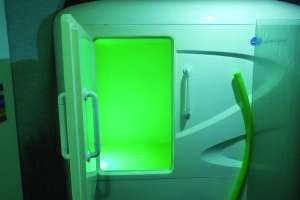
There are also “floatation tanks” where around 1,000 pounds of Epsom salt is added to around 200 hundred gallons of water to increase the specific gravity of the solution allowing a person to easily float in the tank. Epsom salts increase the specific gravity for the solution to around 1.27. It is this change to the density that adds buoyancy to the water and allows a flotation tank user to float.
These tanks are also called flotation-REST (Restricted Environmental Stimulation Therapy) or sensory deprivation tanks, as the goal is that all your external senses are shut off. The user naturally floats in the Epsom salt water which is heated to body temperature. The tank is pitch-black, lightproof and a soundproof environment. These tanks are most commonly located in spas, salons and gyms, but some people may consider adding them to their home.
The tanks are not generally drained between usage as the water is recirculated, filtered and sanitized with UV light and ozone treatment after each session, with a full water change usually occurring only every few months or after around 1,000 uses.
When it comes to use as toilet cleaner a typical recipe is to combine one cup of Epsom salt, a half-cup of baking soda and a quarter-cup of dish soap into a paste. This paste is then used to clean the toilet.
Impacts on Septics
A study was actually done and published in the Journal of Applied Sciences Research to see how Epsom salts impact microorganisms present in sewage. The study took raw sewage and tested the impact on eight different naturally occurring microorganisms including four bacteria and four fungi. Various dilutions of Epsom salts solutions were tested: 25 g/mL, 8.3 g/mL, 5 g/mL and 2 g/mL. The Epsom salt solutions showed antibacterial inhibition at concentrations of 25 g/mL, 8.3 g/mL and 5 g/mL to all of the bacteria tested. At the lowest concentration of 2 g/mL, only 1 bacteria was impacted.
Although Epsom salt affected the bacteria, the fungi showed no change. The reason why may be that the sewage fungi possessed some resistant structures in the form of spores, which withstand adverse conditions.
The takeaway from this study was that 5 g/mL or more are needed to inhibit microorganisms. This corresponds to approximately 38.5 pounds of Epsom salt per gallon of water or 77 cups/gallon. Based on the typical amounts used in a tub (2 cups/tub) or foot bath (1/2 cup in a basin) the effect of adding Epsom salt into an OWTS should be minimal.
A significant amount of Epsom salt would have to be added to negatively affect the bacteria. Therefore, an occasional Epsom salt bath would not cause any harm to the bacteria in the septic tank or the soil treatment area. As an added benefit, Epsom salt will add magnesium to the soil of your septic drain field, encouraging healthy plant growth.
Float tanks are different primarily due to the large volume of discharge, which could cause the flushing of beneficial microorganism and solids out of the septic tank. This will impact other components designed around the principle of hydraulic retention time, such as aerobic treatment units and recirculating media filters. It may also impact treatment in soil treatment areas which rely upon unsaturated flow. Therefore, the discharge from these isolation tanks should be directed out of the OWTS to the surface.