It takes a unique equipment fleet to run an island-based pumping and inspection business that requires frequent trips to the mainland.
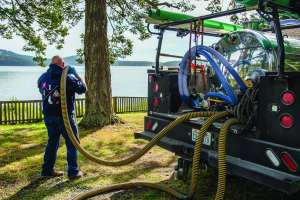
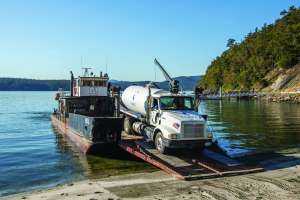
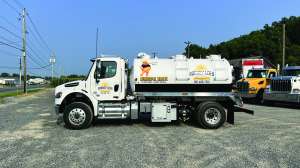
Jason Kramer runs just such a business on Washington’s Lopez Island, a 4-by-14-mile strip of land in the Puget Sound with 3,500 residents (6,000 in the summer). His fleet includes a vacuum truck he purposely kept under 30 feet long to save $54 on the fare for each ferry trip to offload septage at the Anacortes Wastewater Treatment Plant.
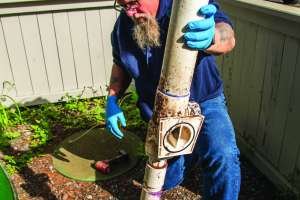
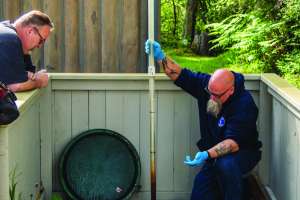
For island-hopping to perform inspections, he has a 21-foot Parker fiberglass boat. On board he carries a Rad Power electric bicycle that he rides to the home site, packing a foldable TruCore sludge sampler (Simtech Industrial Products), a hose, spare parts and other gear. His service truck is fully equipped and has a 400-gallon tank with pump for small pumping jobs and emergencies.
A 6,000-gallon tanker truck lets him provide pumping for a sanitary district on another island while minimizing ferry trips to the treatment plant. And he’s restoring and customizing a motorcycle to be carried on the vacuum truck as an agile vehicle for side trips.
It’s all designed to help him operate A1 Septic on Lopez as flexibly and efficiently as possible. He started the business in 2017, and in a given year, he pumps 150 to 200 septic tanks, while doing about 50 time-of-sale and other system inspections. He also pumps restaurant grease traps, maintains aerobic treatment units and does minor onsite system repairs and upgrades.
He’s assisted by part-time team members Tim Arnold, who drives the trucks on disposal runs, and Jose Cisneros, who helps out on weekends and performs inspections. The company serves San Juan County and is certified for work in Skagit and Island counties.
OPPORTUNITY KNOCKS
Kramer grew up in Oregon and in 1997 at age 23, moved to Lopez Island. He lived for a time with a cousin and then for a year in a travel trailer while getting established. For a decade he worked in the local grocery store meat department, ultimately becoming manager. “Then I went to work on the county road crew,” he says. “That’s where I got my CDL and got 13 years of playing with Tonka trucks.”
Along the way he took a second job with a septic service contractor, driving loads of septage off the island. “They were easy runs,” he recalls. “You drive four-and-a-half miles off the ferry boat, dump at the treatment plant in Anacortes, and come right back. It takes three or four hours. I did that for a year and a half.”
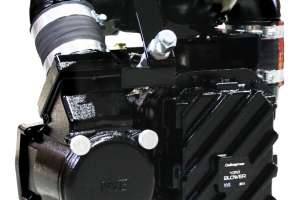
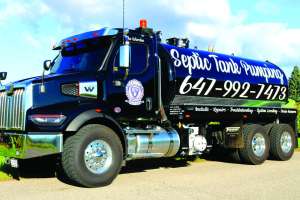
The opportunity came to buy that business, but decided instead to purchase his own truck and launched A1 Septic on Lopez. The truck is a 2001 International 9100 with a 3,500-gallon steel tank and National Vacuum Equipment pump. He bought it with about 135,000 miles on the odometer.
It wasn’t hard finding a customer base: “Being the guy who worked in the meat department for a decade on this little island, I knew pretty much everybody. I get along with people, and they seem to like me. I was kind of counting on that when I started the business. So far, so good.”
To supplement his business income and maintain health insurance, Kramer works 20 hours a week operating a lagoon treatment system serving a sewerage district with about 200 homes on a septic tank effluent pumping, or STEP, system. Altogether, he works 80 to 100 hours per week.
COMMITTED TO LEARNING
The part-time job pays dividends as it covers the cost of Kramer’s health insurance and continuing education. He listens to podcasts and takes classes sponsored by the Washington Onsite Sewage Association or the National Onsite Wastewater Recycling Association.
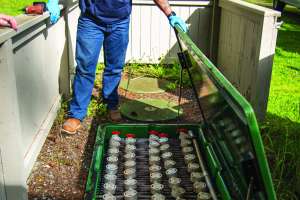
“I’m always trying to learn,” says Kramer. “You always have to advance yourself and advance the business. My latest thing is getting familiar with AdvanTex treatment units (Orenco Systems). I got certified at WOSSA a little over a year ago, but when I went out to work on one I realized I didn’t really know my way around it.”
Earlier this year an Orenco representative paid a visit to help him get familiar with the systems. Besides AdvanTex, Kramer services NuWater, Glendon, Delta Whitewater (Infiltrator Water Technologies) and Nayadic (Consolidated Treatment Systems) units. “I want to be certified on any proprietary systems used in this area,” Kramer says. “I want people to call me and I can just take care of them. Handing off customers to other people is not an option.”
BUILDING THE FLEET
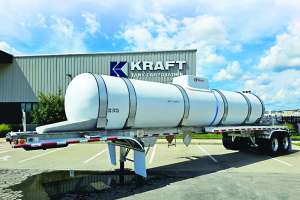
Piece by piece, Kramer built his equipment inventory. In 2023, the Eastsound Sewer & Water District on nearby Orcas Island needed a hauler for septage from its storage tanks. To make the work efficient, Kramer bought a 6,000-gallon stainless steel tanker trailer from Erickson Tank & Pump.
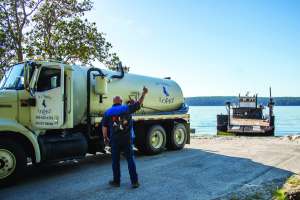
He then bought a 1989 Freightliner tractor and had Erickson outfit it with a Masport Cobra pump, added plumbing and a PTO, and converted one fuel tank into a hydraulic fluid tank. The Eastsound district accounts for about 60,000 gallons of septage per year, and the truck also hauls pumping from A1 customers. “We store septage in the tanker until it’s full, then Tim takes it off island for emptying a couple times a week,” says Kramer.
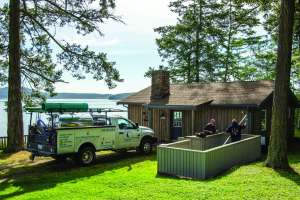
His service truck, a 2005 Ram 3500, is customized for multitasking. “I bought it from a fellow locally and changed just about everything on it,” says Kramer. “It has new wheels and tires, new front bumper and grille, new light and mirrors. I put a pipe rack on top. It has all my tools and everything I could possibly need for any emergency.”
It’s equipped with a lightweight 400-gallon aluminum tank (Erickson) and Masport pump for servicing RVs and portable restrooms. When maintaining ATUs, he can use it to pump out the trash tank if needed instead of bringing the bigger vacuum truck. On emergency calls he can pump full septic tanks down to avoid flooding drainfields and to access the filter.
His go-to earthmover is a 2021 John Deere 17G mini-excavator: “It is the handiest machine. I don’t know why I ever thought of getting anything bigger.” He hauls it easily on a flatbed trailer behind the service truck. He uses it for tasks such as locating the ends of the drainfield laterals to installing inspection ports to scraping soil off the tops of tanks to install risers.
He also relies on a 2023 John Deere 317G skid-steer, a RIDGID NaviTrack Scout locator with 600-foot pushrod, and small water jetter (Jetters Northwest) delivering 3,000 psi/4 gpm for cleaning grease traps and lateral lines. For travel, the jetter mounts on a rack behind the service truck.
GOING TO MARKET
Kramer enjoys marketing, and his methods range from print and online advertising to supporting community events. His favorite event is a Halloween Trunk or Treat that enables kids to fill their plastic pumpkins without having to visit the island’s widely spaced homes. Homeowners and businesses park decorated vehicles on a large lot in the middle of Lopez Village and the kids easily make the rounds. “Our pumper truck is there, and we have a table where we hand out candy. My wife Kim totally helps with that event.”
The company advertises on Facebook, on the Lopezrocks community website and in the
Islands’ Weekly print newspaper. His new company logo features an image of the island, the poop emoji and Crust Busters and Sludge Judge tools. In the near future, he plans to apply the logo to his trucks and print it on hats, sweatshirts and T-shirts for customers.
Kramer is wired in with real estate agents and offers time-of-sale inspections. Other than that, it’s word of mouth and quality work.
“I just try to go out there and be the best person I can be,” he says. “Anytime somebody buys a house, I offer to stop by and introduce them to their septic system free of charge. A lot of people who move up here are coming from Seattle; they have no idea what a septic system is or does.”
LOOKING AHEAD
Juggling so many tasks means keeping long hours. “On a typical day I wake up at four in the morning to get showered and get coffee for my wife and myself,” Kramer says. “By 5 o’clock I’m in my office trying to keep up with paperwork.
“At 7:30 I show up at the sewer district. I leave there at 11:30, and I’m off and running doing all the physical work. I get home anywhere between six and eight at night. Weekends are a little better. I try to take at least one full day off per week.”
For the future, he’s working toward onsite system designer certification as part of his retirement plan. He’s been active in WOSSA for six years and intends to continue. “Most of what I take advantage of is training and networking, getting to know the people in the industry,” he says. “It has been invaluable to me, and they do a lot of great stuff with legislation and emphasizing the importance of clean water and our role in it.”