“Resilient” design is the benchmark for any architectural or building project. But what factors make a design resilient? Resilience cannot only mean “long-lasting efficacy.” Asbestos is extremely long-lasting and effective. But time told the story that it was also very harmful. A similar story is emerging for PFAS.
A more holistic definition of “resilient” considers factors such as sustainability, waste reduction and overall environmental impact alongside material longevity and efficacy. Let’s examine what makes a plumbing design “resilient” by this definition.
Waste reduction
In this AI and data center age, water is arguably Earth’s most precious resource. Resilient plumbing must incorporate efficient water use and greater waste reduction. While HVAC has outpaced plumbing in this area, hot-water systems have ways to catch up.
1. Choose the best water heater for each situation. While it’s normal to prefer certain brands and models, every installation is different and should be treated as unique. Instead of using a “one size fits all” approach, consider factors like location, home size, available fuel types and energy costs. Looking at these details helps plumbers select the right water heater and reduce energy waste.
2. Focus on the floorplan and configure to minimize in-pipe hot water storage. To coin a phrase, “the more feet, the more lost heat.” Long piping runs kill resiliency. Keeping hot-water-use areas near one another can help. Some homes have two separate hot water heaters for this reason: If a floorplan has the laundry, guest bathroom and kitchen on one side of the home and the primary bedroom/bathroom far away from this area, having a separate water heater serving each area can maximize energy. With multiple options available (trunk and branch, central manifold, etc.), each installation is an opportunity for plumbers to use their skills and judgment to maximize resiliency.
3. Insulate. It’s an easy win: Lab tests have shown a 30-48% reduction in heat loss in insulated pipes.
4. Start with efficient piping materials. Typical homes experience 10-15% energy loss through their hot-water distribution systems. Piping materials with inherently lower thermal conductivity can help reduce this loss.
5. Remember geography when assessing reliability. Plumbing problems can take years to appear, as the industry learned in the early 1990s with polybutylene piping. Installed in millions of homes from the late 1970s through the mid-1990s, polybutylene was marketed as an affordable, easy-to-install alternative to copper. Over time, however, it was found that chlorine and other disinfectants in U.S. water supplies could cause the polybutylene pipes to become brittle and crack from the inside out. Many systems developed leaks, leading to costly water damage and a major class-action lawsuit.
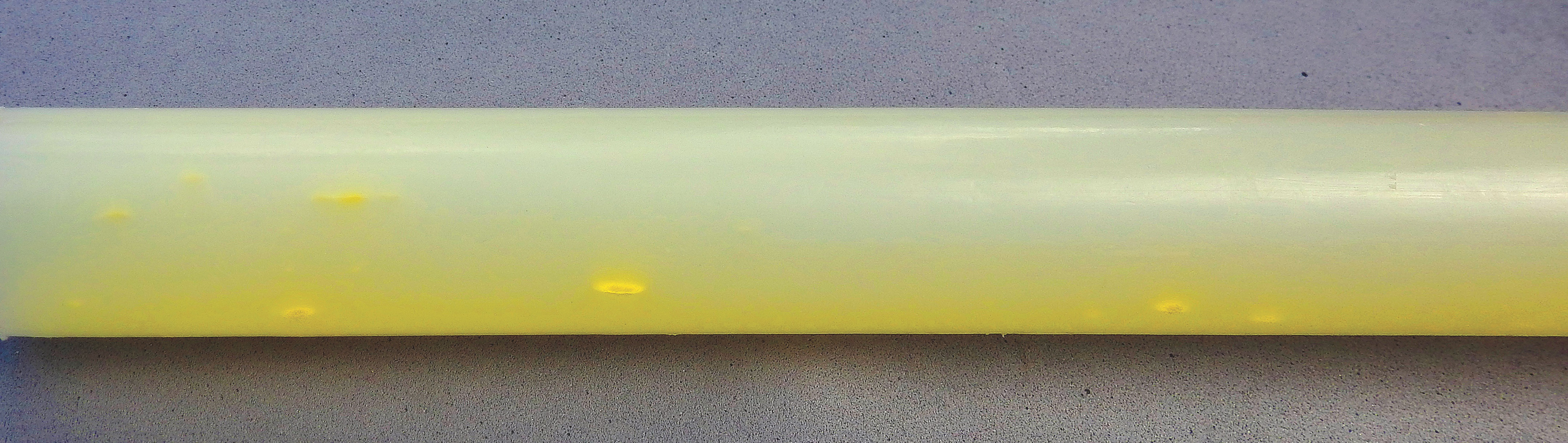
Water treatment methods in the United States are different from those in other parts of the world, so material performance may differ between regions. CPVC, on the other hand, has been used successfully in American homes for more than 65 years, and PEX has a long history of use in Europe.
Overall environmental impact of a system
Holistic resilience demands that a system be net positive rather than net negative over its entire life cycle. Being net positive in one area — like heat efficiency — but negative in others — i.e. weight, manufacturing emissions or poor recyclability — can mean a system is durable but not truly resilient.
Several factors combine to determine a system’s overall environmental impact. A certified Life Cycle Assessment (LCA) is a reputable, independent way to demonstrate claims of sustainability and positively impact end users. For example, FlowGuard Gold CPVC’s LCA provides customers with the data needed to earn LEED credits and other green building benefits. An LCA can give data such as Global Warming Potential (GWP). For 1,000 feet of material, FlowGuard Gold CPVC has the equivalent GWP of driving 390 miles, compared with 670 miles for copper.
Material longevity and efficacy
In 2026, there are many choices for piping materials. A full understanding of their benefits and limitations can help ensure maximum longevity and efficacy for your applications.
Copper has set the industry standard for nearly a century. But sediment and debris in pipes can cause pitting and scaling inside copper piping. The resulting bumpy texture is an ideal gathering place for biofilm and for corrosion-based weaknesses, both of which are bad news for long-term reliable performance.
PEX has risen in popularity due to its cost-to-performance ratio. Like all plastics, it is inherently corrosion resistant and has a smooth inner diameter that resists pitting and biofilm. But to resist oxidation, it relies on sacrificial antioxidants. Once depleted, the pipe is more open to degradation from chemicals used to sanitize water.
CPVC, like PEX, is inherently corrosion resistant and has a smooth inside diameter inhospitable to biofilm growth and pitting. CPVC is also inherently resistant to chlorine degradation without relying on sacrificial antioxidants, allowing the material to perform as designed for longer. CPVC fittings are also very similar to copper piping, avoiding noticeable pressure drops for end-users.
Design for true resiliency
A holistic definition of resiliency must include sustainability. Plumbing materials should demonstrate resilience from production through installation to installed performance, standing the test of time as a net positive.
About the Author
Gabe Ellis is the North American market segment manager for Lubrizol Advanced Materials Inc., the parent company for FlowGuard Gold Pipe and Fittings.
Continue reading for free