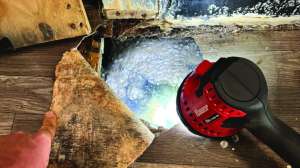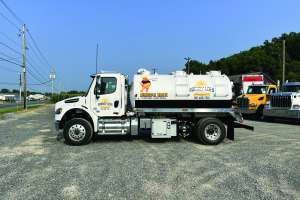

A holding tank is used for an onsite system that has no soil component for a variety of reasons (small lot, lake lot, no suitable soil, etc.). Holding tanks have to be pumped regularly. Because every gallon of water that goes in must be pumped out, the homeowner is typically quite sensitive to anything that causes the tank to fill up faster and cause the need to be pumped more frequently.
When troubleshooting tanks (whether holding or septic tanks) that are filling up “too fast,” check some of these possible causes:
1. Clear water sump pump: This is the sump pump that picks up draintile water from around the foundation. This should absolutely not be going to a holding tank (or septic tank). Clear water sump pumps typically pump outside the foundation, many times to the ground surface and in some cases subsurface. It’s just pumping clean groundwater away from the building. This will fill tanks way too fast, causing frequent pumping — and in the case of an onsite system, hydraulic overload and premature failure.
2. Sanitary sump pump: The sanitary sump pump in a basement is designed to be pumping to the holding tank (or septic tank). It basically lifts any basement level (or lowest level) water up to the shallower sanitary sewer pipe so tanks don’t have to be 9 feet deep in the ground. The sanitary sump pump typically pumps water from a floor drain, laundry tub — whatever plumbing is in the basement or subsurface level of the house. The sanitary sump pump should not be picking up draintile or groundwater. Sanitary sump pumps are installed in the basement floor to pick up the lowest plumbing. That also makes them susceptible to errantly picking up and pumping groundwater to the holding tank if the sump crock is compromised (not watertight) in any way. Older sanitary sump crocks used to be concrete and in many cases lose watertightness over time, filling with groundwater if in a high groundwater location. Make certain the sanitary sump crock is only pumping the water from the plumbing fixtures it should be, and that it is not picking up groundwater.
Please also note that the pipes beneath the basement floor that are supposed to go to the sanitary crock could be compromised and picking up groundwater from beneath the floor on the way to the sanitary sump crock. This is easily found by pumping down the sanitary crock and watching the few incoming pipes. If you aren’t using water in the basement, but water is flowing from the pipes into the sump crock, they could be picking up groundwater, and that groundwater is being pumped to the tank.
3. Silent toilet leaks: Have customers do the dye test. Put food coloring in the tank and do not flush. If the color shows up in the bowl, the toilet is adding a lot of nonstop extra water to the system's flow. This is a really big issue. I did troubleshooting for a very busy commercial establishment, a bar/restaurant on a major highway. The bar’s holding tanks were always full. Troubleshooting of the establishment easily determined that one really badly leaking toilet was quickly filling large commercial holding tanks. Do not underestimate this source of water.
4. No basement: If a house or other building on a holding tank does not have a basement, pipes beneath the floor could be picking up groundwater from beneath the building and filling the holding tank with clear groundwater that should not be going to the holding tank. Underfloor plumbing might require lining or replacement. Pump the tank and make sure no water is being used in the house. Watch the inlet pipe closely for any water coming in.
5. Water softener/iron filter: Recently we evaluated an onsite system for a home sale and the house was vacant. With proper protocol, we pumped the tank(s) to evaluate their condition. Two days later I stopped by to check something. I opened the tank and it was filled with crystal clear water. While looking in the tank I heard more water pump into the tank. The house was vacant, so there was no water being used. I checked all of the possibilities listed above. Turns out the water softener and iron filter recharges were pumping directly into the tank and obviously had some sort of issue because they filled the tank in two days. I would recommend that water softener/iron filter recharges not go to any type of onsite system. I always recommend they be pumped to the clearwater crock or directly out of doors when and where allowed. This is clean enough water that does not have to be treated so there is no reason for this water to be filling the onsite system tank(s).
Continue reading for free