
Cliff Wise has several things going for him that he thinks contribute to the success of his company and help him stand out from others — three business lines that synergistically support each other, a willingness to use his vacuum trucks on any unusual project, an innovative disposal system and a great team.
Wise began his sanitation career in high school when his father (also named Cliff Wise) and his father’s co-worker started their own septic pumping business in 1996. The business eventually added portable restrooms and later went through a change in the ownership structure.
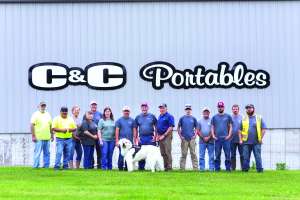
Today the company is owned by Wise and his father. Its three divisions operate under one roof but each with a different name — portable restrooms (C&C Portables), septic pumping (Knox Environmental) and roll-off services (Wise Choice Disposal).
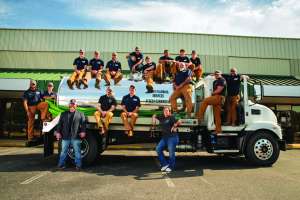
They employ 28 people — fairly evenly split between the three divisions — including Wise’s 17-year-old son Cooper when he’s not in school. Michelle Horn manages the office functions with a staff of three.

The company works within a 70-mile radius, which includes southern Indiana. They operate out of an office and several storage lots in Vine Grove, Kentucky, and recently added storage facilities in Cloverport, Kentucky, 40 miles away, with plans to open an office there in the future.
GETTING STARTED
In the 1990s, Wise’s father was a deputy sheriff. The position paid very little, so he took on moonlighting jobs. One was putting in septic systems for a local plumber. The plumber occasionally needed septic tanks pumped out but the local pumper was unreliable.
That gave Wise’s dad an idea. “He thought he could buy a pump truck, pump four or five tanks a month and make some money,” Wise says. He ran his idea by a part-time deputy in his office, Stan Heslep, who said he’d like to go in with him. Heslep had a farm that could be licensed for land application.
So in 1996, the two gentlemen bought a 1987 Ford F-700 with a 2,200-gallon tank from LaVerne Charlet and went into business calling their company C&S Pumping.
Wise was in high school at the time but helped out. “We started out pumping Saturdays, Sundays, a couple here and there, and in no time it just went crazy,” he says. “So we hired a driver. Not long after that, some contractors said they needed portable restrooms. So we bought four (Tuff Jon from T.S.F. Company).”

Then they hooked up with Bill Abernethy, owner of Abernethy Welding in North Carolina, and bought a 1992 International with a 1,500-gallon tank. “He was a great person,” Wise says. “He helped us out a ton early on. We stayed with him buying trucks right up until he died.”
Business grew so fast it was hard to keep up. For a couple years, on Friday nights they would pick up their units from construction sites, clean them and put them out for weekend events. “Then Sunday we’d pick them all back up, reclean them and take them back to the construction sites,” Wise says. “So, we were double dipping until we bought designated units.”
CHANGES
In 2006 the two partners split up the business. Heslep took the septic side and Wise’s father took portable restrooms, calling his company C&C Portables. “We’re still great friends and do a ton of work together,” Wise says. “But dad had me, and Stan had a grandson, and they wanted to make sure they had stuff lined up for us and the future of the businesses.”
C&C reluctantly got back into septic work about eight years later. “In 2011 my uncle bought a septic truck just to piddle around with,” Wise explains. “I didn’t want to have anything to do with it.” But in 2014 Wise’s uncle was offered a job opportunity, so he called Wise and made a convincing argument why he should buy his truck.
“It got hard for us to get rid of portable restroom waste,” Wise explains. “Stan would take it, but it had a lot of ammonia and he didn’t like the smell. My uncle said, ‘You could pump just enough septic tanks to mix with your porta pot waste.’ And he told me to get my farm licensed.”
The company added roll-offs in 2018 because customers were unhappy with the service they were getting.
PORTABLE RESTROOMS
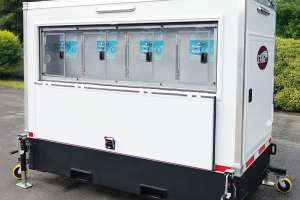
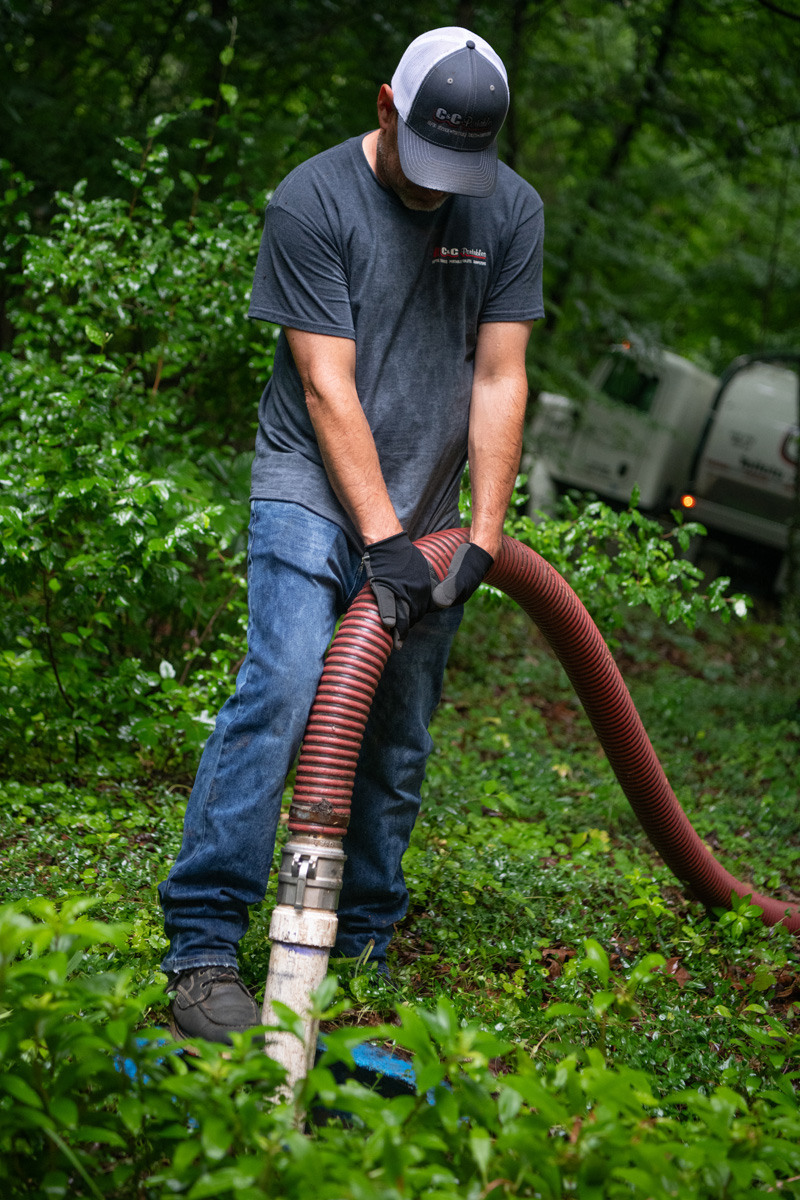
The company has about 1,000 portable restrooms and handwash stations combined, mostly from J&J Portable Sanitation Products, although Wise says they still use their original Tuff Jons.
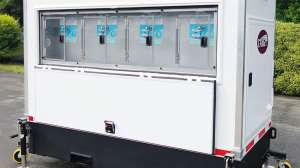
“They’re named Tuff Jon for a reason,” he says. They also have one JAG restroom trailer and five vacuum trucks, most from Imperial Industries.
They do a lot of construction work and a few local events. At one point they were providing units for a large solar installation project. Their oldest event is the Meade County Fair, which they’ve been doing since the 1990s. “We changed the game on that event years ago,” Wise says. “Before my dad and Stan got it, the fair would get about six toilets and maybe clean them, maybe not. We take 30 units and clean them every day. It’s been a big thing for our fair, which is one of the top ones in the state.”
ROLL-OFFS
Adding roll-offs made sense for the company. “A lot of guys don’t realize how close roll-offs go with septic and porta potties,” Wise says. “Usually the first call you get on a big job is for porta potties. Then they’ll ask if you have roll-offs. Then they get to needing vac trucks for various reasons.”
But it was hard to convince his dad because it was a big money pit at first. They started with one truck and 10 roll-offs and now have nine trucks and over 200 roll-offs in sizes from 12 to 50 yards.
Wise’s father works mainly on this side of the business. “He’s 74 and still drives nearly every day,” Wise says. “He’ll be in his truck until the last minute.” His father’s dog, Hoss (a great Pyrenees), is the company mascot.
SEPTIC PUMPING

Pumping is done for residential and commercial customers. Equipment includes T&T Tools probes and hooks, a Crust Buster, a Prototek flushable locator and two Power Boosters from Pressure Lift Corporation for deep work.
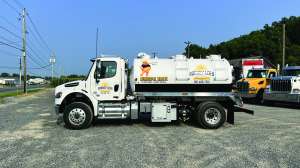
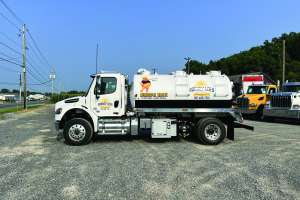
The service fleet includes a 1995 International from Wee Engineer with a 2,500-gallon steel tank, a 2019 Peterbilt from Imperial Industries with a 2,500-gallon aluminum tank, a 2006 Peterbilt from House of Imports with a 4,000-gallon steel tank and a 2025 Western Star from Imperial with a 5,000-gallon aluminum tank, all with National Vacuum Equipment pumps.
In January 2026 they bought a used Super Products’ Camel industrial vacuum truck with a 2020 Freightliner 114SD. “It can do car washes, lift stations, industrial cutting tables — stuff that a lot of people won’t touch, anything that’s deep or thick or tricky,” Wise says. “A lot of days we’ll move 50,000 or 60,000 gallons of something.”
They also do grease traps but are selective. “My prices are pretty steep,” Wise says. “We usually get the customer who’s had a major problem. I don’t want all the grease in this area. I want the ones that are going to pay and who appreciate what we’re doing.”
Wise does not limit his vacuum work to septic tanks. “I’ve seen the vac truck work to a different level — stuff you’d never think you’d do with one,” he says. “We did a job on an interstate where a truck had flipped over. There was laundry detergent in it that caught on fire. We sucked it out of a ditch for 10 hours that night. As long as it’s not hazardous, we’ll do it.”
DISPOSAL
Wise did get his farm licensed for land application and disposed of all waste there, not wanting to rely on costly treatment plants. “The farm has surface spread and also a set of open trenches,” he says. “The health department helped me with all that. I use the trenches when it’s wet and the land application when it’s dry.”

Wise has a good relationship with the health department. “They’ll tell you they’re amazed at the way I do things because I’m always looking ahead 10 years. They’ve used my land-spreader operation for the state’s ‘train the trainer’ where they teach installers how to correctly do this.”
While it was convenient to use his own property for disposal, it was also time-consuming and a lot of work. “I spent hours screening, trying to get the trash out,” he says. “I started looking for different ways.”
He eventually bought a ScreencO Systems screen, which helped. But then at the WWETT Show in 2019, he talked to James Penner, owner of In The Round Dewatering, who had a dewatering system using a rotating stainless steel drum. Wise originally thought it was too expensive and complicated — until he saw it in 2025. “It’s really simple,” he says. “After I saw how it worked, I believed in it and knew that’s what I wanted. We built a friendship from that time on.”
He bought a unit, built a building around it and ran his first load Jan. 1, 2026. He runs everything through it. Sludge is mixed with a polymer in the drum that then rotates. It’s lined with interlocking PVC filter tiles enabling liquids to drain out. The liquid is spread on the field and the sludge taken to the landfill.
“I can get rid of a lot more water on my farm dewatered than sludge, and it’s way cleaner,” Wise says. “In this business, you have to control your disposal.”
A GRATIFYING CAREER
The company’s biggest challenges are fuel and insurance costs, Wise says. But on the plus side he finds satisfaction in operating the business.
“We’re totally service-driven,” he says. “We work a lot of hours and do a lot, but we help a lot of great customers. There’s nothing better than when someone’s house is flooded and in 30 minutes you’ve got them working again. They’re just amazed by it. Or you take someone a roll-off and get them cleaned up. You can change a life at a bad moment into a better moment.”
Continue reading for free