
Sources of discharge into septic systems change over time, and trends in home heating systems play a role.
The Inflation Reduction Act introduced an Energy Efficient Home Improvement Tax Credit, increasing federal tax incentives for a wide range of energy-efficient home improvements, including high-efficiency gas, propane and oil furnaces.
Under the provision, incentives were raised to 30% of the project cost, up to a maximum of $600. To qualify, furnaces must have an Annual Fuel Utilization Efficiency rating of 97% or higher. As efficiency standards increase, heating equipment with condensing technology is increasingly common for residential and commercial installations.
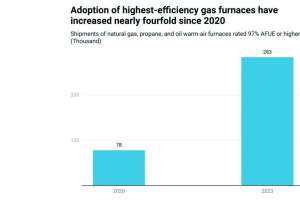
This is not just furnaces — it also includes gas boilers and water heaters. Data on the adoption of tax credits available in the Inflation Reduction Act show that the number of high-efficiency natural gas furnaces installed by consumers has increased since 2020.
The impacts we should know
However, these high-efficiency appliances create an often-misunderstood residue — acidic condensate. Acidic condensate is a byproduct of condensing technology that extracts additional heat from the combustion gases, which then cool inside the appliance.
Unlike air-conditioning condensate, this condensate is corrosive because it includes various acids from burning natural gas (or propane). If discharged untreated, this residue can corrode plumbing, concrete foundations, floor drains, septic systems and other wastewater infrastructure.
BTU input of heating equipment
The more efficient the equipment is, the more condensate it creates. Certainly, the number of days the equipment runs and the type of heating equipment in use will impact on the volume of condensate produced as well.
The chart below provides the estimated condensate produced based on an appliance’s efficiency and Btu input. To estimate the Btu per day to heat a house in more moderate climates, multiply the square footage of the home by 20-30 and in cold climates, multiply the square footage by 30-40. For example, if you are trying to heat 1,250 square feet in a cold climate, 37,500-50,000 BTUs will be needed. With a 98% efficient furnace system this would generate 9-10 gallons of acidic condensate per day. If you have a water heater also using natural gas or propane, the number would increase.
Reroute or neutralize
For septic system applications it is best if the acidic condensate does not go into the system unless neutralized as it could affect the pH. Ideal pH in wastewater will typically be around the neutral range of 7.0.
Aside from the condensate from gas boilers, furnaces and hot water heaters, acidic pH can be influenced by cooking habits, low alkalinity in the water supply or acid-based cleaners. If there is an above normal use of dairy products, soda, coffee, excessive baking or home canning, lower pH levels may be observed. The nitrification process also releases hydrogen ions, which may lower the pH. Acidic conditions limit the type of bacteria that are able to grow and survive, adversely influencing wastewater treatment. And generally, the microbes that do exist at low pH levels are not as efficient as the microbes that can survive at a neutral pH.
The general pH level can be easily identified by the odor of the system. Low pH has a very acidic smell that absorbs readily into clothing and is hard to remove. Over a brief period of time, our olfactory sensors become accustomed to an odor. As a result, the odor test can only be used at the very start of a testing or inspection before our senses get used to the odor.
Testing strips or a pH meter are inexpensive devices that can be used in the field or a laboratory and will give a more accurate reading on the pH.
If there is an uncomplicated way to route the discharge to a French drain or other clear water discharge, that option may work, but keep in mind freezing if you live in a climate where that is a concern. Another item to consider is that there is still a risk to concrete or piping exposed to the acidic discharge. In addition, more regulations are requiring that the condensate be neutralized to limit impacts to downstream components.
Condensate neutralizers are filtration devices filled with neutralizing media, such as magnesium hydroxide, which interacts with the condensate to lower its acidity. There are several commercial condensate neutralizers that work with high-efficiency gas-fired appliances to safely treat and discharge condensate. Not all neutralizer media is the same. The media will need to be replaced and will depend on brand and model, but typical residential replacement is at least every 12 months. Service technicians should incorporate this neutralizer service into the preventive maintenance program for the high-efficiency appliance.
Fixing flow
With either option there is a concern about a slow trickle of condensate water discharged. If there is no other water use in the home, such as when people leave for vacations, this slow stream can freeze in pipes in cold climates.
To solve this problem a small sump can be installed to deliver the volume of water generated in one larger volume. However, both of these problems can be solved with one solution where a condensate pump is combined with a neutralizer. The pump plus neutralizer can simultaneously treat the acidic condensate and discharge it into the sewer pipe pump. In many residential and commercial applications, the condensate evacuation cannot always be done by gravity to an existing sewer line, usually because the application lacks below-floor drainage.
High-efficiency condensing boilers, furnaces and water heaters can save property owners significant money, but to achieve their value and to ensure the customer’s money-saving investment does not cause problems down the road it is important to neutralize the condensate waste. Keep these thoughts in mind when servicing a new customer. Become familiar with the gas equipment they use and explain the potential consequences of running the condensate from them down the drain.
Continue reading for free