For many pumpers, August is the apex of the busy season; you’re emptying more tanks per day, logging more miles per week in your trucks and — for those who also provide portable sanitation — serving numerous special events.
When you’re busiest, a heightened awareness of following the best safety practices is necessary. Many a septic service driver has told me about these hectic times and the near misses they’ve had in traffic or when maneuvering their rigs on frantic job sites. It’s so critical that your crews remain diligent to avoid a catastrophe that could hurt a worker, imperil a pedestrian, take a piece of valued equipment off the road — and even threaten the future of your company.
I recall a horrifying story told to me by a pumper in the desert Southwest many years ago. He pulled away from a stop sign at an intersection at the same time someone darted across the crosswalk out of his field of vision. His truck struck and killed the pedestrian, obviously causing heartache for the victim’s family and wreaking emotional havoc on the pumper. Ultimately, the pumper was not blamed for the death. But the story drives home the point that truck driver safety always has to be top of mind.
This prompts me to ask members of our Pumper community, have you established a formal fleet safety program? Do you provide regular driver safety training for your staff that includes best practices for operating vacuum trucks? Do you promote seat belt usage to protect your drivers from crash-related injuries? Have you looked into new technologies such as telematics including cameras and intelligent speed assist control to monitor and correct drivers? How about exploring new truck designs that reduce blind spots during operation?
And have you appointed someone on your staff to make sure all of these initiatives are pursued to improve your safety record?
HELP IS ON THE WAY
I can hear your response to these ideas ringing in my years. You’ll ask how mom-and-pop pumping companies, operators of small- to medium-sized trucking fleets can afford all of these new safety initiatives? When every worker is on the truck 10 hours a day this time of year to serve customers, how can you justify dedicating on staffer’s time to perform the duties of a safety coordinator? As much as you recognize the need to promote safety in these ways, it’s just not feasible.
That’s where groups like the nonprofit Together for Safer Roads might be able to help. Working with government safety agencies, owners of some of the largest trucking fleets and technology companies, TSR is promoting a host of training materials available for use free of charge by small and medium-sized fleet operators. I recently had the opportunity to talk to the group’s executive director, Peter Goldwasser, about the importance of improving trucking safety and the Focus On Fleet Safety Training program.
“Small carriers represent a large share of the fleets out there. Some estimates are 80 to 88%, but they don’t necessarily have the time, resources or personnel to analyze, design and implement safety improvement systems or build a robust safety culture,” Goldwasser says. “We started doing market research on small and midsized fleets to get a sense of what was out there. From a resource perspective, what we found wasn’t particularly accessible or scalable to what fleets wanted. So our solution was to work with our members to create a program that’s not only comprehensive, but also easy to implement for fleets.”
TSR and its partners launched Focus On Fleet Safety curriculum that is presented through an online learning portal over six to eight weeks and then also offers further coaching sessions over Zoom or via telephone. The training focuses on three key areas: technology, training and development, and safety leadership.
ONE STEP AT A TIME
The message to small fleet operators is that changes can be adopted incrementally — that the mission for companies with only a handful of drivers may be to always look for constant safety improvement. Keep making an effort and overall safety will improve no matter how much time and financial resources you can throw into the effort.
For instance, if you can’t afford to retrofit all of your trucks with the latest cameras and driver monitoring gear, you can at least create a book of safety policies and begin to more formally train up drivers.
“You don’t necessarily need the most expensive or the most advanced telematics or technology systems, but what’s a critical place to start is around the overall safety leadership, training and development,” Goldwasser says. “What types of programs and policies do you have in place? How is safety being discussed and introduced? What’s the overall safety culture? These are things that certainly take time, planning and attention, but they don’t necessarily take heavy capital investment.”
To learn more about TSR and emerging safety program offerings, check out the website togetherforsaferroads.org In the meantime, I’ll elaborate on a few of the safety and technology tips I discussed with Goldwasser.
WEARING SEAT BELTS
It may seem obvious, but simply increasing the use of seatbelts by your drivers can make a positive difference in overall safety for your team. Unfortunately, as a recent TSR study showed that while seat belts saved more than 400,000 lives between 1975 and 2017, an estimated 14% of commercial drivers still don’t wear them. Seat belts reduce the risk of death by 45% and the risk of serious injury by 50% for drivers and front-seat passengers, according to the report. And over three-fourths of those ejected during a fatal crash die from their injuries.
“One of the oldest safety technologies is seat belts, but it’s sometimes forgotten and overlooked on how dramatic that can be in saving lives,” Goldwasser says. So what should fleet owners do to work toward 100% compliance with seat belt usage?
First, write a strong seat belt policy for your company and enforce it — monitoring devices today can track whether drivers are wearing seat belts. And part of that policy should require seat belts no matter how short the drive or how slow the vehicle is operating. Also, make sure the seat belts on all of your trucks are comfortable to wear for your drivers, with plenty of adjustability. Buy vehicles in the future that have advanced pretensioners and load limiters, locking retractors and energy absorbing technology.
BLIND ZONE REDUCTION
TSR worked with the U.S. Department of Transportation and other partners to release a report on blind zone reduction for truck drivers. Goldwasser explains that there is a trend in some parts of the world to move to more cabover truck designs to improve visibility.
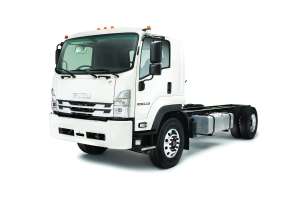
“The conventional truck is designed in such a way with the hood and engine out front that it creates very significant blind zones around the vehicle,” he says. “Whereas more modern cabover design trucks where the driver is sitting on top of the engine block and lower to the ground provides much superior vision to the front and sides. These trucks are readily available in many markets; not so much in North America, but increasingly so.”
Goldwasser envisions a slow transition of fleets to optimize the view from the cab. Other options, he says, are making aftermarket modifications of existing trucks, adding cameras that improve visibility all around vehicles.
“It’s not an either-or proposition, but they should run in tandem because you’ve got millions of trucks on the road that could benefit from cameras,” he says.
Regarding the cabover trucks, Goldwasser says drivers have noted “they universally have a superior, positive experience. They’re easier to get into, lower to the ground and have more [interior] space.”
ADDING TELEMATICS TECHNOLOGY
Tracking driver performance through technology devices like cameras and speed tracking can have a positive impact on driver safety and may provide other benefits, such as lowering insurance premiums for fleet owners. Cameras can reveal inattentive or impaired driving and ISA allows fleet managers to govern maximum speeds of trucks and shift those limits on the fly.
The key to successfully adapting to these new technologies is gaining buy-in from drivers who might feel threatened by constant performance monitoring, Goldwasser says.
“How it’s presented is critical. If drivers view cameras as being invasive and they’re being implemented for reasons that are not beneficial to them, then it’s logical that they will be apprehensive toward them,” he says. “But if it’s presented to them as a way to exculpate in situations where someone accuses you of being at fault, or if there are ways for you and your managers to support training, the reception is dramatically better.”
ADDITIONAL RESOURCES
As you continue your fleet safety journey, consider looking into these sources of information suggested by TSR:
• The Federal Motor Carrier Safety Administration provides information on regulations, programs and commercial vehicle research designed to improve road safety for commercial carriers.
• The National Highway Traffic Safety Administration shares data and research on topics like seat belt usage, crash statistics and safety campaigns for fleet managers.
• The Commercial Vehicle Safety Alliance is an international group that provides updates on safety initiative, inspection standards and commercial vehicle regulations changes.
• Transportation Topics is a news source that provides updates on safety legislation, regulations and industry trends.
• Safety+Health Magazine is published by the National Safety Council and addresses topics and best practices relevant to fleet safety management.
• The Insurance Institute for Highway Safety offers research and statistics about vehicle safety, crash testing results and safety ratings fleet managers can utilize when buying new trucks.
• The American Transportation Research Institute focuses research on trucking industry safety, security and sustainability.
• The Smith System Driver Improvement Institute emphasizes defensive driving techniques through its “5 Keys to Safe Driving.”
• The National Safety Council offers a variety of courses for commercial truck drivers aimed at reducing crashes and creating a culture of safety.
Continue reading for free