As municipal treatment facilities face increasing stress from rapid population growth and aging infrastructure, septic service providers across the country are finding themselves caught in a major disposal pinch.
Pumper talked with Spencer Stevenson, owner of Atlas Septic in North Carolina, to discuss his transition from the automotive world into septic service, the challenging reality of treatment plant shutdowns, and why finding constructive solutions to the disposal crisis is critical for the industry’s future.
Pumper: Tell us a bit about your background before entering the septic industry.
Stevenson: I actually started my career in the automotive world. I was working as a service manager at a Chrysler dealership. It was hands-on, high-volume customer service and mechanical management, but a totally different world from environmental services.
Pumper: What made you decide to make the jump from automotive management into septic pumping?
Stevenson: I have a cousin who has been in the trade for a long time. He started out as an installer, transitioned into working as a county inspector and then eventually went back into installation. One day, we were talking about the septic business and what it would look like to open up a pumping and service operation.
At the time, my immediate reaction was, “Man, that sounds terrible, I don’t really want to do that.” But the idea stuck with me. The more I read into the industry and thought through the business logistics, the more I realized there was a real opportunity there.
Pumper: How did you go from that initial idea to actually founding Atlas Septic?
Stevenson: I left the Chrysler dealership and took a job with an existing septic company for a little while just to gain practical, hands-on experience. After working there, I realized I wasn’t a big fan of their business model.
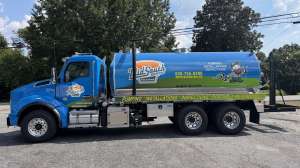
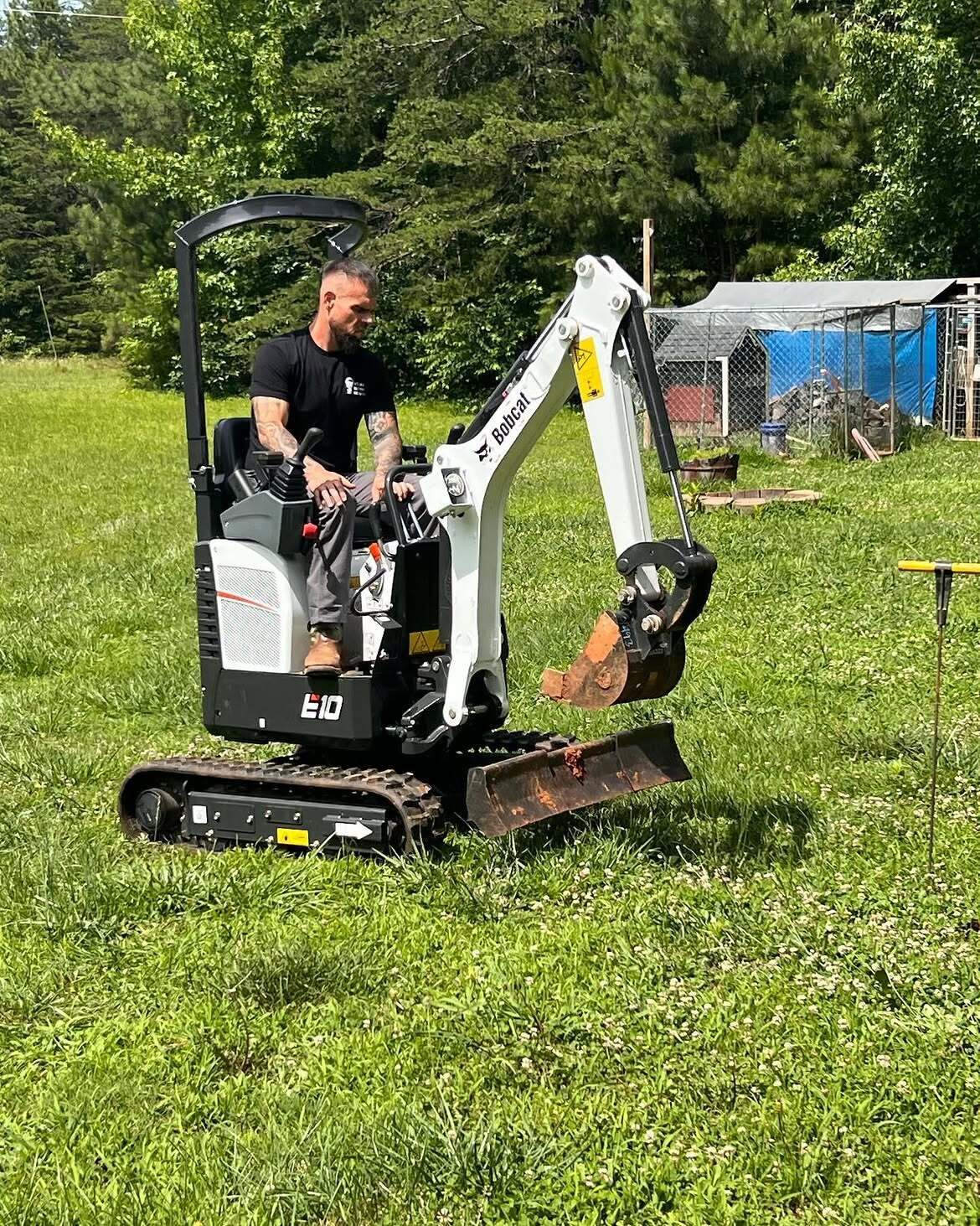
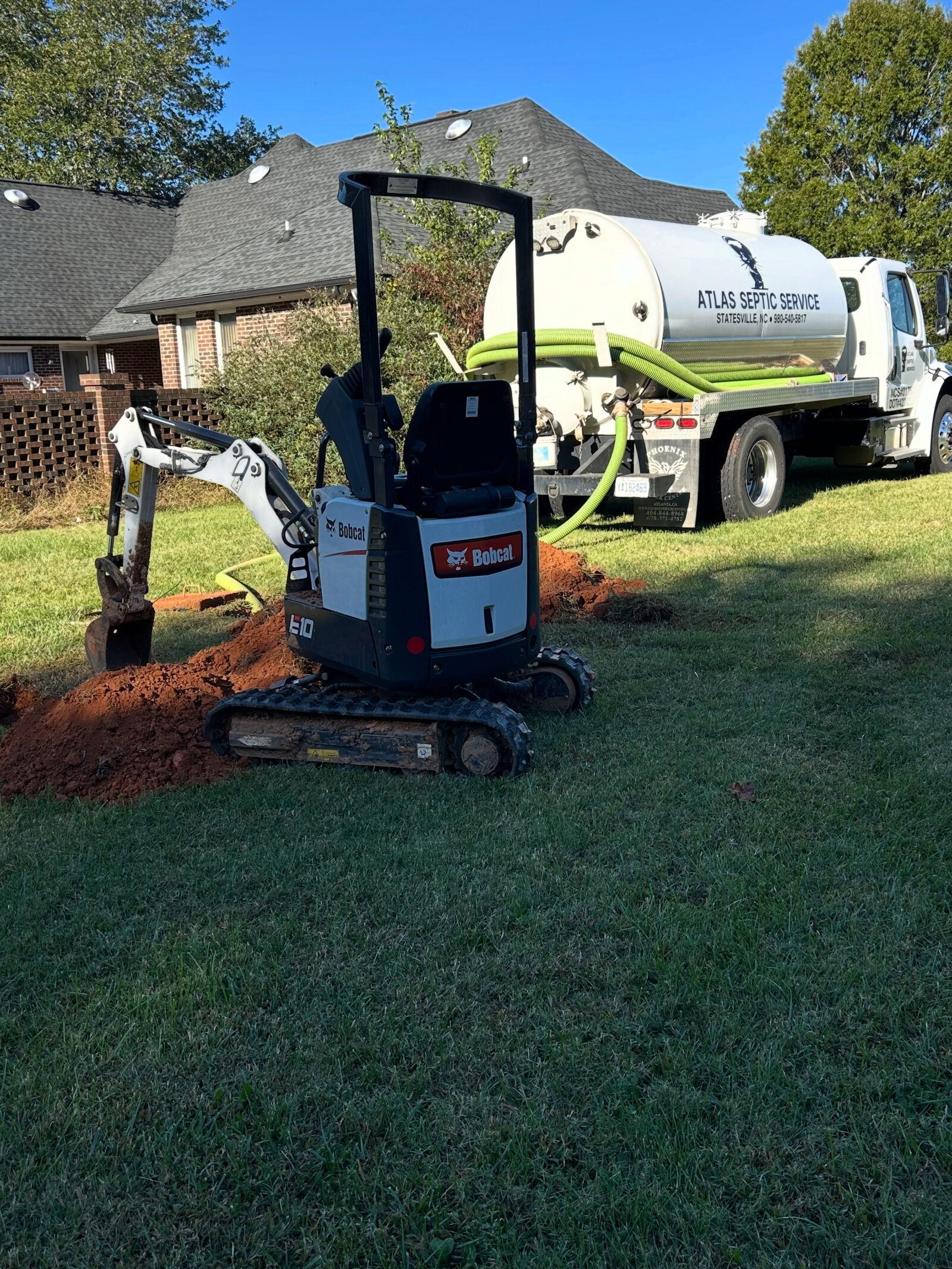
My wife Ashley and I decided I could do it on my own. We put together a business plan, bought a vacuum truck, a trailer, a mini-excavator and in May 2024, hit the ground running. Today, Atlas Septic is a lean one-man operation. I run a 2015 Freightliner equipped with a 2,500-gallon tank that I sourced out of Georgia from Phoenix Truck Center.
Pumper: When you first launched the business, what was the disposal situation like in your local county?
Stevenson: Getting started as a new guy in our home county, Iredell County, was tough. There were no open municipal dumpsites available to us locally. There’s a very large, established septic company in that area that has operated its own land application field for 50 or 60 years, so they were set. But for a startup, finding local disposal was a major hurdle right out of the gate.
Pumper: How did you solve that initial disposal dilemma?
Stevenson: We looked to neighboring Catawba County, which was pretty close to our core service area. At the time, Catawba had two municipal facilities accepting septage, one in Newton and one in Hickory. Both had been taking trucks for a long time, so we felt confident structuring our business around those two outlets. For the first eight to 12 months, everything ran smoothly.
Pumper: When did the disposal situation begin to deteriorate, and what were the warning signs?
Stevenson: The first warning sign came from the Newton plant. It’s an older facility, built back around 1970. Whenever our region got heavy rainfall, they’d send out an email blast saying, “Hey, you can’t dump today due to rain.” That caused temporary disruptions, but they kept telling us they were planning construction and upgrades to handle the capacity, which made sense given the age of the plant.
Pumper: What happened when those temporary delays turned into permanent shutdowns?
Stevenson: Eventually, the Newton plant went down completely. We received an email stating they couldn’t accept septage trucks at all until 2027. Then, just a few weeks later, the Hickory facility suffered a major pipe collapse and infrastructure failure. They shut their doors to outside trucks, too. Overnight, both of our primary disposal outlets were gone.
Pumper: Where did you go once those local plants closed?
Stevenson: We reached out to Wilkes County, which is further north. They were gracious enough to open their doors to us, but it forced us straight into what I call “limp mode.”
When Newton and Hickory went down, all the local pumpers flooded into Wilkesboro or Morganton. That shift cascaded through the whole region: every time one facility shuts down, dozens of trucks get rerouted, overloading the next plant until it suffers operational strain too.
Pumper: How did having to drive to distant treatment facilities affect your daily schedule and workload?
Stevenson: It drastically altered our logistics. Before the shutdowns, driving to a local dumpsite was about a 38- to 45-minute trip loaded. Once we had to haul up to Wilkesboro, especially when working jobs on the southern end of our territory, traffic and distance added over an hour and 15 minutes one way. I’d finish a job, drive to discharge by 3 p.m. and still have a two-hour drive just to get back home.
Pumper: How severely did that impact your revenue and business sustainability?
Stevenson: It cut my daily job capacity at least in half. When local plants were open, I could easily service three tanks a day working solo. After the closures, I was capped at two tanks a day maximum just because of the transit time.
Losing one job a day is a 33% drop in gross revenue. Two tanks a day pays for fuel, truck maintenance and overhead, but that’s about it. It’s just “staying alive” income. To make matters worse, diesel prices spiked back up toward $5 a gallon during that same stretch, so we were spending significantly more money on fuel while making less.
Pumper: Did the situation ever reach a point where you questioned whether Atlas Septic could survive?
Stevenson: There was a brief period when Wilkesboro had to pause acceptance for a major main upgrade, and Morganton was completely overwhelmed. Ashley and I wrote an article and posted about it online because I genuinely didn’t know if I could keep operating.
Luckily, Ashley has a steady job, so our household wasn’t going under, but it made me worry about other operators. If pumping is a guy’s sole livelihood and he built a business around facilities that have always been open, what is he supposed to do when the state or municipality shuts the gate?
Pumper: Have you looked into private land application or setting up your own disposal facility to get around municipal plant reliance?
Stevenson: We’ve actively investigated land application, but the regulatory process at the state level is a massive gamble for a small business.
The Department of Environmental Quality informed us that to apply for a land application permit, you must first buy the land out-of-pocket and pay $10,000 to $20,000 for a soil scientist to complete all testing.
Only after you’ve spent $300,000-plus on land and testing will the state come out and evaluate whether they will grant a permit. If they turn you down over environmental buffer zones or local wildlife, you’re stuck holding hundreds of thousands of dollars in unusable land.
Pumper: What about technological solutions like dewatering or private pretreatment?
Stevenson: I’ve looked into drying beds, where you dump onto an incline, let the material dry and haul the solids to a landfill, as well as mechanical dewatering units. I even talked to an innovator building private pretreatment systems.
The problem again comes down to scale and regulatory clarity. Buying $200,000 in specialized processing equipment isn’t realistic for a one-man show without investor backing. And whenever you bring alternative ideas to regulatory agencies, the response is often a blanket, “We don’t think you can mitigate smell,” without providing clear design standards for what would be approved.
Pumper: What do you think the general public and municipal leaders misunderstand about the septic and wastewater industry?
Stevenson: Wastewater is completely “out of sight, out of mind” for most people. Towns expand rapidly, approve massive residential developments, collect property taxes and build beautiful public parks. Parks are great, but if residents can’t flush their toilets, a playground doesn’t do much good.
People don’t realize that septic waste is much more concentrated and difficult for a plant to process than standard municipal sewage. It puts a heavy burden on facilities that were never designed for these volumes.
Pumper: How do you want to see the industry and regulators collaborate to solve this long-term?
Stevenson: I want to be clear, this isn’t about pointing fingers or blaming municipal workers. Every plant operator I’ve worked with has been fantastic. They are genuinely heartbroken when they have to turn us away because their facilities are physically at capacity.
What we need is open communication and long-term planning. Industry associations, state agencies and municipalities need to sit down and build one-year, five-year and 10-year plans for septage disposal before the next wave of plant shutdowns occurs.
We must educate local officials that blocking septage disposal creates environmental hazards. If a homeowner’s septic system backs up and no pumper can discharge waste, people resort to unapproved, dangerous workarounds just to use their bathrooms.
Regulators should establish realistic, step-by-step pathways for private operators to invest in dewatering or land application without taking on catastrophic financial risks upfront.
Ultimately, I want Atlas Septic to be part of the solution. Disposal is a nationwide challenge, but if we start having honest, constructive conversations now, we can build an infrastructure that supports both our communities and the essential trade businesses that keep them running.
Captions: Photos submitted by Atlas Septic
Stevenson - Stevenson on his Bobcat E10 ultracompact mini-excavator. This machine has proven very useful for him to expose tanks on small lots with minimal damage to homeowner property.
Atlas Excavator - After exposing the septic tank lid using the mini-excavator, Stevenson backs up his 2015 Freightliner from Phoenix Truck Center, deploys the hose and is ready to pump.
Continue reading for free