
Pumping a holding tank is typically straightforward, but you should still evaluate several key factors to ensure the tank is performing as designed.
Holding tanks are simply a collection and storage device requiring services by a sewage pumper/service provider and offsite treatment. Use of holding tanks is often prohibited except when no other option exists or for ultra-low use applications. In some cases, a holding tank captures commercial or industrial flow that cannot be treated in the OWTS due to components that cannot tolerate chemical additions at higher amounts. OWTS are designed to handle normal usage of cleaners and other household products, but some businesses and even homes use levels that can be detrimental to the treatment process.
Initial inspections
When servicing a holding tank, you should first check for odors near the tank. There should be no strong odors if the house vent stack is operating properly. If odors are detected, determine the source by checking for missing caps on inspection ports, or damaged lids/risers. Note the date the tank was last pumped to evaluate how the facility is used and when the next pumping may be needed.
The volume of septage removed versus the tank capacity is another item to evaluate. Ideally the facility has a flowmeter or other device to track the amount of water used inside. This volume of storage in the tank should be indicated in the permit, but if it is not available, it can be determined by first calculating the volume in cubic feet based on tank dimensions and then using a conversion factor (7.48 gallons/cubic foot) to convert cubic feet to gallons.
The maximum liquid level for a holding tank is measured from the bottom of the inlet pipe (versus the outlet pipe in a septic tank). Obviously if the tank is full, you can determine the capacity based on how many gallons are removed (unless ground/surface water is leaking in as you are pumping). The data collected from the tank should then be compared to the interior flow data to determine if there are leaks into the piping or holding tank.
Access examination
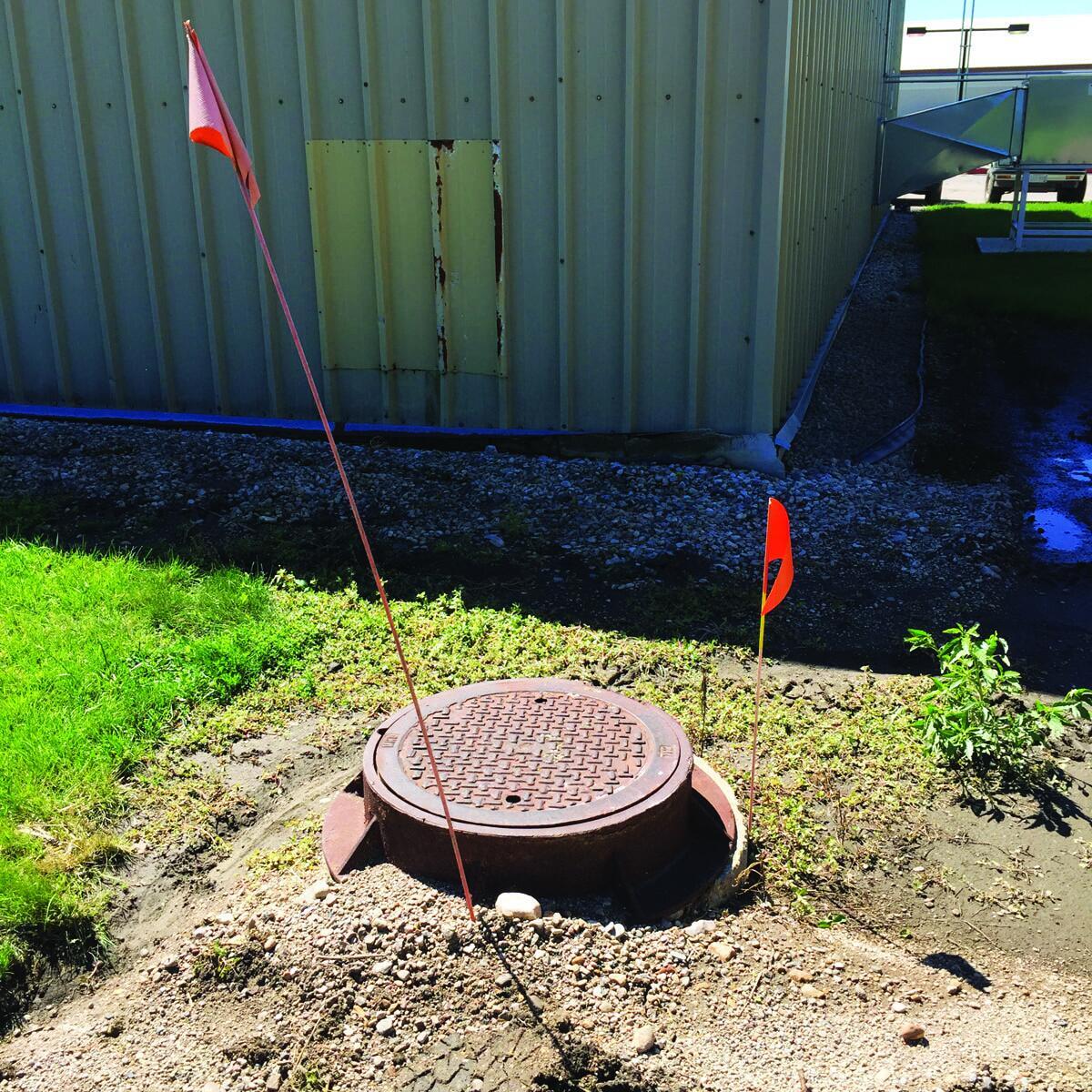
Tank access must be adequate for inspection, servicing and pumping and should always come to grade. The lid on the tank or riser should be securely fastened with safety screws or a heavy concrete lid. Secondary lids are a great safety feature for holding tanks and retrofitting is something to offer the property owner. When you open the tank, check if the levels have risen above the inlet pipe (indicating an alarm failure) or if they are lower than expected (indicating a potential leak). Check the inlet for sewage flow into the holding tank, particularly if no one is home continuous flow may indicate a leak, which can be very costly for those on a holding tank.
Inspect the tank access, inlet and seams where risers join tanks for stains or root intrusion that may indicate infiltration of groundwater or surface water. If access is buried, this is a time to talk with the owner about adding a riser to grade since frequent servicing will be needed. Although you can get the liquid out of smaller access (like a 6-inch pipe), the maintenance hole should be used to empty the holding tank so the overall tank characteristics can be evaluated and any heavier material that may have settled out be properly removed.

Alert systems
Every holding tank should have an alarm to monitor the level in the holding tank to indicate when it needs service. There are simple devices which do not require power, but these devices only provide a visual indication of the sewage level in the tank. A better option is the use of hardwired sensors, which can provide both a visual and audible alarm.
The alarm level is specified based on how fast a pumper/service provider can respond to a service call or regulations. Use of multiple alarm sensors increases the data available in regard to the timeline for service or redundancy.
Examples include three alarm sensors set at 50%, 75% and 100% capacity or two alarm sensors set at 75% and 90% capacity. More frequently these alarms
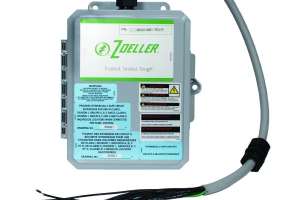
are tied into telemetry. Telemetry can allow the owner or service provider to know when the tank is getting full and in need of service. When servicing the system, it is always a good idea to ensure the alarm is operating as designed and if present the telemetry is functioning. If the system includes a battery backup, you should confirm the battery operates the alarm as designed. If this alarm is not working, the result will be a lack of service when needed resulting in sewage on the surface or backing up in the home or business.
Contents within
Settling of the solids may occur during storage, but generally they contain significantly less sludge and scum. This results in a mixed slurry that is less concentrated than typical septage from a septic tank. This information may be useful if the septage is going to a wastewater treatment plant that has capacity limitations, as domestic holding tank waste is easier to treat than the septage from a traditional septic tank.
When servicing holding tanks, consider the potential for toxic waste streams being generated. If the home or business has a full-sized OWTS, but is collecting a small stream of sewage in the holding tank, first determine why it was installed. It may be due to a lack of treatability such as from beauty salon waste or garage floor drain or regulatory requirements due to generation of industrial or agricultural waste.
Treatability is a bigger issue as it may pose concerns with land application of the septage or acceptance at a wastewater treatment plant. Any nonsewage waste must be carefully evaluated to determine the appropriate location for treatment. If the sewage looks or smells off, it should be tested before pumping. An easy field test is to check the pH, and results should fall between 6 and 9. If it is outside of this range additional testing is needed to determine an appropriate disposal option.
Post pumping
After the tank is pumped, structural conditions should be evaluated. Holding tanks may be made of concrete, plastic or fiberglass and rarely full of sewage, so therefore must be designed to stay in the ground without the weight of sewage in the tank. The outside force of soil and groundwater can damage tanks, so noting deficiencies during service is important.
Check the integrity of the tank top, sides and bottom as well as possible from above using either a hand mirror to cast light into the tank or using a remote camera. The inside of the tank should show no signs of structural failure such as cracks, exposed rebar or rust stains from the rebar in a concrete tank. Spalling (physical degradation of a concrete structure that exposes aggregate and/or structural reinforcement materials) is an indication of possible structural failure and should be noted. A plastic or fiberglass tank that has cracks is likely no longer watertight. Your report should indicate any flex or deformation detected in these tanks because their strength is dependent upon the integrity of their shape.
A large challenge with holding tanks is leaks in the home or business or infiltration into the piping or holding tank. If the facility has dripping faucets, toilet or waterline leakage, the holding tank will fill up rapidly. A steady stream of sewage entering the tank while service is being conducted can be a sign of leakage. If storm or ground water flows into the tank, it will need to be pumped frequently increasing the cost to the property owner. This is where having the ability to compare the use of water in the facility with the gallons removed can be helpful. If flow data is not available, historical trends can also indicate an increase in volumes which may relate to leakage in the facility.
Holding tanks have their place in onsite wastewater solutions, but like everything, they are only practical when operating efficiently and optimally, and that comes from proper maintenance on the system as a whole.
Continue reading for free