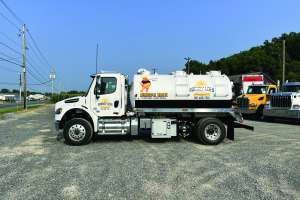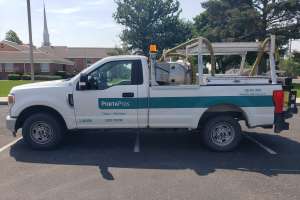

Running a liquid waste business is more complicated than it looks from the outside. Whether you pump septic tanks, service portable toilets, clean grease traps, or haul waste oil, the work is measured in gallons; every job is a little different. Volumes change from stop to stop, schedules shift, and the back office depends on drivers out in the field to accurately record what happened.
For most operators, the biggest challenge is not their trucks or crews. It’s paper tickets, information stored in someone’s head, and the gaps between the field and the office. That is where jobs get missed, invoices are delayed, and revenue slips away. Closing those gaps makes the entire operation run more smoothly, and these six changes can make a big difference.
Liquid waste management covers the collection and servicing of waste that does not go into a traditional trash container. That means septic tank pumping, portable toilet and restroom servicing, grease trap cleaning for restaurants and commercial kitchens, and waste oil collection. Some businesses specialize in one line, though many run several at once. In either case, liquid waste operations means scheduling jobs, routing trucks, documenting service, and billing customers day after day.
There are a few reasons why liquid waste routes are harder to run than a standard trash collection. The amount collected varies at every stop, so there is no fixed load to plan around. A vacuum truck holds only so much before it must drive off and empty, so poor planning can quickly waste fuel and time. And much of the work happens out of sight, at an underground tank or a unit tucked behind a building, which makes service verification a real problem. Variable volume, truck limits, out-of-sight work: these three challenges shape nearly every part of a liquid waste operation.
Where does a liquid waste operation lose money?
Rarely from one major mistake. Instead, revenue slips away through small gaps across a day managed on paper. A driver gets a printed route each morning and relies on memory to finish it. A midday change means printing a new sheet, snapping a picture, and texting it to the truck. A service gets skipped because it was written down on a sticky note. A customer disputes a bill and, with no record of the job, the office writes it off rather than fight it.
The back-office side leaks revenue too. Field data crawls back on paper tickets, so billing lags days behind the work and ties up cash you already earned, while someone retypes records by hand to get invoices out the door. None of these make a dramatic impact on its own. But stacked across thousands of jobs a month, they add up to the difference between a difficult year and a profitable one. Every one of them is fixable.
How do you streamline liquid waste management?
Streamlining comes down to putting the whole job on one system instead of paper and memory, so each step feeds the next. Six ways carry most of the weight:
- Optimize your routing: When the office can see service locations, customer schedules, and where every truck sits in real time, the day builds itself so drivers’ chain nearby stops instead of criss-crossing the service area, and last-minute emergency calls drop to whoever is closest; the single change Routeware links to around 22 minutes saved per route each day.
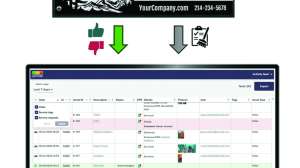
- Track every unit: Inexpensive NFC tags record the identity, location and status of each unit out in the field and sitting in the yard, so you always know what is placed, what is ready to go, and what is overdue to come back, which stops you promising the same unit to two customers or bleeding rental on one forgotten on a job that finished weeks ago.
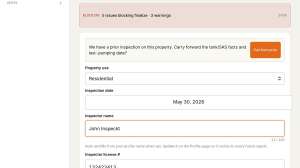
- Prove the service in the field: The driver taps a photo of the unit right there on the job, stamped with the date, time and GPS, and now you can win any argument in seconds instead of losing it, which also means you stop eating the overages and emergency runs a nervous office would rather waive than defend.
- Automate your invoicing: When the service a driver logs flows straight into billing, invoices go out while the job is still fresh and match exactly what happened in the field, which is how operators run a billing cycle roughly twice as fast, lift revenue per vehicle, and stop the charges that used to slip through from going uncollected.
- Connect the office and the cab: Real-time communication between dispatch and drivers means a change reaches the truck the moment it is made, and the office sees progress as it happens, instead of a morning spent on the phone working out who is where.
- Run it all on one platform: When routing, tracking, proof of service and billing share a single system rather than a stack of disconnected tools and paper, the whole job moves through without anyone rekeying it, which is where operators win back close to 16 hours a week in the back office.
You can see how these fit together on Routeware’s Site Services, built for portable sanitation, septic, and site service businesses.