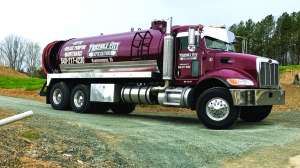
Pumpers in Ravalli County, Montana, have long relied on the wastewater treatment plant in nearby Missoula to dump their septage as there are no in-county facilities that can handle it. But in 2022, the Missoula treatment plant reduced the amount of septage it would take from Ravalli County.
Ravalli County officials are now trying to address the problems this has caused, reported the Ravalli Republic. Some pumpers now have weeks-long backlogs of septage, and one pumper says he drives 300 miles to dump in Helena.
Septage taken to the Missoula treatment plant by Ravalli County pumpers rose from 410,000 gallons to 1,450,000 over a four-year period, placing a strain on the facility. “With the limits, we’re once again at a comfortable limit,” said lab and pretreatment manager Nate Gordon. “It’s a city facility paid for by the taxpayers of the city of Missoula.”
The county formed a wastewater working group. The group of pumpers, wastewater treatment specialists, county and health officials have discussed options such as developing their own treatment plant or using county-owned land for land application. The group plans to issue recommendations to the county.
Colorado
Lake County had a moratorium on new short-term rental licenses since September 2022 to assess the positive and negative impacts of such rentals and allowing time to create recommendations for the Board of County Commissioners to consider. The moratorium expired earlier this year.
The main environmental concern over these short-term rentals, expressed by Lake County Community Planning and Development and Economic and Planning Systems, is overuse of septic tanks, according to a report in the local Herald Democrat.
Recommendations include not allowing STR licenses for properties with seepage pits, setting occupancy limits based on a septic system report to avoid system failures, and requiring owners to show proof of inspection every three years.
Massachusetts
To address ongoing water quality issues on Cape Cod, Barnstable County commissioners are promoting a program to help homeowners qualify for loans to create and upgrade septic systems. The program is called Aquifund, which is a rebranding of a program the county has had for years, provided by the Barnstable County Department of Health and Environment, says Mark Forest, county commission board member.
“The Department of Environmental Protection has come out with new regulations, and in some cases homeowners are going to have to upgrade their septic systems or eventually tie in to a sewer connection to a sewer line that will be coming by their homes,” Forest said in a report in capecod.com.
By rebranding to the Aquifund, the program will be able to provide more than just upgrades to septic systems, but also help homeowners with connections to sewer lines, Forest explained.
Ohio
Many homeowners in Lorain County were upset recently to receive a bill from the Lorain County Public Health Department for their septic systems, reported News5Cleveland. Ryan Tristano, an environmental health supervisor for the department, said residents now need a permit for their system. The cost is $120 for three years, with an annual fee of $40 thereafter. Systems installed in 2015 or later have been automatically enrolled in the program.
Although the invoice caught some homeowners off guard, the permit fees were approved by the Lorain County Board of Health after three public readings in 2023 and the city has been trying to get the word out since then, Tristano said.
In 2015, Ohio law changed to require all county health departments to run an O&M program for home septic systems. There are an estimated 20,000 septic systems in the county, half of which were installed before 1970.
Oregon
The Eugene Water and Electric Board has more than $1 million in the septic system repair grants program from federal funding. To distribute the money by the September 2024 deadline, they are broadening the eligibility requirements, reported KMTR-TV.
Previously, the grants were eligible only for properties that sustained damage in the Holiday Farm Fire, but now include all properties in the Holiday Farm Fire region and the McKenzie Watershed above Hayden Bridge.
To qualify, repairs must be made by the property owner or a licensed and certified installer and inspected by Lane County.
Everyone is being encouraged to apply, said Misty Fisher, EWEB’s customer programs coordinator. “Once you apply, we can match your request to the funds we have available. If we can’t match you with these grants, we can recommend other sources of funding and still help you along.”
Improperly maintained septic systems pose a threat to the McKenzie River, the sole source of drinking water for the nearly 200,000 people in the Eugene area.
Washington
Members of the Island County Marine Resources Committee presented a white paper outlining climate trends in the Pacific Northwest toward warmer and drier summers, storm surges and extreme high tides, reports the Whidbey News-Times.
Sea level rise increases risks to coastal communities, including impacts on septic drainfields, utilities, water systems and marine wildlife.
Preparation is key, said Patrick Havel, one of the authors of the paper.
“After an inundation event is not the time to find that insurance does not cover the damage or that the government can’t pick up the tab,” he said. “Ensure emergency response plans anticipate septic system exposure.”
Commissioner Janet St. Clair encouraged residents to make good choices and build solutions. “Your gravity-fed septic system that you put in in 1968 ain’t gonna cut it in 2030,” she said.
Commissioners were encouraged to incorporate this information into the county’s comprehensive planning process.
Continue reading for free