The septic tank is a settling device that provides a space for sedimentation and flotation to take place. The primary purpose of the septic tank is to provide relatively quiescent conditions to allow settleable solids to sink to the bottom and accumulate and floatable solids to rise to the top and accumulate. Both segregation and stratification are essential to the overall performance of the septic tank and involve both ascending and descending matter.
In this article, we will discuss how some products could impact the natural flotation process in a septic tank. This issue can be identified by septic tanks that have no clear zone or lack a scum layer.
In general, the flotation process in a septic tank is about density. A particle or object will float if its density is less than the density of the wastewater in the tank. The flotation process is enhanced by oil and grease in the wastewater, which congeals on the small, discrete particle surfaces, making them more buoyant.
Accumulation of scum by flotation is a significant factor relative to the efficient removal of grease, oil and floating solids. In general, septic tanks are effective at removing fat, oils and grease. Septic tanks typically take residential wastewater from a FOG level of 75-100 mg/L to below 25 mg/L. It is critical not to overload downstream components with FOG, as they can lead to clogging and overloading.
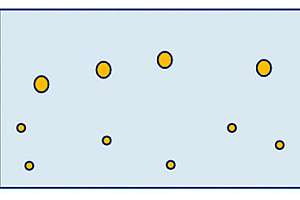
Emulsifiers are products (chemical) or processes (mixing) that affect this natural flotation process. An emulsion can take the scum layer, particularly the fat, oil and grease, and suspend it in the water. Whole milk is an example of an emulsion, in which the fat phase or cream forms tiny droplets within the milk.
Surfactants and emulsifiers help to keep dirt and oil particles suspended in the cleaning solution, preventing them from redepositing on surfaces. Emulsifiers are a type of surfactant.
- Surfactant is the broadest term. Both emulsifiers and detergents are surfactants. Surfactants, or surface-active agents, are compounds that lower the surface tension between two liquids or between a liquid and a solid.
- An emulsifier is a surfactant that stabilizes emulsions. Emulsifiers coat droplets within an emulsion and prevent them from coming together or merging.
Nature-based and synthetic emulsifiers are found in food, supplements, home and personal care, and industrial lubricant applications. The most common ones found in homes and residential wastewater include:
- Cleaning products: Soap, oven/stovetop cleaner, drain opener/clog remover, hard water stain remover, toilet cleaner, floor polish.
- Laundry products: Liquid fabric softener, laundry soap.
- Grooming products: Shaving cream, sunscreen, hand sanitizer, makeup remover, foundation, facial cleansers, exfoliants and liquid hand soap.
- Hair products: Shampoo, conditioner, hair dye, styling products.
- Dental care products: Toothpaste, teeth-whitening products and mouthwash.
- Bath products: Bath oils or salts, body wash and bubble bath.
- Creams and lotions: Moisturizers, hand creams, masks, anti-itch creams, hair-removal products and sunscreen.
In commercial kitchens, emulsifiers are common in degreasers and other cleaning products. They disperse oil and grease, allowing them to be rinsed away.
In septic systems, these emulsifiers can be difficult to remove by our typical sedimentation and floatation process. If used in large amounts, they can cause secondary emulsion where fats, oil and grease that was in the scum layer can move into the liquid layer of the tank. These emulsions can persist in the tank and cause overloading to downstream components.
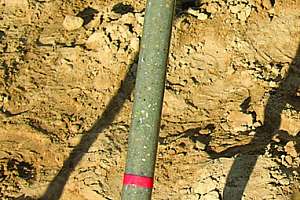
To identify a system that may be overloaded with emulsified products, a profile of the tank should be obtained using a device that can provide a liquid observation/core of the tank. Septic tanks that are not working properly may lack a scum layer at the top or may not have a distinct, clear zone as the scum that would normally be at the top is mixed in.
Product usage should be discussed with the system owner and as many eliminated as possible. Degreasers, fabric softeners and commercial laundry soap are some of the most common day-to-day uses in some homes, but some of the other products listed should be evaluated for heavy use to see if they could impact the flotation process.