
Satellite Vacuum Truck Manufacturing and Operator Efficiency
Bringing truck manufacturing under one roof
Satellite’s new 172,000-square-foot Georgia facility brings tank manufacturing, fabrication, truck upfitting, and assembly together in one location, creating a more streamlined production process.
Greater control over quality and efficiency
Bringing more manufacturing in-house gives Satellite greater visibility into each stage of production, helping maintain consistent quality while reducing unnecessary handoffs and improving communication between teams.
Designed around the driver
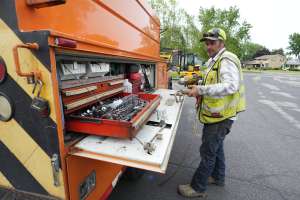
Satellite trucks are engineered with ergonomics and service efficiency in mind. Thoughtful placement of hoses, controls, storage and frequently used components helps reduce driver fatigue and the time required to complete service stops.
Trucks built for different operations
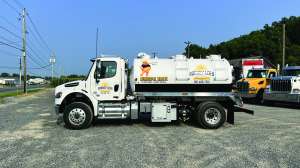
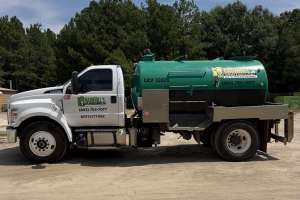
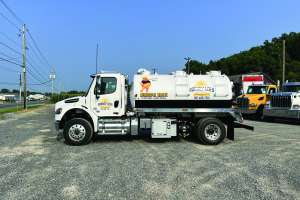
From the MAL 1300 and PnD 1150 to the SS 1600, Satellite offers truck configurations designed to support different route demands, service applications, and operational needs.
Investing in the future of the industry
The new Georgia facility strengthens Satellite’s ability to manufacture, refine and develop equipment around the evolving needs of portable sanitation professionals.
For portable sanitation operators, a vacuum truck isn’t just another piece of equipment, it’s one of the most important tools in the business. Reliability, tank quality, thoughtful design, and serviceability all have a direct impact on how efficiently a route runs every day.
That’s why Satellite Industries has taken a major step forward in how its vacuum trucks and tanks are manufactured.
With the opening of its new 172,000-square-foot truck manufacturing and distribution facility in Lumpkin County, Georgia, Satellite has brought more of the manufacturing process under one roof. From tank fabrication and manufacturing to truck upfitting, assembly, and final inspection, the facility gives Satellite greater control over production, quality, and efficiency.
But the investment goes beyond manufacturing. It’s also about building better equipment for the people who use it.
Satellite’s vacuum trucks are designed around the operator, helping reduce unnecessary movement, minimize driver fatigue, and shorten service times. Combined with a more streamlined manufacturing process, the new facility reinforces Satellite’s commitment to delivering dependable, purpose-built equipment for the portable sanitation industry.

Bringing truck manufacturing under one roof
Building a vacuum truck requires much more than mounting a tank to a chassis.
The tank, vacuum system, water system, plumbing, controls, storage, mounting hardware, and numerous other components all need to work together as one complete piece of equipment.
Satellite’s new manufacturing facility in Lumpkin County, Georgia, was developed to bring more of that process together.
The facility allows Satellite to manufacture tanks and complete truck upfitting within the same operation. Instead of treating tank manufacturing and truck assembly as separate processes, Satellite can approach the entire build as one integrated system.
Tank fabrication can be coordinated with the requirements of the truck configuration, pumping system, plumbing, mounting points, and other components that ultimately need to work together.
That creates a more direct connection between engineering, fabrication, assembly and quality control — and gives Satellite greater visibility into the entire manufacturing process.
For portable sanitation operators, the benefit isn’t simply where a truck is built. It’s what greater control over the manufacturing process can mean for the equipment they rely on every day.

Greater control over quality and efficiency
Quality is critical when manufacturing equipment expected to perform day after day in demanding environments.
Portable sanitation trucks routinely encounter heavy workloads, changing weather conditions, long service routes, and repeated operation of their pumping and water systems. That makes attention to detail throughout manufacturing especially important.
By bringing tank manufacturing and truck upfitting together, Satellite has greater control over how components are fabricated, installed, inspected and integrated into the finished vehicle.
Teams can monitor quality throughout production, identify potential issues earlier, and verify that individual systems work together before a completed truck leaves the facility. Rather than relying solely on a final inspection, quality can be addressed throughout the manufacturing process.
Bringing these operations together also improves manufacturing efficiency.
Every time materials, tanks, components or partially completed equipment have to move between separate facilities or outside production partners, another step is added to the process. Centralizing manufacturing helps reduce those handoffs and creates a more coordinated production environment.
When a question arises during a build, the people responsible for engineering, fabrication, assembly or installation can work together to resolve it. That tighter feedback loop helps identify opportunities for improvement, reduce production inefficiencies, and keep the manufacturing process moving.
For operators, it all comes back to building a dependable truck efficiently without sacrificing the quality and functionality they expect from their equipment.

Designed around the driver
A vacuum truck can have plenty of capacity and power, but if it makes the operator work harder at every stop, those advantages can quickly disappear over the course of a route.
That’s why Satellite trucks are designed around the operator, with an ergonomic layout that helps reduce driver fatigue and improve service efficiency.
Drivers may get in and out of their trucks dozens of times throughout a shift. Reaching for hoses, operating controls, accessing storage, connecting equipment, and servicing portable restrooms are actions repeated again and again throughout the day.
Satellite considers the placement of controls, hoses, storage, plumbing, pumps and other frequently used components to create a more intuitive working environment. Accessible components can help reduce repetitive bending, reaching, walking and unnecessary movement around the truck.
The objective is simple: make the operator’s job easier and help reduce the time required to complete each service stop.
Those small efficiencies can add up.
Consider an operator completing 40 service stops per day. If a more ergonomic truck layout helps reduce service time by just 30 seconds per stop, that represents 20 minutes of potential time savings in a single day. Across a five-day workweek, that adds up to more than an hour and a half of potential time savings for one driver.
Actual savings will vary depending on route conditions, equipment configurations, and operating practices, but the example illustrates why seemingly small design improvements can matter.
Time isn’t the only consideration, either. Reducing unnecessary reaching, lifting, bending and movement can help minimize driver fatigue over the course of a long route.
For Satellite, the question isn’t simply, “How much can the truck carry?”
It’s also, “How can we make the operator’s job easier?”
Trucks built for different operations
No two pumping operations look exactly the same.
Route density, service area, tank capacity, maneuverability, payload requirements, and the type of work being performed all influence what an operator needs from a truck.
That’s why Satellite offers multiple truck configurations designed around different applications.
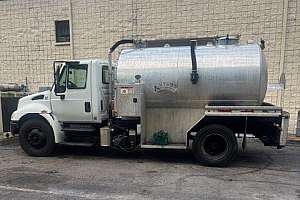
The MAL 1300, PnD 1150, and SS 1600 demonstrate three different approaches to meeting those needs — while maintaining a common focus on operator efficiency, functionality and durability.

MAL 1300: Capacity meets route efficiency
The MAL 1300 provides portable sanitation operators with a versatile option for everyday service routes, combining substantial capacity with a layout designed around the driver.
For businesses managing busy routes, efficiency depends on more than tank capacity alone. Operators need equipment that is accessible, intuitive and practical to use throughout the day.
The MAL 1300 is designed with those considerations in mind. Its tank is constructed from aluminum, helping keep the overall truck weight down and allowing operators to maximize payload while staying within the truck’s GVWR.
That means more usable capacity without adding unnecessary weight, a significant advantage for operators looking to get more out of every route.
Ergonomic placement of frequently used components also helps operators move efficiently through their normal service routine. Convenient access to hoses, controls, storage, and other equipment can help reduce unnecessary reaching, bending, walking and repositioning.
The result is a truck designed not only around how much it can carry, but also around how efficiently the driver can work from the first stop of the morning to the last.
For operators looking to balance capacity, payload, ergonomics, and everyday route efficiency, the MAL 1300 provides a practical solution.

PnD 1150: Built to do more on the route
Portable sanitation drivers often do much more than pump tanks.
They may deliver restrooms, retrieve units, service existing locations, move equipment, and respond to customer needs, all within the same day.
The PnD 1150 is designed around that versatility, combining pumping capabilities with the functionality needed for pickup-and-delivery operations.
At the heart of that design is a split-tank configuration. The 800-gallon waste Sidewinder tank sits directly behind the cab, while the 350-gallon freshwater tank is integrated into the flatbed. This configuration helps evenly distribute weight across the truck while maximizing usable bed space, allowing operators to carry more portable restrooms at one time.
The tanks are constructed from aluminum, providing a strong, corrosion-resistant solution while helping keep overall truck weight down. The lighter tank construction helps maximize usable payload, giving operators more flexibility to carry portable restrooms and equipment without adding unnecessary weight.
Integrating the freshwater tank into the flatbed also leaves the working deck open for transporting portable restrooms, allowing operators to service, deliver and retrieve units with the same truck.
For businesses managing multiple service responsibilities, that kind of versatility can help simplify daily operations. Rather than relying on separate equipment for every task, operators have a single platform designed to support both restroom transportation and servicing.
Just as importantly, the PnD 1150 is designed around the person doing the work. Ergonomic design and accessible equipment help reduce repetitive movement and driver fatigue while allowing operators to complete service tasks more efficiently.
The result is a truck designed to make the most of tank capacity, bed space, durability, and operator efficiency, giving operators the flexibility to pump, service, deliver and retrieve portable restrooms throughout the same route.

SS 1600: More capacity to keep the route moving
For operations where capacity is a priority, the SS 1600 provides a larger-capacity option designed to support demanding service routes.
Additional capacity can help reduce interruptions during the day, particularly when operators are covering larger service areas or handling higher-volume accounts. Fewer trips to unload or refill can translate into more time spent servicing customers.
The SS 1600 tank is constructed from stainless steel for exceptional durability, corrosion resistance, and an extremely long service life. For operators who depend on their trucks day after day, that durability makes the SS 1600 a long-term investment designed to withstand the demands of portable sanitation service.
But capacity and durability are only part of the equation. The truck still needs to be practical and efficient for the person operating it.
Like the rest of Satellite’s truck lineup, the SS 1600 is designed around operator accessibility, ergonomics, and service efficiency. Thoughtful placement of frequently used components helps drivers work efficiently while reducing unnecessary movement throughout the day.
The goal is to give operators the capacity and long-term durability they need without sacrificing ergonomics or service efficiency, helping keep both the truck and the route moving.
Investing in the future of the industry
The new Lumpkin County facility represents more than additional manufacturing space. It represents a long-term investment in how Satellite builds equipment for the portable sanitation industry.
Bringing tank manufacturing and truck upfitting together gives Satellite more direct control over production today while creating the infrastructure needed to continue improving its equipment in the future.
Just as important, it creates a stronger connection between what happens in the field and what happens on the manufacturing floor.
Feedback from the people using Satellite trucks every day can help identify opportunities for improvement. Those ideas can then move back through engineering and manufacturing, helping Satellite continue refining truck layouts, components and designs around the real-world needs of operators.
As portable sanitation businesses continue to grow, operators need equipment that can support increasingly demanding routes, improve productivity, and help make the most of their available workforce.
That means manufacturers need to think beyond simply increasing tank capacity. They need to consider how trucks are built, how drivers interact with them, and how design choices can improve efficiency over thousands of service stops.
For Satellite, that means investing not only in new trucks, tanks, and technology, but also in the people, processes, and manufacturing capabilities behind them.
From our facility to your route
At the end of the day, operators don’t measure a truck by the manufacturing process behind it.
They measure it by what happens when the key turns in the morning.
Does it start? Does it pump? Can the driver complete the route efficiently? Is the equipment comfortable and practical to operate? Can it handle the demands placed on it day after day?
Satellite’s investment in its new Georgia truck manufacturing facility is designed around delivering better answers to those questions.
By bringing more of the process in-house — from tank manufacturing through truck upfitting and final inspection — Satellite has created a more integrated approach to building the equipment portable sanitation professionals rely on every day.
Whether that finished truck is an MAL 1300, PnD 1150, SS 1600, or another Satellite configuration, the goal remains the same:
Build dependable, ergonomically designed equipment that helps operators reduce driver fatigue, shorten service times, and get more out of every route.
Because building a better vacuum truck isn’t just about what happens inside the manufacturing facility.
It’s about what that truck can do for the operator once it hits the road.
Explore Satellite Industries’ full lineup of vacuum trucks, tanks and truck manufacturing capabilities at SatelliteIndustries.com.